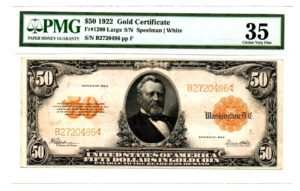
Walk into any major currency auction and mention the word ‘Rainbow,’ and every seasoned collector in the room knows exactly what you mean. The Series 1869 $1 Legal Tender note stands as one of the most visually arresting pieces of paper money ever produced by the United States government. Its swirling combination of green, red, and black ink on a large-format note gives it an almost painterly quality that photographs simply cannot do justice. Holding one in hand for the first time is genuinely a collector milestone, and understanding the full story behind it makes the experience even richer.
A New Era for American Currency Design
By 1869, the United States had been issuing paper currency under the Legal Tender Acts since 1862, when wartime necessity forced the government to abandon specie payments temporarily. The earliest Demand Notes and the first generations of Legal Tender notes were relatively plain, utilitarian documents. The Series 1869 issue represented a conscious departure from that utilitarian approach. Treasury officials and engravers at the Bureau of Engraving and Printing wanted to create something that projected the permanence and authority of the federal government while also being extremely difficult to counterfeit.
The solution was radical for its time: printing with multiple ink colors on a single note. The face of the $1 Rainbow Note features an intricate green tint overprint on the left portion, a vivid red-orange Treasury seal on the right side, and rich black engraved detail throughout. The back is printed entirely in a warm green, consistent with the emerging tradition of ‘greenbacks’ that had taken hold during the Civil War era. The overall visual effect struck contemporary observers as almost gaudy, and the public nickname ‘Rainbow Note’ stuck almost immediately after the notes entered circulation.
When examining a Rainbow Note, check the color vibrancy of the red Treasury seal first. Circulated examples often show fading in the red ink before the green tint loses its luster. A bright, unfaded red seal is one of the strongest indicators of a well-preserved, high-grade specimen, and it significantly impacts eye appeal even within the same numerical grade.
Design Elements: Portrait, Vignettes, and the Columbus Scene
The face of the Series 1869 $1 note centers on a portrait of George Washington based on the Stuart painting, engraved with exceptional detail by the Bureau’s skilled craftsmen. To Washington’s left is the large green tint overprint that gives the note so much of its color drama. A smaller vignette in the upper right corner depicts a young Christopher Columbus sighting land, a patriotic and historical image that was popular on American currency and bonds of the era.
The back design is equally thoughtful. A large central counter with ornate lathe-work surrounds the word ‘ONE,’ and the overall composition is printed in a single green color that provides visual unity to an otherwise complex reverse. Legal Tender obligation language appears prominently on both sides, a requirement under the statutes governing United States Notes throughout this period.
The note carries the red floral Treasury seal with rays, a design specific to this era of Legal Tender notes. This seal style, sometimes called the ‘large red seal’ by collectors, differs meaningfully from the smaller and later modified seal designs used on subsequent series, and its presence is one of the first authentication checkpoints any collector should know.
Friedberg Numbers and Signature Combinations
The standard reference for United States paper money is the Friedberg catalog, formally titled Paper Money of the United States, and the Series 1869 $1 Legal Tender notes run from Fr. 18 through Fr. 22. Each Friedberg number corresponds to a distinct signature combination of the Register of the Treasury and the Treasurer of the United States, both of whom were required by law to sign every note (via facsimile engraving after the earliest hand-signed issues).
Fr. 18 pairs the signatures of John Allison (Register) and Francis Spinner (Treasurer). Spinner is himself a numismatic legend, having served as Treasurer from 1861 to 1875 and being closely associated with the earliest greenback issues. Fr. 19 carries Allison and John New. Fr. 20 features Allison and James Wyman. Fr. 21 shows Allison and James Gilfillan, and Fr. 22 pairs Lucius Scofield with Gilfillan. The Scofield-Gilfillan combination (Fr. 22) is by far the most common, as Gilfillan served an unusually long tenure and enormous quantities were printed during his years in office.
The signature combination is the single most important variety factor for Series 1869 $1 notes. Fr. 18 (Allison-Spinner) is notably scarcer than Fr. 22 (Scofield-Gilfillan) and commands a substantial premium even in lower grades. Always verify the signature pairing before purchasing, as misidentified examples do occasionally appear in the market, especially in dealer lots.
Printing History and Estimated Quantities
Precise print run data for 19th-century currency is notoriously difficult to establish because BEP record-keeping of the era was inconsistent and many archival documents have been lost. What numismatic researchers have pieced together through surviving Treasury reports and population data from grading services gives us a reasonable picture. The Series 1869 $1 notes were printed in massive quantities by the standards of the era, but circulation took a heavy toll. The large-format notes were handled constantly, folded into wallets never designed for their dimensions, and subjected to decades of wear before most were eventually replaced by smaller-size notes after 1929.
The Bureau printed Series 1869 $1 notes throughout most of the 1870s and into the early 1880s, as the series date on Legal Tender notes did not change with each printing the way it would on later National Bank Notes and Federal Reserve issues. This means a note bearing the 1869 series date could physically have been printed as late as 1882 or 1883, depending on the signature combination. The Scofield-Gilfillan notes (Fr. 22) represent the bulk of surviving examples precisely because they were the last and most heavily printed variety.
Grading Challenges and What to Look For
Grading large-size Legal Tender notes from the 1869 era requires attention to factors that differ somewhat from modern currency. Paper quality is paramount: the notes were printed on a fiber-rich paper that tends to develop a distinctive amber or golden tone with age, even on uncirculated examples. This natural aging, sometimes called ‘original skin,’ is considered desirable by most serious collectors and should not be confused with environmental damage.
Folds are the most common grade-reducing defect. A single crisp fold through the center of a Rainbow Note can drop it from a potential Fine-15 to a Very Good-10 in collector parlance under the Sheldon numerical scale used by PCGS and PMG. Corner wear, edge tears, and pinholes (from 19th-century banking practice of binding notes with pins) are also extremely common. Truly uncirculated examples, graded 63 or higher by PMG or PCGS Currency, are rare enough that they generate strong bidding competition at major auctions. A PMG 64 example sold at Heritage Auctions in 2019 realized over $4,200 for a common Scofield-Gilfillan Fr. 22, while rarer signature combinations in comparable grades have exceeded $15,000.
Pinholes are extremely common on Series 1869 notes and are almost expected on circulated examples. Under a good loupe or UV light, check the left-center and right-center areas first, as these were standard binding positions in 19th-century bank teller drawers. PMG and PCGS will note pinholes on their holders, which affects resale value but does not disqualify a note from an otherwise accurate numerical grade.
Authentication Concerns and Known Alterations
The Rainbow Note has been reproduced and altered throughout its collecting history. The most common fraud involves taking a common Fr. 22 Scofield-Gilfillan note and chemically altering or physically erasing the signature area, then re-inking it to simulate the rarer Allison-Spinner (Fr. 18) combination. Third-party grading from PMG or PCGS Currency is essentially mandatory for any example representing itself as a scarce signature variety. Both services authenticate the paper, inks, and printing characteristics under high magnification and UV examination.
Genuine Series 1869 notes will show the characteristic intaglio printing feel on the portrait and vignette areas. Run a fingertip lightly over Washington’s portrait on a genuine example and you will feel the ridges of engraved ink. Flat, uniform printing is a red flag. The paper should also show the appropriate fiber content under a loupe, distinct from modern copy paper or even later BEP paper stocks.
| Friedberg Number | Signature Combination | Relative Availability | Rarity |
|---|---|---|---|
| Fr. 18 | Allison – Spinner | Scarce in all grades; rare in VF or better | Rare |
| Fr. 19 | Allison – New | Seldom seen; fewer survivors than Fr. 18 | Key Date |
| Fr. 20 | Allison – Wyman | Very scarce; limited printing period | Rare |
| Fr. 21 | Allison – Gilfillan | Scarce; more available than Fr. 19-20 | Scarce |
| Fr. 22 | Scofield – Gilfillan | Most common variety; still scarce in high grades | Common |
| Fr. 22 (Unc.) | Scofield – Gilfillan, PMG 63+ | Genuinely rare at top grades; few dozen known | Rare |
| Fr. 19 (VF+) | Allison – New, Very Fine or better | Condition rarity; possibly fewer than 10 known | Key Date |
Building a Collection Around the Rainbow Note
For collectors new to large-size Legal Tender notes, the Series 1869 $1 Rainbow Note makes an ideal entry point for several reasons. First, the Fr. 22 Scofield-Gilfillan variety in circulated grades (Good through Fine) is genuinely affordable, with well-worn examples available for $150 to $350 from reputable dealers and auction houses. This puts a genuine 19th-century piece of American monetary history within reach of almost any collector budget.
More advanced collectors often pursue a complete Friedberg number set, acquiring one example of each signature combination. This type of ‘type set by variety’ approach is a satisfying long-term project that requires patience, a good dealer network, and a willingness to monitor major auction results from Heritage Auctions, Stack’s Bowers, and Lyn Knight Currency Auctions. The rarest pieces, particularly Fr. 19 (Allison-New), may only appear at auction once every few years.
The Rainbow Note also pairs naturally with other multicolor Legal Tender issues of the 1869 series. The same Series 1869 design philosophy carried through to the $2 (Fr. 42, featuring a portrait of Alexander Hamilton), the $5 (Fr. 64, with the famous ‘Pioneer Family’ reverse), and higher denominations up to the $1,000. Building a denomination set across the 1869 Legal Tender series is an ambitious but deeply rewarding collection that captures one of the most artistically distinguished moments in American currency history.
When budgeting for a Rainbow Note purchase, factor in the cost of third-party grading if you are buying a raw (ungraded, unslabbed) example. PMG and PCGS Currency grading fees typically run $30 to $65 per note depending on the service tier, but the authentication and grade opinion they provide are worth far more than the fee for any note priced above $200. A slabbed example is also dramatically easier to resell at fair market value.
The Legacy of the Rainbow Note in American Currency Design
The multicolor approach pioneered by the Series 1869 Legal Tender notes did not immediately become universal practice in American currency, but it planted a seed. Security printing technology continued to advance through the late 19th and early 20th centuries, eventually leading to the sophisticated color-shifting inks and color-coded Federal Reserve district numerals of the modern era. In a very real sense, the Rainbow Note represents the first serious attempt by the United States government to use color itself as a security feature, a concept that is now central to every note printed by the BEP.
For collectors, the Series 1869 $1 Rainbow Note sits at the intersection of artistry, history, and monetary policy in a way that few other notes can match. It was born out of post-Civil War nation-building, designed to project federal authority, and executed with a level of craft that even modern reprints cannot fully replicate. Whether you acquire a circulated Fr. 22 as your first serious large-size note or spend years hunting a gem-uncirculated Fr. 19, the Rainbow Note rewards every level of engagement. It is, without exaggeration, one of the great treasures of American numismatics.