The Most Deceptive Counterfeit You Will Never Suspect
Imagine holding what appears to be a genuine $100 Federal Reserve Note. The paper feels right, the texture is authentic, and it even passes the basic pen test that most retailers rely on. But something is wrong. What you are holding is a $1 bill that has been chemically bleached, dried, and reprinted to mimic a $100 denomination. This is the world of washed notes, and it is one of the most sophisticated and dangerous forms of currency fraud active in the United States today.
For currency collectors, washed notes represent a unique threat. Unlike crude photocopied counterfeits, a well-executed washed note uses genuine U.S. Bureau of Engraving and Printing (BEP) paper, complete with authentic red and blue security fibers, correct weight, and legitimate watermarks repositioned to match the target denomination. The Secret Service has documented washed note operations targeting $100s, $50s, and $20s since at least the mid-1990s, with notable prosecution surges in 2002, 2008, and 2014.
A Brief History of Note Washing in the United States
The practice of washing currency is not new. Early documented cases in the United States date to the 1920s, when prohibition-era criminals experimented with ink-stripping chemicals to alter denominations. However, the modern incarnation of the washed note crime gained serious traction after the Federal Reserve began issuing large-format security upgrades starting with the Series 1990 $100 (which introduced the security strip and microprinting) and accelerating through the Series 1996 redesigns.
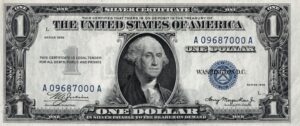
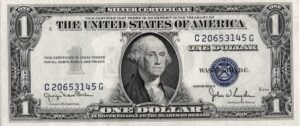
Ironically, the very security features that made post-1990 notes harder to duplicate on copiers made low-denomination bills more attractive to washers. A genuine $1 Series 1995 Federal Reserve Note, printed in enormous quantities (the BEP printed over 9.4 billion $1 notes during the 1990s alone), carries authentic Crane Currency paper embedded with the correct security fibers. Criminals discovered that bleaching the ink off a $1 note and overprinting it as a $100 Series 1996 note created a document that defeated pen tests, UV lights, and even some automatic bill validators.
The Secret Service Counterfeit Division formally classified washed notes as a priority threat category in 1998, dedicating a working group to the problem. Their 2004 annual report to Congress noted that washed note seizures had increased 340 percent between 1999 and 2003, with hotspots in California, New York, Florida, and along the U.S.-Mexico border.
The Chemistry Behind the Crime
Understanding how washing works helps collectors identify the telltale signs. The process typically involves several stages. First, the criminal obtains large quantities of low-denomination genuine bills. $1 notes are preferred because they are cheap and plentiful, but $5 notes have also been used extensively. Series 1995 and earlier small-denomination notes lack the color-shifting ink and embedded security strips found in higher denominations, making them easier to reuse as a substrate.
The washing stage uses chemical solvents to strip the intaglio-printed ink from the paper without destroying the substrate. Common agents include diluted sodium hypochlorite (bleach), acetone, and various ether-based solvents. Professional counterfeiting operations have used ultrasonic baths with solvent solutions to speed the process. After stripping, the blank substrate is dried under controlled conditions, often using vacuum drying equipment to minimize fiber distortion.
The reprinting stage is where modern technology has made washed notes far more dangerous. High-resolution inkjet and laser printers, or even offset printing equipment, are used to apply the new denomination imagery. Sophisticated operations use intaglio-style presses to replicate the raised-ink texture that is one of genuine currency’s most reliable authentication features. The best washed notes will have tactile printing that feels almost identical to authentic BEP intaglio work.
When examining any pre-2000 series high-denomination note at an estate sale, coin show, or dealer purchase, check the serial number prefix letter against the issuing Federal Reserve Bank district. A $100 note with an “A” prefix should originate from the Boston Fed. If the serial number district letter does not match the printed district seal and letter, the note deserves immediate further scrutiny as a possible washed note.
What Security Features Washed Notes Can Fool and Which They Cannot
This is where the knowledge becomes critically important for collectors. Washed notes exploit the genuine BEP substrate to defeat the most basic authentication tools, but they consistently fail against more sophisticated inspection methods.
Features a Washed Note CAN Defeat
The counterfeit detection pen (iodine-based starch test) tests for wood-pulp paper, not the specific denomination. Since a washed $1 note is printed on genuine 75 percent cotton, 25 percent linen Crane Currency paper, it will pass the pen test every time. This is the single most dangerous characteristic of washed notes and the primary reason the Secret Service warns retailers not to rely on pen tests alone.
Standard UV fluorescence checks are also frequently defeated. Genuine BEP paper does not fluoresce brightly under UV light, and since a washed note uses genuine paper, it will display the same dull, non-fluorescent response as an authentic note. Some washed notes targeting Series 1996 and later $100 notes successfully replicate the position of the embedded security strip (by using higher-denomination source bills as the substrate, a more expensive but more convincing method) or by carefully inserting a strip during the reprinting process.
Features a Washed Note CANNOT Reliably Defeat
The Federal Reserve’s color-shifting ink (Optical Variable Ink, or OVI), introduced on $100 notes with the Series 1996 redesign and expanded to the $50 (Series 1997) and $20 (Series 1998), cannot be replicated by standard inkjet or laser printing. On a genuine note, the numeral in the lower right corner shifts from green to black (or copper to green on newer designs) when tilted. On a washed note, this area will appear as flat, single-color printing that does not shift.
The microprinting on post-1990 Federal Reserve Notes, which reads “USA 100” on the security thread and “THE UNITED STATES OF AMERICA” along the portrait collar on $100s, appears under magnification as crisp, perfectly formed text on genuine notes. Washed note reprinting almost always produces microprinting that is blurry, broken, or appears as a gray smear rather than legible characters at 10x magnification.
The intaglio printing feel is another reliable test. Run your fingernail lightly across the portrait on a note. On genuine BEP intaglio-printed currency, you will feel distinct ridges corresponding to the engraved lines. On a washed note reprinted with inkjet or laser technology, the surface feels uniformly flat or has a slightly waxy texture from the toner. Even on washed notes reprinted with offset presses, the ink layering differs from genuine intaglio work.
Invest in a good 10x loupe with adequate working distance. The Bausch and Lomb Coddington 10x is a collector favorite at around $30. When evaluating any high-denomination note, examine the portrait’s fine line engraving under magnification. Genuine BEP portraits show clean, sharp engraved lines with crisp white spaces between them. Washed notes typically show dot patterns from inkjet printing or slight blurring in the fine-line areas that authentic engraving never produces.
The Watermark Problem: Source Bill Selection
One of the most revealing tells for washed notes involves the watermark. The Series 1996 and later $100 Federal Reserve Notes contain a watermark portrait of Benjamin Franklin embedded in the paper during manufacturing at Crane Currency. This watermark is visible when held to light and is positioned to the right of the printed portrait.
A washed note using a $1 Series 1995 source bill has no such watermark, or it has the small “USA ONE” text watermark present on $1 notes issued after October 2003. Criminals attempting to wash $1 notes into $100s therefore produce a note with either no watermark or the wrong watermark. However, some sophisticated operations switched to washing $5 or even $10 source bills after the $5 Series 1999 redesign, as these notes share paper characteristics with higher denominations more convincingly.
The most alarming washed note technique documented by the Secret Service involves using genuine $5 Series 2006 notes (which contain the “USA FIVE” watermark and the purple security thread reading “USA FIVE”) to create fake $100 notes. When held to light, these show a watermark that, while incorrect, is less obviously wrong to an inattentive examiner than a blank field would be. The security thread, however, always gives these away: on a genuine $100 note since Series 1990, the thread reads “USA 100” and glows pink under UV light. The $5 note’s thread reads “USA FIVE” and glows blue under UV.
Key Series and Denominations Most Affected: A Collector’s Reference
Certain series attract washed note activity more than others, both because of their high face value and because of characteristics that make convincing washing more achievable. Here is what collectors should watch for by series:
The Series 1988A and 1990 $100 Federal Reserve Notes are historically significant as the first notes targeted by modern washing operations. These notes introduced the polyester security thread and microprinting but lacked OVI ink, making them somewhat easier to replicate in the reprint stage. Genuine examples of these series in grades above EF-40 command $110 to $175 from specialist dealers; washed fakes circulating in these grades represent a real risk at unvetted auction lots.
The Series 1996 $100 introduced the large off-center portrait of Franklin, color-shifting ink, and an updated security thread. Despite these improvements, washed examples targeting this series were the most commonly seized type between 1998 and 2006 according to Secret Service data. Collectors purchasing Series 1996 $100 notes should be particularly attentive to OVI verification.
The current Series 2009A $100, featuring the blue 3-D Security Ribbon with shifting bells and “100” numerals, represents the hardest target for washers. No large-scale successful washed note operation targeting the 2009A design has been publicly prosecuted as of 2024, though the Secret Service acknowledges isolated attempts.
| Series / Denomination | Security Feature Replicated | Documented Cases | Collector Risk |
|---|---|---|---|
| $100 Series 1988A | Thread only, no OVI | High (pre-1998) | High Risk |
| $100 Series 1990 | Thread and microprint | High (1998-2003) | High Risk |
| $100 Series 1996 | OVI, portrait watermark | Very High (2000-2010) | High Risk |
| $50 Series 1997 | OVI, Grant portrait watermark | Moderate (2002-2008) | Moderate Risk |
| $20 Series 1998 | OVI, Jackson watermark | Moderate (2004-2012) | Moderate Risk |
| $20 Series 2004A | Peach background, OVI, watermark | Low to Moderate | Lower Risk |
| $50 Series 2004 | Color printing, OVI, watermark | Low | Lower Risk |
| $100 Series 2009A | 3-D Security Ribbon | Minimal documented | Lowest Risk |
Authentication Protocol for Collectors: A Step-by-Step Approach
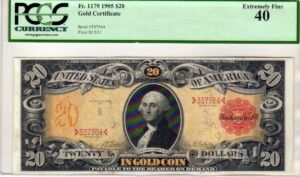
When purchasing any high-denomination Federal Reserve Note outside of a major certified grading service submission, apply this systematic authentication routine. PCGS Currency and PMG (Paper Money Guaranty) graded notes in slabs provide meaningful protection, but raw notes at shows, estate sales, and online marketplaces require your own due diligence.
First, perform the portrait and denomination consistency check. On genuine notes, the portrait, denomination text, Federal Reserve Bank designation letter, and Treasury seal should all be perfectly registered and consistent in ink quality. On washed notes, slight misregistration between the background color printing and the black intaglio layer is common because two separate printing passes are involved.
Second, verify the serial number format against the series. Federal Reserve Notes follow strict serial number conventions. The Series 1996 $100, for example, uses a format of letter-eight digits-letter, with the first letter indicating the Federal Reserve Bank (A through L) and the second letter indicating the print run series (starting at A and incrementing). Serial numbers on washed notes are often applied with inferior inkjet printing and will lack the sharp, clean edges of BEP letterpress-applied serials. Under magnification, look for ink spread or dot patterns in the serial number digits.
Third, the thread and UV test. Using a good UV light (365nm wavelength, not the cheap 395nm blue-light versions that are less discriminating), verify thread color. $100 notes Series 1990 onward should glow pink. $50 notes should glow yellow. $20 notes should glow green. $10 notes glow orange. $5 notes glow blue. Any mismatch immediately signals a washed note, regardless of how convincing the surface printing appears.
Purchase a quality 365nm UV flashlight specifically rated for banknote authentication. The Convoy S2+ with a 365nm Nichia LED emitter, available for around $25 to $40, is widely used by professional numismatists and outperforms the $5 UV pens sold at office supply stores. The correct wavelength makes security thread fluorescence unmistakably clear, and it also reveals paper repairs, alterations, and cleaning on collectible currency that normal lighting conceals entirely.
What to Do If You Suspect a Washed Note
If you believe you have received or purchased a washed note, do not pass it along. Under 18 U.S.C. Section 472, knowingly passing counterfeit currency, including washed notes, is a federal felony regardless of whether you created it. Surrender the note to your local Secret Service field office or to a bank, which is legally required to forward suspected counterfeits to the Secret Service. You will not be reimbursed for the face value, but you will be protected from criminal liability if you act in good faith.
Collectors who discover a washed note in a purchased lot should document it thoroughly with photographs before surrendering it and contact the seller for a refund. If purchased at auction, most major paper money auction houses including Heritage Auctions, Stack’s Bowers, and Lyn Knight have authentication return policies specifically covering counterfeits and alterations.
Conclusion: Authentication Knowledge Is the Collector’s Best Asset
Washed notes represent a sophisticated intersection of chemistry, printing technology, and criminal ingenuity. For currency collectors, they serve as a reminder that genuine paper alone is never sufficient proof of authenticity. The substrate is the foundation, but the security features, printing quality, and denomination-specific details are where authentication succeeds or fails.
Building a systematic authentication habit, investing in proper tools including a quality UV light and loupe, understanding series-specific security features, and using certified grading services for significant purchases will protect your collection and your financial investment. The more deeply you understand how washed notes are made, the more naturally you will spot the inconsistencies that give them away. In this hobby, knowledge is quite literally legal tender.