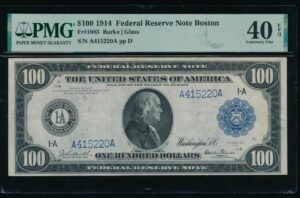
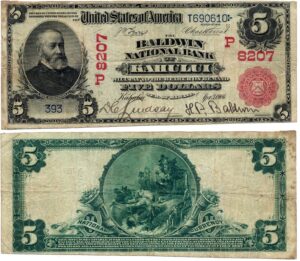
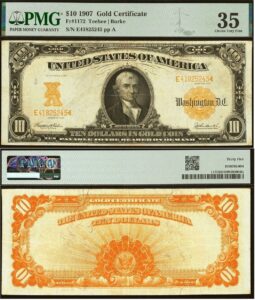
Walk into any busy diner, hand over a five-dollar bill, and watch it travel. It gets stuffed into an apron pocket, jammed into a cash drawer, folded into a wallet, and eventually deposited at a bank. From there it enters the Federal Reserve’s vast sorting machinery, where high-speed sensors scrutinize every square millimeter of its surface. If that note has been handled too many times, if it’s limp, torn, written on, or simply too worn to reliably pass through automated counting equipment, a machine marks it as unfit. Within hours, it is shredded. The currency you held this morning could be confetti by tonight. But the story does not end there, and for collectors, the replacement half of this cycle is where things get genuinely interesting.
What Makes a Note “Unfit”?
The Federal Reserve System uses a surprisingly precise set of standards to determine when a note has reached the end of its useful life. High-speed currency processing equipment, capable of sorting more than 100,000 notes per hour, grades each note against criteria for soil level, tears, holes, missing corners, graffiti, and structural integrity. The Fed’s fitness standards are published in its Cash Product Office Guidelines, and they differ by denomination. A $1 note, which circulates far more aggressively than a $100 note, is pulled at a lower threshold of wear because the cost of reprinting low-denomination notes is justified by the sheer volume of transactions they facilitate.
Notes that fail the fitness scan are flagged electronically and routed to a shredder integrated directly into the processing line. At major Federal Reserve Bank offices such as those in New York, Chicago, San Francisco, and Atlanta, destruction happens on-site. The shredded material, reduced to confetti-sized pieces roughly 3/16 of an inch square, is baled and either sent to landfill or, in some districts, recycled into novelty products. The Federal Reserve Bank of San Francisco, for instance, has sold bags of shredded currency as souvenirs. The New York Fed has historically packaged shreds as promotional items. For collectors who enjoy the unusual, these shred bags represent a legitimate tangible connection to destroyed currency, though they carry no numismatic premium beyond novelty.
Several Federal Reserve Banks sell bags of genuine shredded currency through their visitor centers and online gift shops. While these have no serial number collectibility, they make excellent display pieces alongside star note collections to illustrate the full lifecycle of a Federal Reserve Note.
The Replacement Order: How the Fed Tells the BEP What to Print
Destruction does not happen in isolation. The Federal Reserve’s Cash Product Office, working with data from all twelve Federal Reserve Banks and their branch offices, compiles ongoing projections of how many notes at each denomination will need to be retired in a given fiscal year. These projections are submitted to the Bureau of Engraving and Printing (BEP) typically well in advance of the fiscal year beginning October 1. The BEP uses this print order to schedule press runs at its two facilities: the main campus at 14th and C Streets SW in Washington, D.C., and the Western Currency Facility in Fort Worth, Texas, which opened in 1991.
The print order is broken into two categories. The larger portion covers net new notes needed to support economic growth and expanding currency demand. The smaller but critically important portion covers replacements for destroyed notes. It is from this second category that star notes emerge.
Star Notes: The Collector’s Window Into Destruction Data
When the BEP prints a run of Federal Reserve Notes, each note in a given series and district receives a unique serial number within a block of 100 million. If a note is misprinted, damaged during production, or otherwise fails quality control before leaving the BEP, it cannot simply be reprinted with the same serial number, as that would create a duplicate. Instead, the BEP destroys the defective note and replaces it with a star note: a note carrying a star symbol (*) in place of the last letter of the serial number suffix. This keeps the total count accurate without duplicating any serial number.
The connection to currency destruction is direct. The BEP produces star notes continuously, and the Federal Reserve draws on star note inventory when replacing worn notes pulled from circulation requires filling a partial block. This is why star note print runs are almost always dramatically smaller than regular issue runs, sometimes by a factor of 100 or more, and why they command premiums in the collector market.
The website moneyfactory.gov and the independently maintained resource mystarnotebook.net both publish official BEP print run data for star notes by series, district, and denomination. Cross-referencing these with the Friedberg catalog numbers for a given series helps you quickly identify which star notes are genuinely scarce versus merely less common than regular issues.
Why Some Star Notes Are Worth Thousands and Others Are Worth a Dollar Over Face
Not all star notes are created equal. The premium a star note commands in the collector market depends almost entirely on print run size and survival rate, with condition acting as the multiplier. Understanding a few specific examples makes this concrete.
The Series 1995 $1 Federal Reserve Note star run for the Atlanta district (prefix F) is one of the most famous modern key dates. The BEP printed only 128,000 of these notes, compared to tens of millions for common districts in the same series. In circulated condition, a genuine F* 1995 $1 star note trades for $400 to $600 or more. In Gem Uncirculated (PMG 65 EPQ or PCGS 65 PPQ), examples have sold at Heritage Auctions for over $1,500. The Friedberg reference number for the 1995 $1 series is Fr. 1921, with the star designation appended by the district letter.
By contrast, the Series 2017A $1 star notes from the Boston district (prefix A) were printed in runs exceeding 3.2 million, and circulated examples trade at minimal premiums over face value. The lesson is straightforward: print run data is the single most important factor in determining whether a star note is worth pursuing beyond face value.
Higher denominations add another layer of complexity. Star notes for $50 and $100 notes are produced in relatively small quantities compared to $1 notes simply because far fewer high-denomination notes circulate, and the Fed replaces them at lower rates due to their longer service lives. The Series 1996 $100 star notes, for example, represented an important transitional issue because the 1996 series was the first $100 note to feature the large off-center portrait of Franklin and the security thread reading USA 100. Star notes from this series in grades of Extremely Fine 40 or better are consistently in demand from both large-size era collectors who appreciate transitional issues and modern note specialists.
The Destruction Process in Detail: A Walk Through a Federal Reserve Cash Vault
The physical process of destruction at a Federal Reserve Bank is more sophisticated than most collectors realize. Notes arrive from commercial banks in sealed, strapped bundles of 100. These bundles are logged by denomination and depositing institution, then fed into high-speed processing machines manufactured by companies such as Glory Global Solutions and Crane Currency’s NXT series sorters. These machines read each serial number optically, verify the note against counterfeiting databases, measure soil and damage levels using infrared and ultraviolet sensors, and sort notes into fit and unfit categories at speeds that make individual notes invisible to the human eye.
Unfit notes are not simply discarded. Federal Reserve regulations require meticulous accounting. Each destroyed note is logged by serial number where possible, and the aggregate destruction totals by denomination are reported to the Federal Reserve Board in Washington. This data eventually feeds back into the print order submitted to the BEP, completing the cycle. The lag between destruction reporting and new print orders means the BEP is always working somewhat ahead, producing notes against projected rather than real-time destruction figures. This forecasting element is one reason star note print runs occasionally appear in small, unexpected quantities: the BEP may have overestimated the need for replacement stock in a given block, leaving a short run on the books.
When searching bank-wrapped $1 star note packs at face value, look for packs where the first and last serial numbers are close together, indicating a short print run. Any pack with fewer than 640,000 notes in its run (the threshold commonly cited by collectors as the cutoff for a “scarce” modern star note) is worth holding for potential future appreciation.
Mutilated Currency: A Special Category of Destruction Avoidance
Not all damaged notes go straight to the shredder at the Federal Reserve. The BEP maintains a Mutilated Currency Division in Washington, D.C., which accepts damaged notes from the public and businesses and attempts to redeem them at face value when enough of the note survives to authenticate it. The standard the BEP applies is that more than 50 percent of the note must be clearly identifiable as genuine U.S. currency. Notes that pass review are redeemed and then destroyed by the BEP rather than returned to circulation.
For collectors, the Mutilated Currency Division represents an interesting historical footnote. Destroyed notes processed through this division are not replaced by star notes in the traditional sense; they are simply absorbed into the broader replacement order. The division processes thousands of claims annually, ranging from house fire victims to unfortunate encounters between currency and lawn mowers. The redemption records, when released under FOIA requests, occasionally surface fascinating stories and have been mined by currency historians for data on how notes distribute regionally over time.
| Series / Denomination | District or Variety | Print Run | Rarity |
|---|---|---|---|
| 1995 $1 | Atlanta (F*) | 128,000 | Key Date |
| 1999 $1 | Atlanta (F*) | 640,000 | Rare |
| 2003A $1 | Richmond (E*) | 320,000 | Rare |
| 1988A $1 | Boston (A*) | 3,200,000 | Scarce |
| 2013 $1 | Minneapolis (I*) | 1,600,000 | Scarce |
| 1996 $100 | All Districts (*) | Varies, avg. 640,000 | Scarce |
| 2017A $1 | Boston (A*) | 3,200,000 | Common |
| 2009 $50 | Kansas City (J*) | 640,000 | Scarce |
| 1981A $1 | Chicago (G*) | 2,560,000 | Common |
| 2003 $1 | Minneapolis (I*) | 640,000 | Scarce |
What Collectors Should Take Away From the Destruction Cycle
The lifecycle of a Federal Reserve Note, from fresh sheet at the BEP through circulation to the shredder at a Federal Reserve Bank, is both a mundane logistical operation and a rich source of numismatic opportunity. The destruction and replacement cycle is the engine that produces star notes, and star notes are the most accessible form of scarcity in modern U.S. paper money collecting. Unlike errors or experimental notes, star notes are government-acknowledged replacements with documented print runs, making it possible to evaluate their rarity with a precision rarely available in other collecting fields.
For newer collectors, the practical starting point is simple. Request star note packs from your bank teller, particularly in $1 denomination. Log the serial number prefix and suffix, then check the print run against BEP published data. Most packs will be common runs, but the occasional scarce district or short run pack can be found at face value, and that is one of the genuine joys of modern note collecting. For advanced collectors, focusing on third-party graded examples of low-run star notes in Gem Uncirculated condition represents one of the stronger long-term value propositions in small-size U.S. currency, particularly as the series that produced the most dramatic short runs, primarily the 1995 through 2003 era $1 notes, recede further into history and surviving uncirculated examples grow harder to locate.
The worn, limp bill that gets shredded at a Federal Reserve Bank tonight will be replaced tomorrow by a crisp star note rolling off a BEP press. Somewhere in that replacement stack might be a key date worth multiples of its face value. The destruction cycle, mundane as it is by design, keeps generating collecting opportunity with quiet regularity.