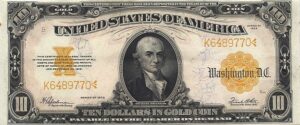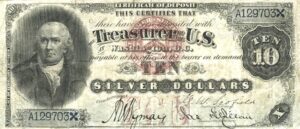
Pick up a Silver Certificate from the 1880s and you are holding a piece of American monetary art that has never been surpassed for sheer elegance. The Series 1886 and 1891 issues arrived during a turbulent decade for silver policy, shaped by the Bland-Allison Act of 1878 and the fierce political battles that would culminate in the Sherman Silver Purchase Act of 1890. Against that backdrop, the Treasury Department issued some of the most elaborately engraved currency the nation had ever seen, with bold portrait vignettes, intricate geometric lathe work, and a rainbow of seal colors that still captivate collectors more than 130 years later. Whether you are hunting your first 19th-century note or filling the final gap in a specialized type set, understanding the specific varieties, signature combinations, and condition nuances of these two series is essential.
The Legislative Context: Why Silver Certificates Existed at All
Silver Certificates were born from the Bland-Allison Act of February 28, 1878, which mandated the Treasury purchase between $2 million and $4 million worth of silver bullion monthly and coin it into silver dollars. The resulting surplus of coin was cumbersome, so the government authorized Silver Certificates as paper representatives redeemable in silver coin on demand. The Series 1878 and 1880 issues established the format, but it was the 1886 series that brought genuine artistry to the concept. By 1891, a design refresh across multiple denominations produced what many collectors regard as the high-water mark of American banknote engraving.
Series 1886: The $1 Martha Washington and the Tombstone Reverse
The Series 1886 $1 Silver Certificate occupies a unique place in U.S. currency history as the only note to feature Martha Washington as a primary portrait. Engraved by Charles Burt from a painting attributed to Gilbert Stuart, her portrait appears on the face of the note in a finely detailed oval vignette. The reverse of the 1886 $1 is equally celebrated. Early printings carried an ornate design dominated by a large “1” surrounded by intricate scrollwork, but the most visually arresting variety is the so-called “Tombstone” reverse, Fr. 224-Fr. 225, which features the large numeral enclosed in an almost architectural frame that collectors likened to a grave marker, giving this design its memorable nickname.
The 1886 $1 was issued with three primary signature combinations: Rosecrans-Jordan (Fr. 215), Rosecrans-Hyatt with a red seal (Fr. 216), Rosecrans-Hyatt with a red-brown seal (Fr. 217), Rosecrans-Huston with a red-brown seal (Fr. 218), and Rosecrans-Nebeker (Fr. 219). The Rosecrans-Jordan combination is the scarcest of this group, with relatively few examples surviving in problem-free condition. In Very Fine 25, a Rosecrans-Jordan 1886 $1 typically commands $800 to $1,200 at auction, while Choice Uncirculated 63 examples have sold for well over $3,500.
When examining 1886 $1 Silver Certificates, pay close attention to the seal color. The distinction between red and red-brown seals is not always obvious under incandescent light. Use a daylight-balanced LED or natural sunlight and compare against a known example or a certified reference note. Misattributed seals are a common source of error in ungraded collections.
Series 1886: The $2, $5, and Their Signature Varieties
The Series 1886 $2 Silver Certificate features a portrait of General Winfield Scott Hancock on the face, flanked by a complex geometric border. It was issued with two signature combinations: Rosecrans-Jordan (Fr. 242) and Rosecrans-Hyatt (Fr. 243). Total surviving populations for both are modest, and any example in Fine or better condition is considered desirable. The Friedberg 242 in particular is cataloged as scarce, with PCGS and PMG combined population reports rarely exceeding 40 to 50 graded examples across all grades.
The Series 1886 $5 is one of the great portrait notes of the era, carrying a left-facing portrait of Ulysses S. Grant with a distinctive large “FIVE” overprint across the lower reverse in a style sometimes called the “Silver” back because the word SILVER CERTIFICATE dominates the reverse design in enormous block letters. Friedberg numbers Fr. 260 through Fr. 263 cover the four signature combinations: Jordan-Rosecrans, Hyatt-Rosecrans, Huston-Rosecrans, and Nebeker-Rosecrans. The Fr. 261 Rosecrans-Hyatt with large red seal is considered the most available of the group, while Fr. 260 (Rosecrans-Jordan) is genuinely rare in grades above Very Fine.
Series 1891: A Design Refresh Across Seven Denominations
The 1891 series expanded Silver Certificate issuance dramatically, ultimately covering denominations from $1 through $1,000, though the higher denominations were issued in limited quantities and are essentially unobtainable today. For practical collectors, the 1891 series means the $1 through $100 range, and each denomination received a redesigned reverse that is cleaner and somewhat less ornate than its 1886 predecessor, though many collectors prefer the bolder 1886 reverses.
The 1891 $1 retains the Martha Washington portrait but pairs it with a revised back design (Fr. 222-Fr. 226), and was issued with signature combinations ranging from Rosecrans-Nebeker through Tillman-Morgan. The Rosecrans-Nebeker 1891 $1 (Fr. 222) with its small red seal is moderately scarce, while the Tillman-Morgan combination (Fr. 226) is relatively available and makes an excellent entry point for new collectors seeking an affordable, genuine 19th-century Silver Certificate. In circulated Fine condition, a Tillman-Morgan 1891 $1 can often be acquired for $75 to $150 from reputable dealers.
For new collectors building a type set of 19th-century Silver Certificates, the Tillman-Morgan Series 1891 $1 (Fr. 226) is the ideal starting point. It is authentic, affordable, and genuinely historic, yet available in presentable circulated grades without breaking the budget. Once you own one, you will appreciate exactly what to look for when stepping up to scarcer varieties.
The 1891 $2 and the Surprising Scarcity of Lower Denominations
Counterintuitively, it is often the lower denominations of 19th-century Silver Certificates that prove hardest to find in high grade, precisely because small notes circulated until they were worn to rags. The 1891 $2 Silver Certificate (Fr. 246-Fr. 249) features a portrait of General William Windom, Treasury Secretary under Presidents Garfield, Harrison, and briefly under Fillmore. The Rosecrans-Nebeker signature combination (Fr. 246) is the key date of this group; PCGS Currency has certified fewer than 20 examples above Very Fine 30 as of recent population data. Budget for $2,000 or more for a problem-free Fine example, and significantly more for anything grading Extremely Fine or better.
The 1891 $5: Spencer M. Clark and a Famous Portrait Controversy
The 1891 $5 Silver Certificate (Fr. 267-Fr. 271) carries a portrait that most collectors assume to be General Grant, but the face actually underwent revision between the 1886 and 1891 issues, and the engraving is based on a slightly different source. The four primary signature combinations for the 1891 $5 include Rosecrans-Nebeker, Tillman-Morgan, Bruce-Roberts, and Lyons-Roberts. Among these, the Lyons-Roberts combination (Fr. 271) is the most readily available, while Rosecrans-Nebeker (Fr. 267) commands a significant premium. An AU 55 example of the Rosecrans-Nebeker 1891 $5 has sold above $8,000 at major currency auctions.
Higher Denominations: The 1891 $10, $20, $50, and $100
As denominations increase, survival rates drop sharply for the 1891 series. The $10 (Fr. 295-Fr. 302) features a portrait of Thomas A. Hendricks, the 21st Vice President, and was issued across several signature combinations. The $20 (Fr. 318-Fr. 323) carries a portrait of Daniel Manning, Treasury Secretary under President Cleveland, and is considered a true rarity in grades of Very Fine or better across all signature combinations.
The 1891 $50 Silver Certificate (Fr. 332-Fr. 333) is one of the most spectacular large-size notes ever printed, featuring a detailed portrait of Edward Everett on the face and an elaborate blue-tinted reverse bearing the large numeral 50 surrounded by fine lathe work. Only two signature combinations exist: Rosecrans-Nebeker and Tillman-Morgan. Both are genuinely rare, with the Rosecrans-Nebeker being the scarcer of the two. A problem-free Very Fine example of either variety is a legitimate trophy note that could anchor an advanced collection of large-size type.
The 1891 $100 Silver Certificate (Fr. 342-Fr. 344) with its portrait of James Monroe is arguably the most difficult note in the entire combined 1886-1891 Silver Certificate series to obtain in any collectible grade. PCGS and PMG together have certified fewer than two dozen examples of the various signature combinations, and most of those are in circulated grades. When a Fine or better example comes to auction, it routinely exceeds $30,000 to $50,000 or more depending on condition and signature combination.
For high-denomination 1891 Silver Certificates ($50 and above), third-party certification from PMG or PCGS Currency is not optional, it is essential. The rarity and value of these notes make them targets for restoration, paper washing, and other forms of conservation that can dramatically affect value. Always request the full grading certificate details and check the population report before committing to a purchase.
| Series / Fr. Number | Denomination and Variety | Signature Combination | Rarity |
|---|---|---|---|
| 1886 / Fr. 215 | $1 Martha Washington, red seal | Rosecrans-Jordan | Scarce |
| 1886 / Fr. 242 | $2 Hancock portrait | Rosecrans-Jordan | Scarce |
| 1886 / Fr. 260 | $5 Grant, large red seal | Rosecrans-Jordan | Rare |
| 1891 / Fr. 222 | $1 Martha Washington, small red seal | Rosecrans-Nebeker | Scarce |
| 1891 / Fr. 226 | $1 Martha Washington, blue seal | Tillman-Morgan | Common |
| 1891 / Fr. 246 | $2 Windom portrait | Rosecrans-Nebeker | Rare |
| 1891 / Fr. 267 | $5 Grant revised portrait | Rosecrans-Nebeker | Rare |
| 1891 / Fr. 332 | $50 Everett portrait | Rosecrans-Nebeker | Key Date |
| 1891 / Fr. 342 | $100 Monroe portrait | Rosecrans-Nebeker | Key Date |
| 1891 / Fr. 344 | $100 Monroe portrait | Bruce-Roberts | Key Date |
Grading Considerations Specific to These Notes
Large-size Silver Certificates from the 1886 and 1891 series present specific grading challenges that collectors must understand before buying raw or evaluating slab grades. The paper stock used in this era was a high-rag-content blend that develops a distinctive crispness in uncirculated examples but creases sharply and permanently under even modest handling. A single vertical or horizontal fold will drop an otherwise gem note to the Extremely Fine range. Center folds are particularly damaging and are readily visible when the note is held to raking light.
Edge wear is another critical factor. The ornate borders on these notes, particularly the 1886 $1 with its complex scrollwork, show wear first at the corner tips and along the top and bottom margins. A note with sharp interior detail but soft or rounded corners should be graded conservatively. Look also for ink lifting in the portrait areas, which can indicate prior cleaning or improper storage in contact with acidic materials. Original paper color ranges from cream-white in uncirculated examples to a warm golden-tan in well-circulated notes; a bright stark white on an otherwise circulated note is a red flag for washing.
When bidding on ungraded 1886 or 1891 Silver Certificates at auction, request high-resolution scans of both the face and back under raking light if possible. Folds and pinholes that are invisible in flat scans become immediately apparent under angled illumination. Most major auction houses will provide these images upon request for lots above a certain value threshold.
Building a Collection: Strategies by Budget
A complete type set of the 1886 and 1891 series in problem-free Very Fine condition represents one of the most rewarding long-term projects in large-size currency collecting, but it is also genuinely demanding. A realistic strategy is to build by denomination group, starting with the more available $1 and $5 notes before committing capital to the high denominations.
For collectors working with a budget under $500 per note, the Tillman-Morgan 1891 $1 and the Lyons-Roberts 1891 $5 are natural targets. In the $500 to $2,000 range, the 1886 $1 Rosecrans-Hyatt varieties and the 1891 $2 Tillman-Morgan (Fr. 247) become achievable. Above $2,000, you enter the territory of genuinely scarce signature combinations and the lower-grade examples of the high denominations. The $50 and $100 denominations belong to a separate category entirely, and prospective buyers should attend two or three major auction cycles to develop price calibration before bidding.
Conclusion: Art, History, and Enduring Value
The Silver Certificates of 1886 and 1891 are not merely collectible currency. They are primary historical documents from one of the most politically charged monetary episodes in American history, executed with a level of engraving craft that the Bureau of Engraving and Printing has never since equaled in circulating currency. From the affordable Tillman-Morgan $1 to the museum-grade Rosecrans-Nebeker $100, this series offers entry points for every collector and rewards study at every level of expertise. Invest time in learning the signature combinations, understand what original paper looks like, and do not be afraid to pass on problem notes regardless of rarity. The right example, properly attributed and honestly graded, is always worth the patience required to find it.