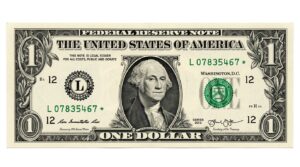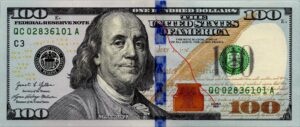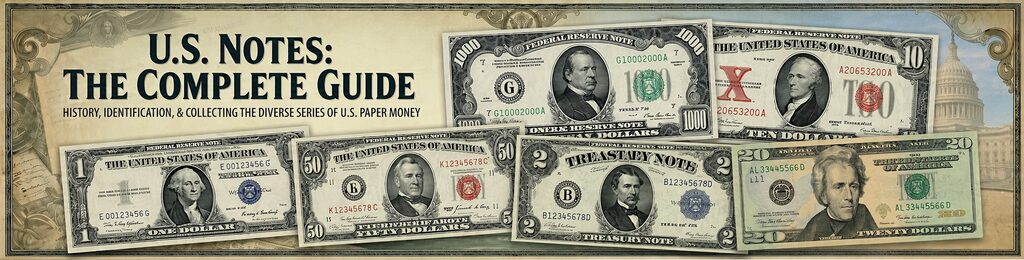
Picture two separate lottery tickets, each a winner on its own, accidentally stuffed into the same envelope. That rough analogy captures something of the statistical improbability behind what serious error note collectors call an optical coincidence error: a note on which two distinct, independently caused printing defects happen to land in a spatial relationship that creates a third, visually coherent anomaly neither defect could have produced alone. The Bureau of Engraving and Printing’s quality control systems are remarkably sophisticated, yet they cannot fully anticipate the cascading randomness of mechanical printing at scale, and occasionally a note slips through that exists at the intersection of two separate failures. These pieces are among the most intellectually compelling artifacts in all of United States paper money collecting.
The Mechanics of a Four-Pass System
To appreciate why optical coincidence errors are so improbable, you need a working knowledge of how modern Federal Reserve Notes are printed. Since the BEP moved to simultaneous face printing in the 1990s, the production of a single sheet of currency involves at minimum four discrete steps. The first is an offset lithographic pass that lays down the subtle background colors and fine-line security printing visible in Series 1996 and later notes. The second is the intaglio pass, where the high-pressure engraved plate deposits the characteristic raised ink that gives U.S. currency its tactile feel. The third and fourth passes handle the overprinting: serial numbers, Federal Reserve district seals, and Treasury seals are applied by letterpress in a separate operation from face and back intaglio.
Each pass introduces its own universe of potential errors. A sheet can enter the offset press skewed, producing a misaligned background. That same sheet, if it jams, folds, or picks up a fiber before the intaglio pass, may acquire a second, completely unrelated defect. The critical point is that these two errors originate in different machines at different times. When the finished note is examined, the defects may appear to a casual observer as a single, intentional design element, or more startlingly, they may align in a way that creates an image or pattern with no precedent in the intended design.
Defining “Optical Coincidence” More Precisely
The term optical coincidence error, while not part of the BEP’s official vocabulary, has gained traction among advanced collectors and error specialists, particularly following its use in The Comprehensive Catalog of U.S. Paper Money Errors by noted researchers tracking multi-defect notes. The concept requires three conditions to be met. First, each defect must be independently caused, meaning traceable to a separate mechanical event or pass. Second, the spatial relationship between the defects must be non-trivial: the two anomalies must interact visually in a meaningful way, whether by partially overlapping, creating a false alignment, or together producing a pattern that neither defect produces alone. Third, the interaction must be confirmable through forensic examination rather than subjective impression alone.
A straightforward example would be a Series 2003A $20 Federal Reserve Note on which an ink smear from a blanket cylinder during offset background printing happens to fall directly beneath a shifted serial number overprint, so that the smear and the displaced numerals together create what appears to be a shadowed or ghost serial number reading. Examined under magnification, the ink compositions are visibly different. The smear is offset ink; the serial number is letterpress ink. They are strangers from different production passes that ended up in the same address.
When evaluating a possible optical coincidence error, always examine the note under both ultraviolet light and magnification of at least 10x. Offset inks and intaglio inks fluoresce differently under UV, which is often the fastest way to confirm that two defects originated in separate production passes rather than from a single event.
Historical Examples and Why They Survived Inspection
The BEP employs both automated optical scanning and human inspectors, yet multi-error notes reach circulation with measurable regularity. This is partly a function of scale: the Fort Worth and Washington facilities together print billions of notes annually, and statistical outliers are inevitable. It is also partly because optical coincidence errors are, by definition, visually confusing. An automated scanner programmed to flag a shifted seal may not flag the same note if the shift is partially masked by an ink accumulation error that makes the misregistration appear less severe than it actually is. The two defects can, paradoxically, camouflage each other long enough to pass through inspection.
A well-documented class of these survivals involves fold-over errors combined with partial face printing. In a classic fold-over, a corner of the sheet folds back before the intaglio pass, leaving a blank wedge on the face and printing part of the design on the reverse of the fold. If that same sheet also experienced a slight misregistration of the Federal Reserve seal during the overprint pass, the resulting note presents two separate anomalies that overlap in the fold zone. Several examples from the Series 1993 and Series 1995 $1 Federal Reserve Notes have been certified by PCGS Currency and PMG with dual-error designations, with grades ranging from VF-25 to Gem CU-65, the latter reflecting notes that escaped circulation entirely and were found in original BEP bags.
The Shifted Seal and Ink Void Pairing
One of the most prized sub-types within the optical coincidence category pairs a dramatically shifted Treasury or Federal Reserve seal with an ink void on the face intaglio. The seal shift is caused during the letterpress overprint pass, while the ink void, typically a blank spot where the engraved plate failed to transfer ink due to a paper fiber or foreign material, originates in the intaglio pass. When the void happens to fall within the shifted seal’s new position, the seal appears to have a deliberate window or cut-out, resembling almost an embossed medallion effect. On a Series 1988A $50 note, an example sold at a Stack’s Bowers currency auction in 2021 showed the Federal Reserve seal shifted approximately 12mm to the left, with an oblong ink void measuring roughly 4mm x 7mm centered within the repositioned seal. The PMG grade was 64 EPQ, and the note realized $18,000, a significant premium over single-defect seal shifts of comparable magnitude.
Do not confuse optical coincidence errors with manufacturing varieties, such as plate position changes or intentional design modifications. If an anomaly appears consistently across multiple notes from the same series and district, it is almost certainly a manufacturing variety or progressive plate deterioration rather than a coincidence error, which is by definition a unique event.
Serial Number Interactions: A Subset Worth Watching
A particularly active area of optical coincidence research involves interactions between serial number errors and intaglio face printing anomalies. Serial numbers are applied in the third and fourth overprint passes, after both face and back intaglio are complete. An ink flood on the serial number heads, producing a filled or blobbed digit, is one common serial error. If the underlying intaglio pass happened to deposit an ink accumulation, essentially a raised ridge of excess ink, in the precise zone where the flooded digit falls, the two ink masses can merge into a raised, blurred artifact that reads as neither the intended number nor the adjacent design element clearly. These notes are sometimes mistakenly described as having a single “ink blob error,” but careful examination reveals the double-layer structure: intaglio ink underneath, letterpress ink on top, each independently anomalous.
Series 2004A and Series 2006 $10 Federal Reserve Notes have produced a disproportionate number of documented serial number interaction errors, possibly reflecting tooling wear in certain overprint presses during those production years. Collectors focusing on this sub-type should seek certification from either PMG or PCGS Currency, as the dual-error designation on the holder meaningfully affects realized values at auction.
Mismatched Backs and the Double-Defect Problem
Back printing, handled in a separate intaglio pass before the sheet is turned for face printing, introduces its own error set. A back-to-face misregistration, where the back design is printed off-center relative to the face, is common enough to be considered a minor error unless extreme. However, when a back misregistration combines with a face overprint shift, the note can exhibit a striking bilateral asymmetry that makes both defects appear more severe than either would in isolation. The visual effect is one of a note that seems structurally unstable, with design elements drifting in opposite directions on each side. These bilateral shift notes are scarce in high grades because the misregistration is usually visible enough to cause the note to be pulled from circulation quickly by aware cashiers or bank tellers.
When attributing a bilateral shift note, measure the misregistration on both sides independently using a transparent ruler held against the design borders. Document your measurements with high-resolution scans before submission to a grading service. Graders at PMG and PCGS Currency appreciate notes that arrive with supporting documentation for complex multi-error attributions, and it can prevent misclassification of a dual error as a single back or face shift.
Authentication Challenges and the Forgery Risk
The extreme value of confirmed optical coincidence errors has attracted attempts to create artificial versions. The most common fraud involves taking a genuine single-error note and introducing a second anomaly mechanically, either by lightly bleaching an area to simulate an ink void, or by using a modified letterpress tool to displace a seal or serial number. Authentication by a major grading service is not optional for any serious purchase in this area: it is mandatory. PMG’s and PCGS Currency’s encapsulation processes include verification that ink compositions and paper characteristics are consistent with the original BEP production run. A chemically altered serial number, for instance, will typically show ink penetration inconsistent with the original letterpress impression depth.
The SPMC (Society of Paper Money Collectors) published guidance in 2018 recommending that any note described as a multi-error or optical coincidence error be independently verified by at least one credentialed expert before transfer of funds above $1,000, regardless of existing holder certification. This reflects the reality that some sophisticated alterations have passed initial certification review.
| Series / Denomination | Error Combination | Known Examples (Approx.) | Rarity |
|---|---|---|---|
| 1993 $1 FRN (Various Districts) | Fold-over plus shifted seal | 12-18 certified | Rare |
| 1995 $1 FRN (Atlanta F*) | Ink void plus mismatched back shift | 6-9 certified | Key Date |
| 1988A $50 FRN (Various) | Shifted FRB seal plus intaglio ink void | 8-12 certified | Rare |
| 1996 $100 FRN (Various) | Offset background shift plus serial flood | 20-30 certified | Scarce |
| 2003A $20 FRN (Various) | Ink smear plus displaced serial | 35-50 certified | Scarce |
| 2004A $10 FRN (Various) | Flooded digit plus intaglio accumulation | 40-60 certified | Scarce |
| 2006 $10 FRN (Various) | Serial number interaction, dual-layer ink | 25-40 certified | Scarce |
| 2009 $5 FRN Star Notes | Back shift plus overprint misregistration | Less than 10 certified | Key Date |
| 2013 $100 FRN (Various) | Bilateral design drift, both passes | 15-22 certified | Rare |
| Pre-1970 Small Size (Various) | Any dual-error combination, circulated | Unquantified, very few | Key Date |
Valuation Principles for Multi-Error Notes
Pricing optical coincidence errors is genuinely difficult, partly because no standard catalog assigns a base value to any specific dual-error combination. The most reliable approach is to treat the note as a compound of its two individual errors, then apply a multiplier that reflects the interactive or visual enhancement created by their coincidence. In practice, experienced dealers and auction specialists typically price confirmed dual-error notes at 2.5 to 5 times the value of the more significant single error alone, with the multiplier rising when the spatial interaction is visually dramatic. A shifted seal that would catalog at $400 as a standalone error, combined with an ink void that would catalog at $150, might realize $1,500 to $2,500 if the void falls squarely within the displaced seal’s footprint and the visual effect is clean and verifiable.
Grade matters enormously in this calculation. Optical coincidence errors in Gem Uncirculated grades (PMG 65 EPQ or better, PCGS 66 PPQ or better) can command multiples several times higher than circulated examples of the same error combination, because the possibility that the note survived in an original BEP bag implies a potentially small and distinct production cohort. Always prioritize notes with the EPQ or PPQ designation, confirming that the paper quality is original and unaltered.
Building a Collection Around Coincidence Errors
For collectors interested in specializing, optical coincidence errors reward a research-first approach more than almost any other numismatic specialty. Start by thoroughly studying single-error note cataloging, particularly the standard references including Bart’s Standard Guide to Small-Size U.S. Paper Money and the PMG population report data available through their website. Understanding the baseline value and visual character of individual error types is prerequisite to recognizing when a note presents a genuine coincidence rather than a single complex error that simply looks unusual.
Auction archives from Heritage Auctions, Stack’s Bowers, and Lyn Knight Currency Auctions contain detailed lot descriptions and, in many cases, high-resolution imaging of previously sold multi-error notes. Building a reference library of these images will train your eye far more efficiently than any written description. Join the SPMC and engage with its error note study group, where active members share newly discovered examples and attribution debates that do not appear in any published catalog.
The collecting community around optical coincidence errors remains small enough that genuine relationships with a handful of specialist dealers can make a meaningful difference in what crosses your desk. These notes rarely appear in general currency shows; they tend to surface through dealer networks, estate collections, and original Federal Reserve bag finds. Patience, relationships, and forensic knowledge are the three pillars of building a meaningful collection in this niche.
Conclusion: Where Accident Becomes Artifact
There is a philosophical dimension to optical coincidence errors that sets them apart from other numismatic rarities. Most key dates and major error notes are rare because of a known mechanical failure, a miscut die, a wrong planchet, a reversed flag. But optical coincidence errors are rare because two unrelated failures happened to find each other on a single piece of paper and, in doing so, created something that neither could have created alone. They are not planned. They are not reproducible. They exist as singular intersections of industrial accident and physical space, and the notes that carry them are as close as currency collecting comes to pure found art. For the collector willing to invest the time in understanding what they are looking at, they represent some of the most compelling paper in American numismatic history.