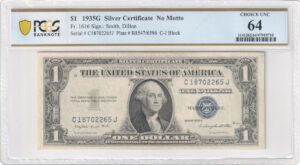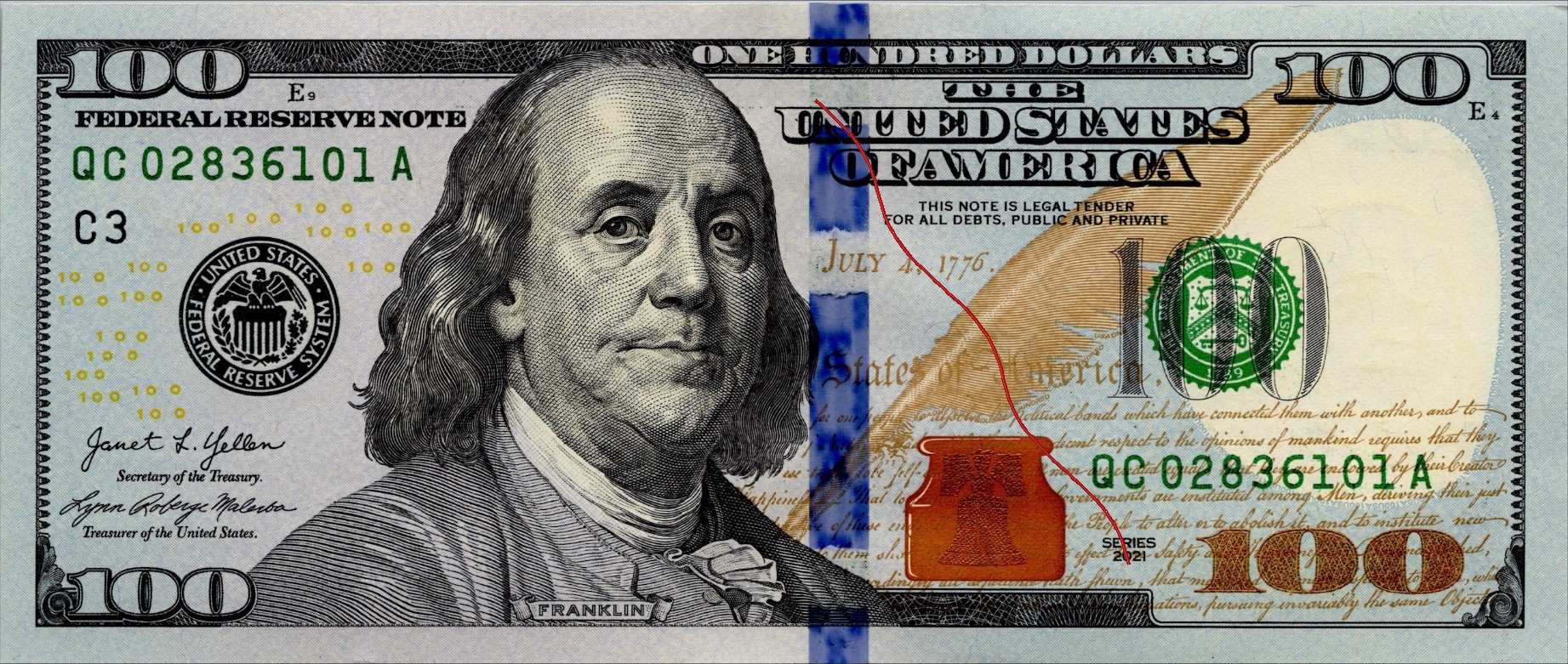
📷 Image source: AI generated. Images are selected by AI to represent the article topic and may not depict the exact note(s) described.
Pull out a Federal Reserve Note and hold it up to the light. You already know what you are supposed to see: the embedded security thread, the red and blue synthetic fibers woven throughout the paper, the watermark portrait. But what happens when something else shows up, something that was never supposed to be there at all? Fiber inclusion errors are among the most visually compelling anomalies in U.S. paper money, and for collectors who know what to look for, they represent a genuinely rewarding specialty within the broader world of error note collecting.
Understanding the Currency Paper Manufacturing Process
To appreciate why fiber inclusions happen, you need to understand how currency paper is made. The Bureau of Engraving and Printing has sourced its paper from Crane and Company in Dalton, Massachusetts, continuously since 1879, making it one of the longest-running government supplier relationships in American history. The papermaking process begins with a pulp slurry composed primarily of cotton rag fiber, which gives the final sheet its distinctive feel, durability, and the ability to survive the washing machine accidents that afflict so many notes in everyday circulation.
During the wet phase of papermaking, when the slurry is spread across forming screens and water is extracted, the substrate is highly susceptible to contamination. Foreign materials present anywhere in the manufacturing environment, whether from workers’ clothing, airborne debris, or even remnants from adjacent production batches, can become entangled in the cotton matrix before it sets. Once the paper dries and the fibers bond, those foreign inclusions are locked in permanently. They travel through the BEP’s printing presses right alongside legitimate sheets, receiving the full suite of offset, intaglio, and letterpress treatments before anyone identifies the anomaly, if it is identified at all.
Intentional Fibers Versus True Inclusions: Drawing the Line
One of the first distinctions a collector must master is the difference between the intentional red and blue security fibers present in all modern Federal Reserve Notes and genuine foreign fiber inclusions. The deliberate security threads were first introduced in 1942 as an anti-counterfeiting measure, a response to high-quality forgeries that had appeared during the wartime period. These fibers are distributed with reasonable uniformity throughout the paper substrate, though their exact placement is random enough to make precise replication difficult.
A true fiber inclusion error stands apart in several ways. The foreign material is typically larger, denser, or structurally different from the standard red and blue threads. Common culprits include textile threads from cotton work clothing worn by mill employees, synthetic fibers from cleaning materials or equipment, human or animal hair, fragments of plant material, and in rarer cases, small pieces of previously processed paper or fabric that found their way back into the pulp stream. The inclusions may run across the face of the note at unusual angles, bunch into a knot or loop, or display coloration entirely inconsistent with the standard security fiber palette, appearing green, yellow, black, brown, or even multicolored.
When examining a suspected fiber inclusion, use a loupe at 5x to 10x magnification and compare the questionable fiber against the standard red and blue security threads on the same note. True inclusions will differ in diameter, texture, color saturation, or structural composition. A fiber that appears partially above the paper surface or that disturbs the surrounding printed ink is a strong indicator of a genuine manufacturing anomaly rather than surface contamination.
Categories of Fiber Inclusion Errors
Experienced collectors broadly recognize several sub-categories within the fiber inclusion family, and understanding these distinctions helps when evaluating a note or negotiating a price.
Thread and Textile Inclusions
These are the most commonly encountered type. A stray thread, often cotton or polyester, becomes embedded during the wet pulp stage. They can range from a millimeter or two to several centimeters in length. Notes from the mid-twentieth century, particularly Series 1950 through 1974 Federal Reserve Notes, seem to turn up with textile inclusions at a slightly higher rate than modern issues, possibly reflecting differences in manufacturing cleanliness standards at Crane’s Dalton facility during that era.
Hair Inclusions
Human or animal hairs embedded in currency paper are among the most visually dramatic fiber inclusions. A dark human hair running diagonally across the face of a crisp Series 1988A $100 Federal Reserve Note is impossible to dismiss as intentional. Hair inclusions are generally rarer than thread inclusions because hair is less abundant in a textile-adjacent manufacturing environment. When authenticated and certified, hair inclusions attract strong collector interest, particularly if the hair traverses a portrait or major design element.
Plant Fiber and Organic Material Inclusions
Given that currency paper is a cotton-linen substrate, it is perhaps not surprising that stray plant fibers occasionally end up where they should not be. Small fragments of raw cotton boll, linen cord, or even cellulose debris from processing equipment can become embedded. These are sometimes harder to authenticate definitively because of the compositional similarity to the base paper material, but experienced examiners can identify anomalous clumps or bundles that disrupt the uniform texture of legitimate paper.
Synthetic and Manufactured Material Inclusions
Perhaps the most exotic sub-category involves synthetic materials: plastic fibers, nylon, or even metallic threads from industrial equipment that shed during the manufacturing process. These can be particularly striking under ultraviolet light, as some synthetic materials fluoresce in ways entirely inconsistent with genuine currency paper. A note displaying an unexpected UV-reactive strand running through it warrants careful examination under both white light and UV before any attribution is made.
Ultraviolet examination is an essential tool for evaluating fiber inclusions. Genuine currency paper glows a faint blue-violet under UV due to optical brighteners in the cotton substrate, while many foreign synthetic fibers will either fluoresce dramatically in a contrasting color or appear as a dark, non-reactive stripe. A quality 365nm longwave UV lamp is a worthwhile investment for any serious error note collector.
Authentication Challenges and the Role of Third-Party Grading
Authentication is arguably the most important challenge in the fiber inclusion market. Unlike a miscut or an offset printing error, a fiber inclusion can theoretically be added to a note after the fact by unscrupulous sellers. The key authentication markers are: the fiber must be fully embedded within the paper matrix, not adhered to the surface; it must be visible from both sides of the note (or at minimum be detectable through the paper thickness); and crucially, the printing ink layers must overlay the fiber without any disruption of the ink film that would suggest post-printing insertion.
Professional Currency Graders (PMG) and PCGS Currency both have experience attributing fiber inclusions, and a certified note with explicit error attribution from either service provides meaningful assurance to buyers. PMG typically notates the error description on the certification label, while PCGS Currency similarly includes descriptive attribution. For high-value specimens, double-certification or requesting detailed examination notes from the grading service is advisable.
It is worth noting that not every genuine inclusion is dramatic enough to warrant a notable premium. A single short thread of unremarkable color, barely distinguishable from the standard security fibers, adds little to a note’s desirability. The premium increases substantially with the size of the inclusion, its visual impact, the degree to which it crosses major design elements, and any unusual coloration that makes it immediately apparent to an observer.
Historical Context: Large-Size Notes and Early Small-Size Issues
Fiber inclusions in large-size currency, issued through 1928, occupy a particularly interesting position. Pre-1928 notes were printed on paper stock without the standardized red and blue security fiber program, which was not implemented until 1942. This means any thread or fiber visible in a large-size note is, by definition, a foreign inclusion rather than an intentional security feature. Gold Certificates, Silver Certificates, and Legal Tender Notes from the 1880 through 1923 series have occasionally surfaced with embedded textile fragments, and because the paper substrate was produced under less rigorously controlled conditions than today, the relative incidence may be somewhat higher.
The transitional period from 1942 through the early 1950s also yields interesting examples, as the newly introduced security fiber program was still being refined. Notes from Series 1934C and 1934D Silver Certificates occasionally display fiber anomalies that fall into a gray zone between irregular security fiber placement and genuine foreign inclusions, an attribution challenge that keeps specialists engaged.
Large-size error notes with fiber inclusions represent a specialized but rewarding collecting niche. Because the pre-1942 paper lacked intentional security fibers, documentation is cleaner: any thread or fiber in a large-size note is definitionally foreign. Focus on notes where the inclusion is clearly visible in the printed face area rather than the margins, as these command the strongest premiums from advanced collectors.
Building a Fiber Inclusion Collection: Practical Strategies
For collectors looking to build a focused fiber inclusion collection, a few strategic approaches are worth considering. First, establish a relationship with dealers who specialize in error notes. The Error Note Collectors Society (ENCS) maintains a network of dealers and provides a community forum where fiber inclusion attributions are regularly discussed and debated. Heritage Auctions, Stack’s Bowers, and Lyn Knight Currency Auctions have all handled certified fiber inclusion notes over the years, and reviewing their past auction archives provides an excellent sense of market values.
Second, do not overlook circulated notes. While uncirculated examples command the highest premiums, a circulated note with a dramatic, clearly authenticated inclusion in Fine or Very Fine condition can be acquired at a fraction of the cost of a Gem Uncirculated example. For educational purposes and general collection building, lower-grade certified examples offer excellent value.
Third, concentrate on visual impact. A fiber inclusion that requires explanation to be seen is far less desirable than one that arrests the eye immediately. Dark fibers crossing the portrait of a president, multicolored threads running through the Treasury seal, or a pronounced hair inclusion bisecting the serial number will always outperform marginal or faint examples in both collector appeal and long-term value retention.
| Type / Period | Denomination or Series | Estimated Occurrence | Rarity |
|---|---|---|---|
| Single cotton thread, short | Any FRN, 1950 to present | Most frequently encountered type | Scarce |
| Long textile thread, crossing portrait | Any FRN, 1950 to present | Significantly fewer than short inclusions | Rare |
| Human or animal hair inclusion | Any series, any denomination | Estimated fewer than 1 in 500,000 notes | Rare |
| Synthetic or UV-reactive fiber | Post-1990 FRNs, any denomination | Very rarely reported; fewer than 20 known examples | Key Date |
| Large-size note, pre-1928 | Legal Tender, Silver Certificate, Gold Certificate | Seldom offered; high verification difficulty | Rare |
| Colored non-standard thread (green, black, yellow) | Any FRN, any date | Occasionally encountered; color adds premium | Scarce |
| Multiple simultaneous inclusions | Any series | Extremely rare; fewer than a handful documented | Key Date |
| Star note with fiber inclusion | Any FRN star note | Doubly scarce due to low star print runs | Key Date |
Market Values and What to Expect at Auction
Pricing for fiber inclusion errors is highly subjective and context-dependent, more so than for many other error categories where print run data allows for more systematic valuation. A certified PMG or PCGS Currency note with a clearly noted fiber inclusion attribution will sell at a premium over comparable non-error examples, with the magnitude of that premium scaling with visual impact, denomination, series desirability, and overall grade.
For reference, a common small cotton thread in an otherwise unremarkable Series 1988 $1 Federal Reserve Note in Fine condition might fetch $25 to $50 from an interested specialist. A dramatic hair inclusion crossing the portrait of Lincoln on a Series 1963 $5 Legal Tender Note in Extremely Fine condition might command $150 to $300 or more. A star note with a clearly authenticated and certified multicolored synthetic fiber inclusion in a high grade could realistically bring $500 to $1,000 or beyond from the right buyer at a major currency auction.
The market remains thinly traded compared to established error categories like offset prints or third printing errors, which actually works in favor of patient, knowledgeable collectors. Undervalued examples do surface, particularly at general antique shows or estate sales where sellers lack the expertise to identify or market error notes correctly.
Conclusion
Fiber inclusion errors remind us that even the most carefully controlled manufacturing processes leave room for the unexpected. Every Federal Reserve Note that passes through the BEP’s presses began as a slurry of cotton and linen pulp, vulnerable in its wet state to the ambient world. When the manufacturing environment intrudes, the result is a permanent record of that intrusion, locked into the paper alongside the portrait of Washington or Hamilton and circulated into the economy alongside billions of entirely ordinary notes.
For collectors, these anomalies represent exactly the kind of tangible, story-rich objects that make numismatics compelling. A fiber inclusion is not just an error; it is evidence of a specific moment in a specific mill in Dalton, Massachusetts, when something went slightly, memorably wrong. That is worth knowing, worth collecting, and for the right examples, worth paying a serious premium to own.