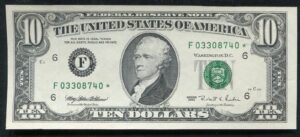
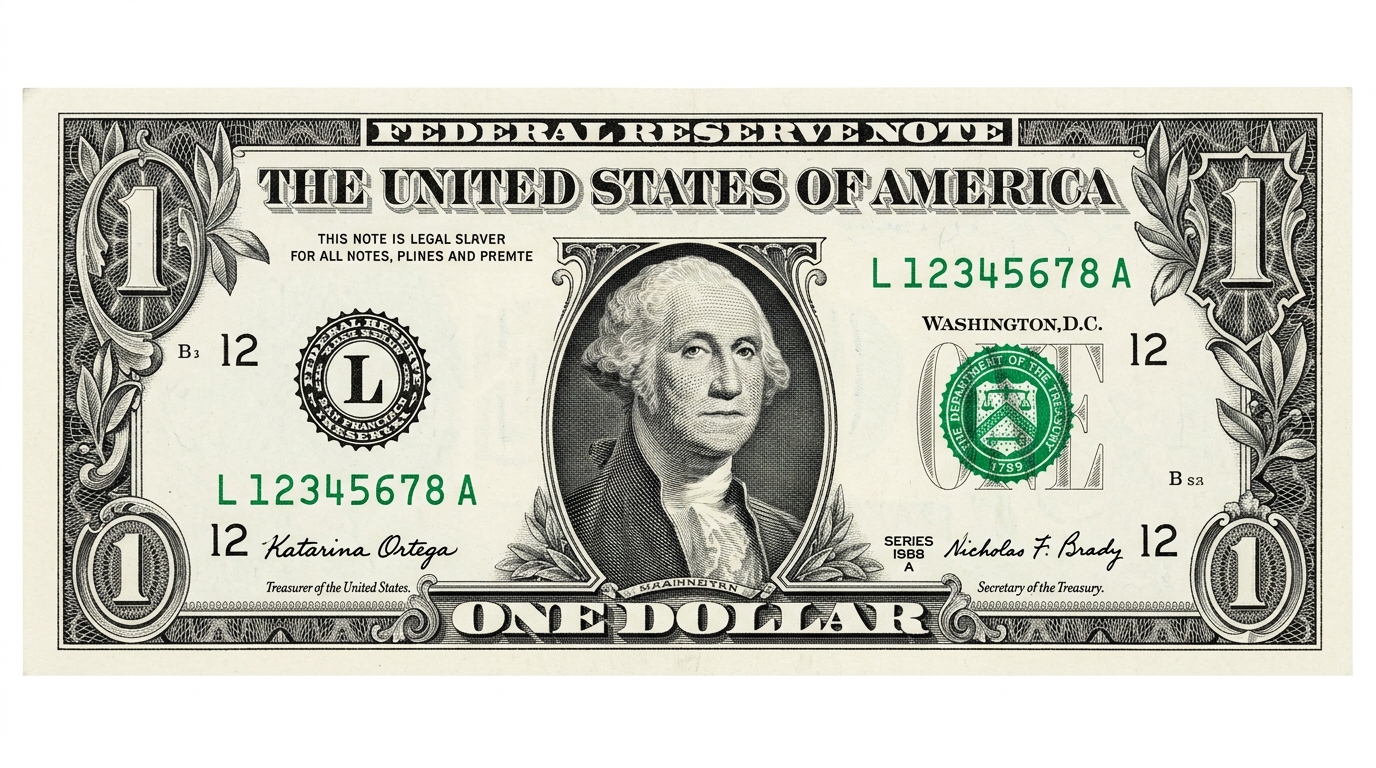
📷 Image source: Wikimedia Commons. Images are selected by AI to represent the article topic and may not depict the exact note(s) described.
Pull open any serious error currency reference and you will find pages devoted to the dramatic mistakes: inverted overprints, missing ink, dramatic folds before cutting. But tucked quietly between those headline-grabbing errors sits one of the most misunderstood categories in all of United States paper money collecting: the serial number skip, the serial number jump, and the non-sequential pair. These notes look normal at first glance. The printing is clean, the paper is intact, the seals are vivid. Only when you examine the numbers themselves does something seem deeply, fascinatingly wrong.
How Notes Get Their Numbers: The Mechanical Foundation
To understand what goes wrong, you first need to understand what is supposed to go right. At the Bureau of Engraving and Printing facilities in Washington, D.C., and Fort Worth, Texas, printed sheets move through a numbering press after face and back printing are complete. For most of the modern era, this has been accomplished using the COPE-PAK (Currency Overprinting and Processing Equipment) system, introduced progressively through the 1990s. Earlier production relied on older Stickney flatbed and sheet-fed rotary numbering presses.
Each note on a sheet receives two serial numbers applied simultaneously by a set of typewheels, small interlocking digits that advance in sequence with each impression. On a standard 32-subject sheet, 32 notes are numbered in a specific skip-numbering pattern. For example, on a 32-subject sheet with four panes of eight notes each, the notes do not receive consecutive numbers left to right across the sheet. Instead, they follow a predetermined skip sequence so that when the sheet is cut and stacked, the resulting bricks of notes run in sequential order when counted from the top of the stack down. This elegant system is critical: a disruption anywhere in the typewheel mechanism cascades outward, potentially affecting dozens or even hundreds of subsequent sheets before quality control catches the problem.
Three Distinct Malfunctions, Three Distinct Errors
The Partial Skip: One Wheel Sticks
The most commonly encountered serial number anomaly occurs when a single digit wheel within the typewheel assembly sticks momentarily and fails to advance for one impression cycle before resuming. The result is a note bearing a number that is lower than it should be, followed immediately by a note with the correct next number. In practice, if a series of notes should read …456789, …456790, …456791, a sticking second-from-right wheel might instead produce …456789, …456789, …456791. This creates a duplicate serial number followed by a skip of one number entirely. When both notes survive together, collectors call them a non-sequential pair even though the numbers appear sequential on individual notes. The duplicated number is, in fact, the error, because the press assigned the same sequence value twice.
The Jump Error: Multiple Wheels Misfire
Far more dramatic and considerably rarer is the jump error, in which multiple digit positions skip simultaneously, producing a serial number that leaps far outside its expected range. A note from a production run of Series 1995 $1 Federal Reserve Notes from the San Francisco district might carry a number in the B-block range when surrounding notes are firmly in the D-block. Jumps of 10,000 or more digits have been documented. These are the notes that stop experienced dealers cold at a show. A well-documented example surfaced at a 2009 Memphis IPMS show: a Series 1988A $1 FRN from the Boston district (A-prefix) with a jump of approximately 1,200,000 numbers above its expected sequence position, certified by PCGS Currency at 64 PPQ.
When evaluating a suspected jump error, always request documentation of the surrounding notes from the same brick or strap if possible. Provenance showing where the note appeared within a sequential run dramatically increases both its authentication credibility and its market value. Dealers who specialize in error notes, such as those regularly dealing in PMG or PCGS-certified material, often maintain records of original strap companions.
The Non-Sequential Pair: The Holy Grail of the Category
The most collectible form of this error class is the confirmed non-sequential pair: two notes from the same sheet that should have consecutive serial numbers but do not, because the numbering press produced a skip between them. To qualify as a confirmed pair, both notes must survive together with documentation or certification confirming they originated from the same sheet position. In Series 1993 $20 FRNs from the Atlanta Federal Reserve district (prefix F), a documented non-sequential pair sold at a 2017 Stack’s Bowers auction for $1,840, with the two notes bearing numbers separated by a skip of four digits when only a skip of zero was expected. The PMG certification noted the skip and graded both notes at 65 EPQ.
The Role of Skip Numbering in Understanding What “Non-Sequential” Really Means
Here is where collectors frequently stumble, and where genuine expertise matters. Because the BEP uses skip numbering on multi-subject sheets, two notes that appear side by side on the uncut sheet will NOT have consecutive serial numbers under normal circumstances. The skip pattern is intentional and varies by sheet format. A 32-subject sheet with a skip of 40,000,000 between positions means that the note in position 1 and the note in position 2 might differ by 40 million numbers even though they are printed next to each other. Confirming a true press malfunction requires knowing the expected skip for that specific series and sheet format, then identifying a deviation from that skip.
This is why raw, uncertified examples are so difficult to evaluate. Without knowing the production format, a buyer cannot distinguish an intentional skip from a press error. Certification services have become essential for this category precisely because the graders maintain reference data on expected skip patterns by series and denomination.
The BEP’s own published production records, available through the BEP website and in Fred Bart’s reference works, include the sheet formats and skip-numbering sequences for most modern series. Downloading and studying these tables before purchasing a claimed non-sequential pair will protect you from overpaying for a note that is simply showing normal skip-numbering behavior misidentified as an error.
Denominations and Series: Where the Errors Concentrate
Serial number skips are theoretically possible on any denomination produced on multi-subject sheets, but the historical record shows a concentration among $1 and $20 Federal Reserve Notes from the late 1980s through the mid-2000s. This is not coincidental. The transition to COPE-PAK presses introduced new mechanical variables, and quality control protocols were still being refined during the Series 1988A, 1990, 1993, 1995, and 1999 production years. The Fort Worth facility, which began printing currency in 1991 and is identified by the “FW” plate position indicator on notes from Series 1988A forward, has a slightly different documented rate of skip errors compared to the Washington facility, though the total population of certified examples from both is small enough that statistical conclusions remain tentative.
Higher denomination skip errors ($50 and $100) are both rarer in the certified population and command substantial premiums. A Series 2003A $100 FRN from the New York district (B-prefix) with a documented jump of approximately 8,000 numbers above sequence was certified by PMG at 63 and sold privately in 2021 for a reported $3,200. The elevated face value of the note itself adds a psychological premium for many collectors, even though the mechanical error producing the skip is identical regardless of denomination.
Authentication Red Flags: Altered Numbers and Honest Errors
Because serial number anomalies can theoretically be created by altering genuine notes, authentication is critical. Chemical alteration of the green or black overprinted serial numbers leaves traces visible under UV light and magnification: disturbed ink fibers, slight color differences, and edge ghosting around altered digits are the most consistent indicators. The BEP uses magnetic ink for serial numbers on Federal Reserve Notes, and magnetometer testing can identify areas where the ink composition differs from the original application. Both PMG and PCGS Currency employ these tools as part of their standard examination process for error currency, which is one reason certification is especially important for this error class.
Legitimate press errors show consistent ink density across all digits, no evidence of chemical treatment, and serial numbers that are part of the original overprinting rather than subsequently added. The paper fibers beneath a genuine original serial number will show normal compression from the typewheels rather than the surface disruption associated with alteration.
Before submitting a suspected skip error to a grading service, photograph the serial numbers under both normal light and UV illumination. A genuine press error will show even fluorescence across the serial number digits consistent with the surrounding overprint ink. Any digit showing dramatically different UV response is a serious red flag for alteration, and submitting it anyway wastes your submission fee without changing the authentication outcome.
Building a Reference Collection on a Budget
Not every collector can afford a confirmed non-sequential pair with an auction pedigree. For those building a study collection of serial number anomalies on a more modest budget, several entry points exist. Single notes with suspected minor skips can sometimes be acquired raw at shows for $75 to $150, pending independent verification. The key is focusing on Series 1988A through 1999 $1 FRNs, where the population of documented errors is large enough that comparison material exists. Submitting raw candidates to PMG or PCGS Currency costs between $30 and $65 per note at standard service levels, and the holder designation of a confirmed skip error transforms the note’s marketability and historical documentation permanently.
Collector societies including the Society of Paper Money Collectors (SPMC) maintain member forums where skip and jump errors have been discussed extensively. Back issues of “Paper Money” magazine, the SPMC journal, include articles from Fred Bart and Morland Fischer specifically addressing serial number anomalies in modern Federal Reserve Notes, and these are essential reading for anyone serious about the category.
| Series / Date | Denomination and District | Certified Population (Est.) | Rarity |
|---|---|---|---|
| 1988A | $1 FRN, Boston (A) | 8 to 12 confirmed | Rare |
| 1990 | $20 FRN, New York (B) | 5 to 8 confirmed | Rare |
| 1993 | $20 FRN, Atlanta (F) | 15 to 20 confirmed | Scarce |
| 1995 | $1 FRN, San Francisco (L) | 20 to 30 confirmed | Scarce |
| 1995 | $1 FRN, Fort Worth (various, FW) | 10 to 15 confirmed | Scarce |
| 1999 | $1 FRN, Multiple Districts | 25 to 35 confirmed | Scarce |
| 2003A | $100 FRN, New York (B) | 3 to 5 confirmed | Key Date |
| 2006 | $20 FRN, Chicago (G) | 6 to 10 confirmed | Rare |
| 2009 | $1 FRN, Multiple Districts | 30 to 45 confirmed | Common |
| 1993 Pairs | Non-Sequential Pairs, Any District | 4 to 6 confirmed pairs | Key Date |
The Market Trajectory and What to Expect Going Forward
Error currency as a broad category has seen sustained collector interest since the early 2000s, with auction records showing consistent year-over-year appreciation for certified, well-documented examples. Serial number skips occupy a middle tier in the error market: more accessible than dramatic production errors like inverted back printings, but considerably more specialized than common ink smears or minor folds. The PCGS and PMG certified population reports, updated periodically, serve as the most reliable guide to relative rarity within the category.
One emerging trend worth noting: as the BEP has modernized its quality control systems and moved increasingly toward digital monitoring of numbering equipment, the frequency of genuine skip errors entering circulation has likely decreased since approximately 2010. This means the current certified population may represent a relatively fixed ceiling for many series, a dynamic that historically supports gradual price appreciation for genuinely scarce material.
When attending major paper money shows such as the Memphis IPMS or the National and World Paper Money Convention, seek out dealers who specialize exclusively in error currency rather than general currency dealers who carry a few errors as secondary inventory. Specialists maintain deeper reference libraries, often have comparison examples in hand, and are far more likely to have authenticated skip and jump errors with solid provenance rather than raw candidates of uncertain status.
Conclusion: The Numbers Tell the Story
Serial number skips and jumps represent one of the most intellectually engaging corners of United States paper money collecting. Unlike ink errors that announce themselves visually, these notes demand that you know what the numbers should say before you can appreciate what went wrong. That combination of mechanical history, production knowledge, and careful authentication makes the category genuinely rewarding for collectors who invest the time to learn it properly. Whether you are chasing a confirmed non-sequential pair with auction provenance or studying your first raw candidate under UV light at a show table, the fundamental skill is the same: understanding how these notes were made, so that you can recognize exactly where the machinery deviated from its instructions. The press made a mistake. Your job is to prove it.