On the morning of December 7, 1941, Japanese aircraft attacked Pearl Harbor and changed everything, including the money in Hawaiian pockets. Within weeks, the U.S. government had authorized one of the most extraordinary currency experiments of the twentieth century: a complete overhaul of all paper money in circulation across the Hawaiian Islands, designed so that if Japan invaded and captured the currency reserves, the bills could be declared worthless with a single announcement. The result was the Hawaii overprint note, a piece of paper that tells the story of wartime fear, logistical ingenuity, and emergency monetary policy better than almost any other item in American numismatics.
Why Hawaii Needed Its Own Money
The strategic logic behind Hawaii overprint notes was straightforward but chilling. American military planners feared that a Japanese invasion of the Hawaiian Islands, which remained a genuine possibility through mid-1942, could allow enemy forces to seize the islands’ entire currency supply. Standard Federal Reserve Notes and Silver Certificates circulating in Hawaii were identical to those on the mainland. If captured in bulk, they could fund espionage operations, destabilize the U.S. economy, or be used to pay informants and collaborators throughout the Pacific theater.
The solution was elegant in its simplicity: issue specially marked currency exclusively for use in Hawaii, then pass legislation allowing those specific notes to be demonetized instantly if they fell into enemy hands. The overprinting program was authorized under the Second War Powers Act of 1942, and the Bureau of Engraving and Printing moved with remarkable speed to implement it.
The program required all residents and military personnel in Hawaii to exchange their existing currency for the new overprinted notes by July 15, 1942. Failure to comply was a serious offense. The old currency was shipped back to the mainland and, in most cases, destroyed. At the same time, the amount of overprinted currency in circulation was strictly tracked, giving the government a complete picture of the money supply at risk in the islands.
When examining a Hawaii overprint note for the first time, check the HAWAII overprint on the reverse first. On genuine notes, the letters appear in a slightly brownish-black ink and are cleanly printed. On counterfeits or altered notes, the overprint often shows smearing, uneven ink saturation, or misalignment with the note’s design elements. Use a 5x loupe under good lighting before committing to any purchase.
What Makes a Hawaii Note: The Physical Details
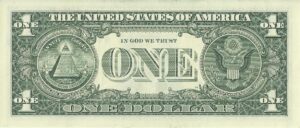
Two distinct types of notes received the Hawaii treatment. The most commonly encountered by collectors today are the Series 1935A Silver Certificates in the $1 denomination, cataloged as Friedberg 2300. These bear the standard Blue Seal of the Silver Certificate series, but that seal and the serial numbers have been overprinted in brown ink, replacing the usual blue. On the reverse, the word HAWAII is printed in large block letters, once on the left side and once on the right, and a smaller HAWAII overprint appears vertically on both ends of the face.
The higher denominations, the $5, $10, and $20, are Federal Reserve Notes of the Series 1934A vintage. These carry the standard green Federal Reserve seal on the face, but again the serial numbers appear in brown, and the distinctive HAWAII overprints appear on the reverse. The $5 notes (Fr. 2269-2270) were issued through the San Francisco Federal Reserve Bank, while the $10 (Fr. 2274-2275) and $20 (Fr. 2280-2281) notes came from the same district, reflecting the logistical realities of Pacific-theater supply chains.
The brown serial numbers and Treasury seals are the single most important identification feature. They replaced the normal colored inks to make the notes visually distinct and immediately identifiable. A teller, a soldier, or a merchant in Honolulu could glance at a bill and know at once whether it was legitimate Hawaiian emergency currency or a mainland note that should not be in circulation on the islands.
The $1 Hawaii Silver Certificate (Fr. 2300) is by far the most affordable entry point into this series, with circulated examples in Fine to Very Fine condition regularly available in the $100 to $250 range. The $20 Federal Reserve Note is the trophy piece of the series; even heavily circulated examples command $500 or more, and any note graded PMG or PCGS Very Fine 30 or better can easily exceed $1,500 at auction.
Serial Number Ranges and Production Details
The Bureau of Engraving and Printing produced Hawaii overprints in substantial but not unlimited quantities. The $1 Silver Certificates received serial numbers in the ranges beginning with the prefix letters that place them firmly within the 1935A production window. Approximately 35.2 million $1 Hawaii notes were printed, making them the most common survivors of the series today. The higher denominations were produced in far smaller numbers: roughly 9 million $5 notes, approximately 10 million $10 notes, and just under 5 million $20 notes.
There are no known star replacement notes for the Hawaii overprint series, which is a point worth emphasizing because altered notes or outright fakes bearing star designations do occasionally surface in the marketplace. Any Hawaii note offered as a star note should be treated with extreme skepticism and submitted to a third-party grading service before purchase.
The notes were placed into circulation through military and civilian banking channels beginning in late July 1942 and remained the exclusive legal tender of Hawaii until October 21, 1944, when the military government formally lifted the currency restrictions and allowed standard U.S. currency to circulate freely again. At that point, Hawaii overprint notes were gradually withdrawn, though many remained in pockets and cash registers for months afterward.
Condition Challenges and Grading Realities
Here is where the educational part of collecting Hawaii notes gets genuinely practical. These were working currency in a tropical, high-humidity environment during wartime. Many notes that survived did so because they were spent, folded, stuffed into uniform pockets, and handled by thousands of hands. The vast majority of circulated examples show honest wear consistent with their history: folds, edge rounding, and the light soiling that comes from real-world circulation.
The single most problematic issue for Hawaii note collectors is artificial pressing and cleaning. Because even modestly higher-grade examples command meaningful premiums over heavily circulated copies, unscrupulous dealers have long subjected these notes to pressing (applying heat and pressure to remove folds) and chemical washing (attempting to brighten the paper). A pressed $1 Hawaii note might look like a Very Fine to the untrained eye but will lack the natural paper crispness that grading services look for. Always buy certified examples from PCGS Currency or PMG when paying more than catalog value for any grade above Very Good.
Uncirculated Hawaii notes exist but are genuinely scarce across all denominations. When a raw, uncirculated-looking example surfaces at a coin show or estate sale, verify paper quality by gently flexing the note near the edges. Genuine uncirculated paper has a distinctive rigidity and snap. Paper that has been pressed flat will often feel slightly limp or show microscopic fiber disturbance under 10x magnification, even when the surface looks clean to the naked eye.
Key Varieties and What to Look For
Within the Hawaii series, the main collecting distinctions center on denomination and condition rather than the complex signature or plate varieties found in other twentieth-century series. On the $5, $10, and $20 Federal Reserve Notes, both the Julian-Morgenthau and Julian-Vinson signature combinations exist, reflecting the transition in Treasury Secretary from Henry Morgenthau Jr. to Fred Vinson in July 1945. However, since most Hawaii notes were withdrawn before that transition became significant in production terms, the Julian-Morgenthau pairing is the one collectors most commonly encounter.
One variety worth noting for advanced collectors is the existence of Hawaii overprint notes that show misaligned overprinting, double overprints, or partial HAWAII reverses. These are genuine error-type notes rather than intentional varieties, and they command significant premiums when authenticated. A documented double overprint on a $1 example, for instance, has sold for multiples of the standard catalog value at major auctions.
| Friedberg No. | Denomination / Type | Approx. Print Run | Rarity |
|---|---|---|---|
| Fr. 2300 | $1 Silver Certificate, Series 1935A | 35,052,000 | Common |
| Fr. 2300, CU | $1 Silver Certificate, Gem Uncirculated | Subset of above | Scarce |
| Fr. 2269 | $5 FRN, Julian-Morgenthau, SF | ~9,000,000 combined | Scarce |
| Fr. 2270 | $5 FRN, Julian-Vinson, SF | Subset of $5 run | Rare |
| Fr. 2274 | $10 FRN, Julian-Morgenthau, SF | ~10,200,000 combined | Scarce |
| Fr. 2275 | $10 FRN, Julian-Vinson, SF | Subset of $10 run | Rare |
| Fr. 2280 | $20 FRN, Julian-Morgenthau, SF | ~4,900,000 combined | Rare |
| Fr. 2281 | $20 FRN, Julian-Vinson, SF | Subset of $20 run | Key Date |
| Fr. 2300 Error | $1 Double Overprint or Misalignment | Extremely limited | Key Date |
Building a Hawaii Overprint Collection
For collectors just entering this area, the obvious starting point is the $1 Fr. 2300 in a circulated grade between Fine and Very Fine. A PMG or PCGS certified example in the VF-25 to VF-35 range typically trades between $150 and $300, making it an accessible piece with genuine historical weight. From there, stepping up to a $5 or $10 note in a similar grade requires a budget of $300 to $800, depending on signature combination and eye appeal.
A complete type set of the four denominations in mid-circulated grades represents a realistic goal for a collector with a modest annual budget. The real challenge, and the real reward for determined collectors, is assembling examples in Extremely Fine or better condition across all four denominations. Very few collectors have accomplished this, and a complete set at that level would represent a genuinely important holding.
One underappreciated collecting angle is pairing Hawaii overprint notes with their non-overprinted counterparts from the same series. A matched pair of Series 1935A $1 Silver Certificates, one standard and one Hawaii overprint, in similar grades, tells the wartime story visually and powerfully. Some collectors extend this concept to include the contemporaneous Yellow Seal North Africa notes (the other emergency currency program of World War II), creating a broader wartime emergency currency exhibit that wins awards at major shows.
When purchasing raw Hawaii notes from estate sales or non-specialist dealers, always cross-reference the serial numbers against known legitimate production ranges before submitting for certification. The Friedberg reference guide and the Standard Catalog of United States Paper Money both provide useful serial number context. While there are no definitive published lists of every known serial number, production range knowledge can help flag obvious problems immediately.
The Historical Postscript
Japan never invaded Hawaii. The Battle of Midway in June 1942, fought just days before the overprint currency began reaching Hawaiian civilians, broke the back of Japanese naval power in the Pacific and effectively ended the realistic threat of an island invasion. The emergency currency program that had been conceived in fear quietly became a fascinating historical artifact rather than a wartime necessity that was ever tested.
That historical context is part of what makes Hawaii overprint notes so compelling for collectors. They represent a plan that worked, not because it was ever activated, but because the broader strategic situation never required it. Every note in your collection is a tangible remnant of a moment when American planners genuinely believed they might need to wipe out an entire regional currency supply overnight. That is a remarkable story for a piece of paper to carry, and it is the reason these notes continue to attract new collectors eight decades after they first circulated under the shadow of war.