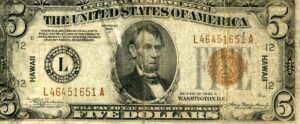
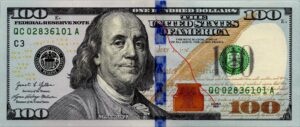
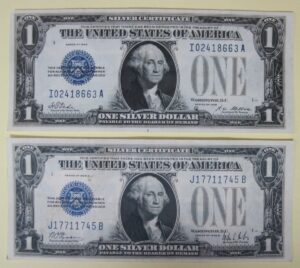
Picture this: you are searching through a stack of circulated notes at a currency show when you notice something unusual. Two consecutive serial numbers, side by side, yet one bears the signatures of Treasurer Francine Neff and Secretary William Simon, while the other carries the names of Treasurer Azie Morton and Secretary W. Michael Blumenthal. The ink is barely different. The paper is identical. But something historic happened between the printing of those two notes. You are holding a changeover pair.
What Exactly Is a Changeover Pair?
Every piece of Federal Reserve Note currency issued since 1963 bears two signatures: that of the Treasurer of the United States and the Secretary of the Treasury. When a new administration takes office, or when a cabinet position changes hands mid-term, the Bureau of Engraving and Printing (BEP) must eventually update the signature plates on the currency printing presses. This does not happen instantaneously. There is a brief overlap period during which notes with the outgoing signature combination and notes with the incoming combination are printed in close succession, often sharing nearly continuous serial number ranges.
A changeover pair, in its strictest numismatic definition, consists of two notes with consecutive serial numbers where one note displays the earlier signature combination and the immediately following note displays the new combination. This means the pair was printed at the literal boundary point of the transition. They are not simply two notes from the same general transition period; they are the specific notes that straddle the exact changeover moment. That precision is what gives them their numismatic identity and their collectible value.
It is worth noting that the serial number sequences at the BEP do not always run in perfectly neat ascending order across an entire press run. Notes are printed in sheets, and sheets from different plate combinations can be interleaved in storage. However, within a given Federal Reserve District and denomination, the BEP maintained consistent sequential numbering. A true changeover pair comes from the same district, same denomination, and carries consecutive numbers across the signature boundary.
The History Behind Signature Transitions
The modern era of collectible changeover pairs essentially begins with the introduction of the Series 1963 small-size Federal Reserve Notes. Prior to this, signature changes occurred under different printing protocols that make true consecutive-serial changeover pairs far more difficult to document. From 1963 onward, however, the Federal Reserve Note system settled into a recognizable pattern of series designations tied to signature changes, creating a framework collectors could systematically pursue.
Some transitions are particularly storied. The shift from Series 1969C (Bañuelos-Connally) to Series 1969D (Bañuelos-Shultz) in late 1972 produced changeover pairs across all twelve Federal Reserve Districts and all denominations then in production. Because Secretary Shultz replaced John Connally in June 1972 and printing continued through the end of that year, the transition window was relatively compressed, making true consecutive pairs genuinely scarce. The $1 denomination in the Boston (A) and San Francisco (L) districts proved especially difficult to locate in consecutive pairs because print runs in those districts ran out of the earlier series more quickly.
The Series 1977 to Series 1977A transition, moving from Morton-Blumenthal to Morton-Miller signatures after G. William Miller replaced W. Michael Blumenthal as Treasury Secretary in August 1979, is one of the most actively collected transitions of the modern era. The $1 notes from this period are numerous enough that dedicated collectors can still find raw examples with patience, but matching consecutive serial numbers in problem-free condition is another matter entirely.
When hunting changeover pairs, always verify both notes come from the same Federal Reserve District. The district letter prefix in the serial number must match on both notes. A Boston $1 and a New York $1 with consecutive serials are not a changeover pair, they are simply coincidence across two independent print runs.
How to Identify and Authenticate a Changeover Pair
Authentication begins with understanding the serial number structure on Federal Reserve Notes. On notes issued since 1963, the serial number contains a prefix letter identifying the Federal Reserve Bank, followed by eight digits and a suffix letter. For a changeover pair to be legitimate, both notes must share the identical prefix and suffix letters, and the eight-digit numeric portion must differ by exactly one, with the earlier signature note carrying the lower number.
Next, confirm the signature combinations. Using a resource such as the Friedberg catalog (“Paper Money of the United States” by Arthur and Ira Friedberg) or the Krause Standard Catalog, cross-reference the series designation printed on each note with the known signature combination for that series. Note that the series year printed on the face of the note does not always change with a signature transition. Sometimes the BEP continued using the same series year with a letter suffix to denote a signature change: Series 1969, 1969A, 1969B, 1969C, and 1969D are five distinct signature combinations all bearing a 1969 date.
Examine the check letters and face plate numbers on the lower left of each note. While these will not definitively prove consecutive printing for every note, dramatic discrepancies in plate numbers between two supposed consecutive-serial notes may warrant closer scrutiny, though it is not unusual for plate numbers to shift slightly during high-volume printing runs.
For high-value pairs, professional third-party grading and certification through PCGS Currency or PMG (Paper Money Guaranty) is strongly recommended. Both services will holder changeover pairs together in a single slab with appropriate notations, providing a permanent record of the pairing and protecting the notes from separation. This certification dramatically increases resale confidence and often commands a meaningful premium at auction.
PMG uses the designation “Consecutive Pair” with a changeover notation on the label when certifying these notes together. Request this specific designation when submitting, as notes certified individually lose most of their changeover pair premium even if the serial numbers are documented. Keep both notes together at all costs until they are slabbed as a unit.
The Most Sought-After Changeover Pairs by Denomination
The $1 Federal Reserve Note
The one-dollar denomination is by far the most actively collected category for changeover pairs. Print runs are large enough that examples surface with some regularity, yet the sheer volume of combinations across twelve districts and numerous transition points means there is always something new to pursue. The 1969C to 1969D transition on $1 notes is considered a benchmark for the series. In Uncirculated condition (PMG 64 or better), a complete matched district set of all twelve changeover pairs from this transition would represent a significant collection achievement. Individual pairs in Choice Uncirculated (65 EPQ) trade in the $150 to $400 range depending on district, with the New York (B) district pairs typically more available and priced lower than Chicago (G) or Minneapolis (I) examples.
The $5 and $10 Federal Reserve Notes
Mid-denomination changeover pairs are considerably more challenging to assemble because print runs are smaller and survival rates in Uncirculated condition are lower. The Series 1977 to 1977A transition on the $10 FRN produced some of the most tightly-printed changeover windows of any modern denomination. A $10 changeover pair from the Atlanta (F) district in this transition is genuinely scarce in grades above PMG 63, with auction appearances numbering in the single digits over the past decade. Values for high-grade examples in this range regularly exceed $500 for a single pair.
The $100 Federal Reserve Note
High-denomination changeover pairs occupy a rarified space. The Series 1990 to Series 1993 transition on $100 notes (moving from Villalpando-Brady to Withrow-Bentsen signatures) involved production changes that coincided with the introduction of new security features. Changeover pairs in this category in grades of PMG 65 EPQ or above are genuine rarities. Known auction results from major sales at Heritage and Stack’s Bowers have placed these pairs in the $1,200 to $3,500 range depending on district and centering quality.
Star Note Changeover Pairs: The Holy Grail
If regular changeover pairs are considered specialized, star note changeover pairs occupy an entirely different stratum of rarity. Star notes, those replacement notes bearing an asterisk in the serial number, are printed in far smaller quantities than regular notes. A star note changeover pair occurs when the BEP’s replacement note print run for a given district transitions from one signature series to another within the star note sequence, producing consecutive-serial star notes that straddle the signature boundary.
The 1969 series star note transitions are particularly celebrated. The Minneapolis (I) Federal Reserve District $1 star note run for the 1969C to 1969D transition had an estimated combined star print of fewer than 640,000 notes across both series in that district, making true consecutive star pairs from this transition extraordinarily difficult to locate. When they do appear, typically at major auction venues, they attract competitive bidding from advanced specialists and type collectors alike. The Friedberg numbers for this specific pair are Fr. 1908-I* (Series 1969C) and Fr. 1909-I* (Series 1969D).
Star note changeover pairs almost never survive in Uncirculated condition because star notes were produced specifically to replace damaged or misprinted notes, meaning they entered circulation immediately. If you encounter a claimed Uncirculated star note changeover pair, scrutinize the centering, paper quality, and serial number ink very carefully before paying a premium. Genuine Uncirculated star changeover pairs in high grade represent some of the most important modern Federal Reserve Note rarities.
Building a Systematic Changeover Pair Collection
Many collectors approach changeover pairs thematically rather than trying to complete every possible combination. One popular strategy is to focus on a single denomination across all transitions, building a type set of changeover moments in $1 notes from 1963 to the present. Another approach is district specialization: choosing a single Federal Reserve Bank, such as the Chicago (G) district, and assembling every signature transition changeover pair for that district across multiple denominations. This approach has the advantage of geographic storytelling and can be accomplished with a more focused budget.
A third collecting strategy gaining popularity among newer collectors is the administration-transition set. This approach focuses specifically on the changeover pairs that occurred when a new presidential administration took office and replaced both the Treasurer and the Secretary of the Treasury simultaneously, or in close succession. The January 1969 transition (Granahan-Fowler to Elston-Kennedy), the January 1977 transition (Neff-Simon to Morton-Blumenthal), and the January 1981 transition (Morton-Miller to Buchanan-Regan) all represent these administration-level signature breaks and carry added historical resonance for collectors interested in the intersection of political and monetary history.
| Transition (Series) | Denomination / District | Est. Surviving Pairs | Rarity |
|---|---|---|---|
| 1969C to 1969D | $1 New York (B) | Several hundred | Scarce |
| 1969C to 1969D | $1 Minneapolis (I) | Fewer than 50 known | Key Date |
| 1969C to 1969D | $1 Star, Minneapolis (I*) | Fewer than 10 known | Key Date |
| 1977 to 1977A | $1 Atlanta (F) | 100 to 200 estimated | Scarce |
| 1977 to 1977A | $10 Atlanta (F) | Fewer than 20 known | Key Date |
| 1977 to 1977A | $1 New York (B) | Several hundred | Common |
| 1981 to 1981A | $1 Chicago (G) | 150 to 300 estimated | Scarce |
| 1990 to 1993 | $100 San Francisco (L) | Fewer than 30 known | Rare |
| 1993 to 1995 | $50 Chicago (G) | Fewer than 40 known | Rare |
| 1999 to 2001 | $1 Boston (A) | 200 to 400 estimated | Scarce |
Pricing Benchmarks and Where to Buy
Changeover pairs trade at a significant premium over their individual components. A general guideline used by experienced dealers is that a certified pair in PMG 64 or better should command at least three to five times the catalog value of the individual note in comparable grade, and for key-date transitions or star note pairs, that multiplier can reach ten times or beyond. However, the market is thin and specialist-driven, meaning prices can vary considerably depending on who is bidding at a given auction.
Heritage Auctions and Stack’s Bowers Galleries handle the majority of high-grade certified changeover pairs that come to market. Searching their archived auction records is an invaluable research tool for establishing realistic price benchmarks before bidding or buying. For more affordable uncertified raw pairs in lower circulated grades, major currency shows such as the Memphis International Paper Money Show and the Chicago Paper Money Expo routinely feature dealer tables with changeover material in the $40 to $150 range for common $1 pairs. The Society of Paper Money Collectors (SPMC) publication, Paper Money, occasionally features research articles on specific transition series that can help you sharpen your focus before spending.
Storage and Preservation of Changeover Pairs
Because the entire value proposition of a changeover pair depends on the two notes remaining together and in original condition, storage deserves special attention. Ungraded pairs should be housed in a single Mylar sleeve or a top-loader designed for two notes side by side, never separated into individual holders. Label the outside of the holder clearly with both Friedberg numbers, the serial numbers, and the grade estimate. If the pair is ever separated accidentally, the changeover designation is destroyed permanently unless both notes can be relocated and the pairing re-documented.
Professional certification in a matched-pair slab from PMG or PCGS Currency is the gold standard for changeover pair preservation. These holders physically prevent separation and document the pairing on a tamper-evident label. For a pair worth more than $200 combined, the certification cost is almost always justified by the protection and market confidence it provides.
Conclusion
The changeover pair sits at the intersection of history, printing technology, and the collector’s instinct for capturing a precise moment in time. These are not simply two old notes placed next to each other. They are physical evidence of the transition of governmental authority, pressed into cotton-linen paper at a specific moment when a new name was authorized to sign the nation’s currency. Whether you are building a focused type collection of $1 transitions or hunting the ultimate prize of a high-grade star note changeover pair from the 1969 series, the discipline and knowledge required to pursue them seriously will deepen your understanding of how United States paper money is made, issued, and collected. Start with a single transition that resonates with you historically, study the serial number ranges carefully, and keep your eyes sharp at the next currency show. Your pair may be closer than you think.