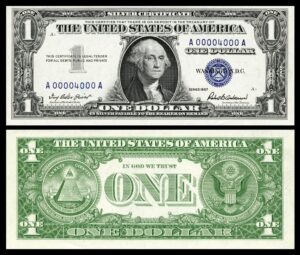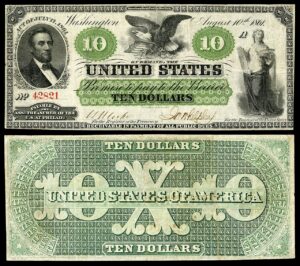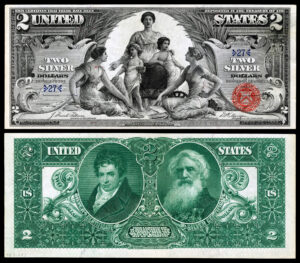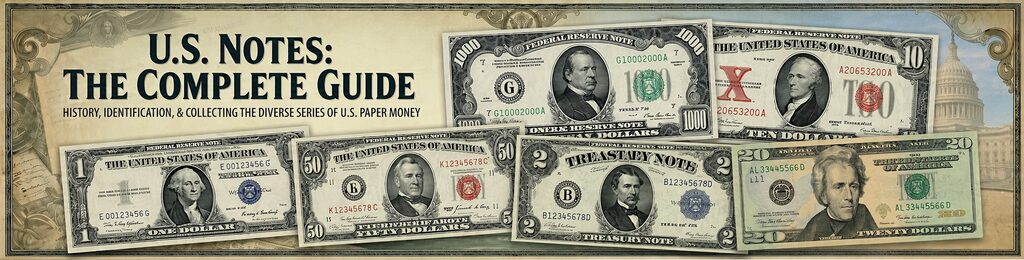
Pick up a circulated 1899 $5 Chief Silver Certificate and a freshly printed Federal Reserve Note from the same drawer. The difference in how they feel between your fingers is unmistakable, almost intimate. One has decades of human contact pressed into its fibers; the other still crackles with factory-fresh tension. That tactile quality, so difficult to articulate yet immediately obvious, is what currency graders mean when they talk about paper quality. It accounts for a surprising share of a note’s final grade, and misunderstanding it is one of the most expensive mistakes new collectors make.
The Anatomy of Currency Paper
Before you can evaluate paper quality, you need to understand what you are actually holding. Since 1879, United States currency has been printed on a proprietary blend of 75 percent cotton and 25 percent linen, manufactured exclusively by Crane and Co. of Dalton, Massachusetts. This blend was not chosen arbitrarily. Cotton fibers give the paper its characteristic strength and ability to survive repeated folding without tearing. The linen component adds stiffness and that distinctive snap when a new note is flexed. Embedded red and blue security fibers, introduced in the early 1940s, are woven randomly throughout the sheet.
Earlier large-size notes, particularly those printed before roughly 1900, used slightly heavier stock with a noticeably different feel from modern currency. Anyone who has handled an 1869 Rainbow Legal Tender Note or a Series 1875 National Bank Note knows the sensation: a thick, almost board-like rigidity that collectors call exceptional body. These early sheets were printed by private banknote companies including the American Bank Note Company and the National Bank Note Company before the Bureau of Engraving and Printing assumed full production responsibility in 1877. The paper sourced during that transition period varies in quality, which is one reason why condition census examples of Reconstruction-era notes are so prized.
Crispness: More Than Just Stiffness
Crispness is the quality most collectors think they understand, and most frequently misinterpret. A crisp note is not simply a stiff note. True crispness means the paper retains its original surface texture, the microscopic peaks and valleys of the cotton-linen weave are intact and uncompressed. Run your fingertip lightly across an uncirculated note and you can feel a very slight roughness, almost like fine linen. That texture disappears as a note circulates because human skin oils, humidity, and the pressure of folding gradually compress and smooth those surface fibers.
A pressed note can fool the eye. Humidity and a book press will temporarily restore some apparent stiffness to a circulated note, and this is precisely why professional graders flex notes and examine them under raking light rather than simply eyeballing them flat on a table. Under raking light at a low angle, an artificially pressed note will show subtle roller marks, a too-uniform flatness, and often a faint sheen where the surface fibers have been ironed down. A genuinely uncirculated note, by contrast, shows irregular micro-texture under the same conditions.
When evaluating crispness at a show or dealer table, hold the note up to a single low-angle light source, such as a desk lamp positioned about 30 degrees above the table surface. Original uncirculated paper will show a lively, irregular texture across the entire face. Pressed or washed paper looks unnaturally smooth and may show faint parallel lines from pressing equipment.
Body: The Structural Integrity of the Sheet
Body is a subtly different concept from crispness, though the two are closely related. Where crispness describes surface texture, body refers to the structural integrity and weight of the paper as a whole. A note with excellent body resists gentle bending, springs back toward flat when released, and produces an audible snap when sharply flexed between two fingers. Collectors and graders sometimes call this quality “paper life” or “paper snap.”
Body diminishes through two primary mechanisms. The first is fiber breakdown from repeated handling, which literally shortens the cotton and linen strands over time. The second is moisture absorption. Currency paper is hygroscopic; it readily absorbs atmospheric humidity. A note stored in a humid environment for decades will have lost significant body even if it was never circulated, because water molecules work their way between the cellulose fibers and weaken the hydrogen bonds that give the sheet its rigidity. This is why finding a high-grade large-size note with exceptional body from a documented dry-storage collection commands such a substantial premium.
The practical effect on grading is significant. PMG and PCGS Currency both use body as a component in determining whether a note grades in the 63-66 Choice Uncirculated range versus the 67-68 Superb Gem range. Two notes that appear identical under magnification for printing quality and surface marks can land two full grade points apart based entirely on paper body. On a key-date note like a 1928 $500 Federal Reserve Note (Friedberg 2200-2212 series), that two-point differential can represent thousands of dollars.
The snap test is simple but revealing: hold the note lightly at two opposing corners and give it a gentle, quick flex inward and outward. A note with good body will produce a crisp, relatively sharp sound and spring back immediately. A note with compromised body produces a dull, soft sound and may retain a slight curve. Never perform this test on a fragile or antique note without good reason, and always use clean, dry hands.
What “Original Paper” Actually Means
The phrase “original paper” appears constantly in auction catalogs and dealer listings, but its meaning is rarely explained. In the context of currency grading, original paper means the note has never been subjected to any artificial treatment intended to improve its apparent condition. This includes washing, pressing, ironing, chemical brightening, or the application of any sizing agent or starch to restore apparent stiffness.
The distinction matters enormously because treatments can be extremely difficult to detect visually, yet they fundamentally alter the note’s integrity as a historical artifact. Both PMG and PCGS Currency will note “apparent” or “net grade” designations when evidence of restoration is found, rather than awarding a straight grade. A note that would otherwise grade PMG 64 Choice Uncirculated but shows evidence of pressing might come back as PMG 64 Apparent, which carries a significant market discount of 30 to 60 percent compared to a straight grade example of equivalent eye appeal.
Original paper also encompasses the concept of natural aging. A note that has aged in an album or envelope over 80 years may have developed a very slight toning or color shift, particularly around the margins where it contacted the storage material. This kind of toning, provided it is even and not discolored, is considered natural and does not prevent a straight grade. The graders at PMG distinguish between “natural light toning” acceptable within a straight grade and “toning” severe enough to warrant a qualifier.
Paper Issues That Affect Grades: A Practical Field Guide
Understanding the specific defects that graders look for helps collectors evaluate notes before submission. The most common paper problems, ranked roughly by their impact on grade, include the following.
Folds and Creases
A single vertical fold through the center drops a note from the Uncirculated range to approximately Very Fine 30-35. Folds compress the paper fibers along the crease line permanently. Under magnification, you can see the fibers have been broken on one side of the crease and compressed on the other. Multiple folds, particularly intersecting folds, indicate heavy circulation and push a note into the Fine to Very Good range (F12 to VG10).
Soiling and Staining
Ink, food, or chemical stains are among the most penalizing paper defects because they are irreversible. Even small stains outside the design area can trigger a PMG or PCGS “Stains” qualifier that reduces the straight-grade value significantly. For rare notes, even stained examples command substantial prices. A stained example of the famous 1890 $1,000 Grand Watermelon Treasury Note (Friedberg 379a), for instance, still sells for six figures.
Rust and Foxing
Foxing refers to small brown or reddish-brown spots caused by fungal growth or iron-oxide contamination in the paper itself. It is particularly common on large-size notes stored in humid conditions. Light foxing may only result in a qualifier, while heavy foxing can push a note to net grade or even problem status.
Edge Tears and Splits
The cotton-linen composition makes US currency surprisingly resistant to tearing, but edge nicks and short tears do occur, particularly on notes that circulated in coin-handling environments. A tear that extends into the design field is a serious problem; an edge nick of 1-2mm on a circulated note may only result in a net grade adjustment of one to two points.
Missing Corners and Pieces
Any missing paper is a significant problem. PMG designates notes with missing pieces as “Restored” if the piece has been replaced, or assigns a heavily discounted net grade if the piece is genuinely absent. PCGS Currency uses similar language.
When buying raw (ungraded) large-size notes at auction or from dealers, always request high-resolution scans of both obverse and reverse under raking light. Artificial pressing is one of the oldest restoration tricks in the hobby, and even experienced collectors have been fooled by a well-pressed note in poor lighting. If a deal seems too good for the apparent grade, trust that instinct and look harder at the paper surface.
Paper Quality Across Different Currency Types
Not all US currency ages identically. Large-size notes printed before 1929 were produced on slightly heavier stock and typically show more dramatic body degradation over time when circulated, but surviving high-grade examples tend to have truly exceptional body because the heavier paper held up better in protected storage. Small-size notes from the 1928-1950 period were printed on slightly thinner stock and are notoriously difficult to find in Gem grades above PMG 65 because the thinner paper bruises more easily.
Star notes across all eras deserve special mention. Replacement notes, identified by the star symbol in place of a prefix letter in the serial number (or as a suffix on pre-1910 large-size notes), were typically printed in far smaller quantities than regular issues. For example, the 1995 $1 Federal Reserve Star Note from the Atlanta district had a reported print run of only 128,000 notes, making high-grade survivors with original paper genuinely scarce. Because star notes were sometimes inserted into circulation to replace damaged notes during the printing process, finding a star note with full original paper and excellent body is disproportionately difficult.
Grading Services and What They Actually Evaluate
PMG (Paper Money Guaranty) and PCGS Currency both evaluate paper quality as part of their holistic grading process, but they weight the components slightly differently. PMG uses five primary criteria: paper quality, impression quality (the depth and clarity of the intaglio printing), color (vibrancy and absence of fading), centering, and surface preservation. Paper quality, which encompasses both body and crispness, accounts for roughly 20-30 percent of the final grade determination on an uncirculated note.
On circulated notes, paper quality becomes relatively less important than the degree of circulation wear because folding and handling are the primary grade-limiting factors. However, paper problems such as staining or missing pieces continue to trigger qualifiers regardless of circulation level.
PCGS Currency grades on a similar framework but is sometimes perceived as slightly more lenient on light toning and slightly stricter on pressing evidence, a perception that has some empirical support in population report comparisons. Collectors assembling a registry set should be aware that the two services are not perfectly interchangeable in grade standards, particularly in the Gem (65-66) and Superb Gem (67-70) tiers where paper quality distinctions become most consequential.
If you are building a type set and plan to submit notes for grading, research population reports on both PMG and PCGS Currency before choosing a service. For some scarce series like 1928 Gold Certificates or early Federal Reserve Bank Notes, one service may have graded significantly more examples, giving you better context for what grade your note is likely to receive. Population reports are free to access on both services’ websites.
| Series / Friedberg No. | Denomination and Type | Approx. Known in Gem (65+) | Rarity |
|---|---|---|---|
| 1869 Fr. 27 “Rainbow” | $1 United States Note | Fewer than 12 | Key Date |
| 1890 Fr. 379a | $1,000 Treasury / Coin Note | 1 known in any straight grade | Key Date |
| 1928 Fr. 2200-2212 | $500 Federal Reserve Note | Fewer than 30 across all districts | Rare |
| 1934A Fr. 2408 | $10,000 FRN (San Francisco) | Unknown, fewer than 5 uncirculated | Key Date |
| 1995 (Star) Atlanta F* | $1 Federal Reserve Star Note | Print run 128,000; Gem survivors scarce | Rare |
| 1929 Type 1 Small NBN | $50 National Bank Note | Varies by charter; most banks, fewer than 5 | Scarce |
| 1928 Fr. 1500 | $1 Gold Certificate | Common issue; Gem survivors moderately available | Common |
| 1923 Fr. 238 | $1 Silver Certificate “Porthole” | Fewer than 20 in PMG 65 or better | Rare |
| 1928B Fr. 1602 | $2 United States Note | Relatively plentiful in Gem | Common |
| 1875 Large NBN (territorial) | $1-$20 National Bank Notes | Extremely few in any uncirculated grade | Key Date |
Storing Your Notes to Preserve Paper Quality
Understanding paper quality is not merely an academic exercise. Proper storage is the most practical application of this knowledge. Currency paper is vulnerable to three primary environmental threats: humidity, light, and acid contamination from storage materials.
Humidity should ideally be maintained between 45 and 55 percent relative humidity. Below 40 percent, paper becomes brittle and prone to cracking along fold lines. Above 60 percent, fungal growth and fiber weakening accelerate rapidly. A small digital hygrometer in your storage area costs under $20 and is one of the best investments a collector can make.
Light, particularly ultraviolet light, fades the colored inks used in Treasury seals and serial numbers. The red Treasury seals on Legal Tender notes and the blue seals on Silver Certificates are particularly vulnerable. Store notes in archival-quality holders away from direct light exposure. Mylar (polyester) currency sleeves are the current standard; avoid PVC-based plastics, which off-gas acids over time and can permanently damage paper fibers and inks.
Acid contamination from albums, envelopes, and cardboard backing is a slow killer of paper quality. Always use acid-free, archival materials. Many collectors who inherited old collections in the 1970s and 1980s have discovered notes that were once high-grade now showing brown edge toning and brittleness from decades of contact with acidic paper products.
Conclusion: Paper Quality as the Foundation of Value
Paper quality, once you train your hands and eyes to recognize it, becomes as natural a part of evaluating a note as examining the printing. The concepts of crispness, body, and original paper are not arbitrary grading-service jargon. They describe real, measurable physical properties of a historical artifact that connect you directly to the moment that note left the Bureau of Engraving and Printing. A 1923 $1 Silver Certificate in PMG 65 Gem Uncirculated with exceptional body and full original paper is not just a grade on a label. It is a 100-year-old piece of cotton and linen that has survived two world wars, the Great Depression, and a century of American life with its integrity completely intact. That is what collectors are really paying for, and why understanding paper quality is central to everything we do in this hobby.