When the BEP Forgot to Tell You Who Issued the Note
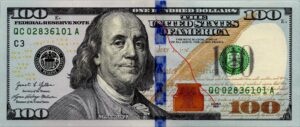
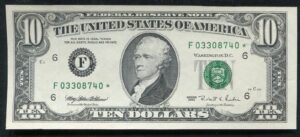
Pick up any Federal Reserve Note from your wallet and look at the left side of the face. You will see a black Federal Reserve District seal, and somewhere in the serial number, you will find a letter prefix identifying which of the twelve Federal Reserve Banks issued that note. Boston gets an A, New York gets a B, Philadelphia a C, and so on through San Francisco, which carries the letter L. That prefix letter is one of the most fundamental identifiers on a Federal Reserve Note, present on every regular issue since the series system matured in the 1930s. Which makes it all the more remarkable that a small number of Series 1988 Federal Reserve Notes escaped the Bureau of Engraving and Printing with that prefix letter missing entirely from both serial numbers.
Understanding the Serial Number Format and Why the Prefix Matters
Before diving into the error itself, it helps to understand exactly what a correct Series 1988 serial number looks like. On any standard Federal Reserve Note of this era, the serial number consists of a Federal Reserve Bank prefix letter (A through L), six or seven digits, and a suffix letter that cycles alphabetically to indicate the sequence of printing. A typical $1 note from the Richmond Federal Reserve Bank, for example, might read E12345678A. The E identifies Richmond, the digits represent the sequential position within the print run, and the trailing A indicates the first pass through that suffix cycle.
On notes with the missing district letter error, the serial number begins immediately with the numeric string and the suffix letter, producing something that looks like 12345678A on both the left and right serial number positions. No prefix letter appears at all. This is not a case of a smeared or partially printed letter. In properly documented examples, the prefix position is completely blank, and the numeric sequence begins where the letter should have been. Both serial numbers on the note are affected identically, which is consistent with how serial numbers are applied to sheets during production.
How These Errors Were Made: The Overprinting Process at the BEP
To understand how a prefix letter could go missing, you need to know how Federal Reserve Notes were produced at the Washington and Fort Worth facilities during the late 1980s. At this time, notes went through a multi-pass printing process. The face and back designs were printed in separate intaglio passes. Then, in a third overprinting stage, the black Federal Reserve District seal, the green Treasury seal, and the serial numbers were applied simultaneously by a separate press run.
The serial number numbering wheels on the overprinting press were set by hand for each print run. Each wheel position corresponded to a character in the serial number. If a press operator inadvertently failed to install the prefix letter wheel, or if an installed wheel slipped out of its proper position or failed to ink correctly, the result would be a note printed with no prefix character. Because sheets were printed in groups of 32 subjects (or 36 subjects in later configurations), an entire batch of notes could theoretically be affected before an inspector caught the problem. The notes that made it through inspection and into circulation represent the portion of the batch that escaped detection, either because inspectors missed them or because the affected sheets were mixed into larger runs.
When examining a Series 1988 note claimed to have a missing prefix letter, check both serial numbers carefully under magnification. On genuine errors, both serials will show the same anomaly: digits beginning with no letter prefix. If only one serial is affected, or if the prefix appears on one side but is smeared on the other, treat the note with skepticism and submit it to a third-party grading service before purchasing.
Series 1988 vs. Series 1988A: Keeping the Signatures Straight
Collectors sometimes conflate Series 1988 and Series 1988A, but these are distinct series with different signature combinations. Series 1988 notes bear the signatures of Treasurer Katherine Davalos Ortega and Secretary of the Treasury James A. Baker III for the earliest printing, then Ortega paired with Nicholas F. Brady when Baker left office in August 1988. Series 1988A notes carry the signatures of Treasurer Catalina Vasquez Villalpando and Secretary Brady. Most confirmed missing-prefix-letter errors on $1 notes trace to the Ortega-Brady signature pairing, suggesting the production runs involved occurred during the 1988-1989 window when those signatures were in use. This matters to specialists who want to assemble a signature-complete error note collection.
Denominations and Districts: What Has Been Confirmed
The $1 Federal Reserve Note dominates the confirmed population of Series 1988 missing-prefix errors, which makes intuitive sense: the $1 was produced in the largest quantities, giving errors more opportunity to slip through and also more opportunity to be found by alert recipients in circulation. Confirmed examples from the Boston (A), Atlanta (F), and Dallas (K) districts have appeared in auction records and dealer inventories over the years, though other districts may exist without having surfaced in the published collector market.
The $5 denomination has a much smaller confirmed population for this error type. Because $5 notes pass through hands less casually than $1 notes and were more likely to be examined by bank tellers during the early 1990s (when the notes would have been relatively fresh in circulation), fewer examples reached collector hands. Reported $20 examples with a missing district prefix from Series 1988 exist in collector lore but are difficult to verify without third-party certification, and the author urges extreme caution before spending significant money on an uncertified high-denomination missing-prefix note.
The PCGS Currency and PMG certification registries are your best friends when researching this error type. Search for “missing prefix letter” or “missing FRB letter” in their online databases. Certified examples give you population data, confirmed grades, and auction histories that are invaluable for determining fair market value before you buy or sell.
Distinguishing Genuine Errors from Altered Notes
Any error note that commands four figures at auction is going to attract counterfeiters and unscrupulous alterers. Missing prefix letter notes are particularly vulnerable to fraud because, in theory, someone could chemically bleach or abrade the prefix letter from a normal note and then offer it as a rare error. Here is what to look for when authenticating:
Paper Surface Integrity
On a genuine missing-prefix error, the paper surface in the area where the prefix letter should appear will be smooth, unaltered, and consistent with the surrounding paper. There will be no thinning, fiber disruption, glossy residue from chemical treatment, or irregular texture. Under ultraviolet light, the paper should fluoresce uniformly across the entire serial number field.
Ink Bleed and Serial Number Alignment
The intaglio overprinting process leaves a characteristic ink bleed and tactile relief on the serial numbers and seals. On genuine errors, the numeric portion of the serial number will show normal intaglio characteristics. The blank space where the prefix should be will simply be uninked paper, not paper that has been worked after the fact. If the numerals appear to begin with slightly irregular spacing, as though the wheel numbering was compensating for a missing character, that can actually support authenticity because it reflects a mechanical quirk of the numbering press.
Third-Party Certification
Submit any potential missing-prefix-letter error to PCGS Currency or PMG before purchasing at significant cost. Both services have seen enough genuine examples to authenticate confidently, and their encapsulation protects the note from further handling damage that would reduce its grade and value.
Where These Notes Surface: Auction Houses and Dealer Markets
Heritage Auctions, Stack’s Bowers, and Lyn Knight Currency Auctions have each handled certified Series 1988 missing-prefix notes over the past two decades. Heritage auction archives, which are searchable online, show that gem uncirculated (PCGS 65 PPQ or PMG 65 EPQ) examples of the $1 denomination have achieved prices in the $800 to $1,400 range at auction, with particularly dramatic or well-documented examples pushing higher. Circulated examples in the VF-30 to EF-45 range tend to realize $400 to $750, depending on eye appeal and certification.
Dealer pricing on these notes tends to run 20 to 30 percent above realized auction prices to account for the dealer’s acquisition costs and the relative difficulty of sourcing certified examples. If you encounter a Series 1988 missing-prefix note in a dealer case priced at $1,200 to $1,800 for a gem example, that is within the reasonable market range for a certified piece. Be skeptical of uncertified examples offered at steep discounts: the savings rarely justify the authentication risk.
Heritage Auctions maintains a free searchable archive of past currency auction results at ha.com. Before negotiating on any missing-prefix Series 1988 note, spend 20 minutes searching the archive for comparable certified examples. Knowing recent realized prices gives you a factual foundation for negotiation and helps you spot overpriced inventory immediately.
| Denomination / Series | District / Signature Pair | Est. Known Population | Rarity |
|---|---|---|---|
| $1 Series 1988 | Boston (A) / Ortega-Brady | Fewer than 15 certified | Rare |
| $1 Series 1988 | Atlanta (F) / Ortega-Brady | Fewer than 25 certified | Scarce |
| $1 Series 1988 | Dallas (K) / Ortega-Brady | Fewer than 20 certified | Scarce |
| $1 Series 1988 | Other Districts / Ortega-Brady | 1 to 5 per district, if confirmed | Rare |
| $1 Series 1988A | Any District / Villalpando-Brady | Extremely few confirmed | Key Date |
| $5 Series 1988 | Any District / Ortega-Brady | Fewer than 10 certified total | Rare |
| $5 Series 1988A | Any District / Villalpando-Brady | 1 to 3 confirmed | Key Date |
| $20 Series 1988 | Any District / Ortega-Brady | Unverified; fewer than 5 claimed | Key Date |
Building a Contextual Collection: Pairing the Error with Normal Examples
Experienced error note collectors often display their prize pieces in context: a normal Series 1988 $1 note from the same district alongside the missing-prefix error, perhaps accompanied by a printed enlargement of the serial number fields for visual comparison. This approach makes the error immediately legible to visitors who are not currency specialists and dramatically increases the educational and display value of the piece. If you are fortunate enough to own a missing-prefix example, consider sourcing a normal companion note from the same district and the same Ortega-Brady signature combination. Crisp uncirculated examples of normal Series 1988 $1 notes are common and inexpensive, making the companion piece an accessible addition to the display.
Some collectors take this further and pursue a district-complete set of Series 1988 error types: one confirmed missing-prefix note from each Federal Reserve Bank. This is an ambitious and likely impossible goal given the uneven geographic distribution of confirmed examples, but the pursuit itself drives fascinating research into BEP production records and auction archives. The Society of Paper Money Collectors (SPMC) and its journal, Paper Money, have published research on error note populations that provides a useful starting point for anyone serious about this collecting niche.
Conclusion: A Genuine Rarity Worth Understanding
Missing district letter errors on Series 1988 Federal Reserve Notes occupy a genuine and well-documented position in the hierarchy of modern error notes. They are not the most dramatic errors ever produced at the Bureau of Engraving and Printing, but they represent a fundamental breakdown in quality control that affects one of the note’s core identifying features. For collectors who specialize in error currency, a certified example from this series offers historical significance, visual clarity as an error type, and a compelling story about the manufacturing processes of late 1980s Federal Reserve Note production.
The keys to buying wisely in this area are straightforward: insist on third-party certification from PCGS Currency or PMG, research recent auction realized prices before negotiating, and familiarize yourself with the authentication markers that distinguish genuine printing errors from post-production alterations. Done right, adding a Series 1988 missing-prefix note to your collection is both a sound numismatic investment and a genuinely fascinating piece of American monetary history.
New to error note collecting? The best single resource for getting your bearings is Frederick J. Bart’s book “United States Paper Money Errors,” which catalogs error types, explains production causes, and provides general value guidelines. Pair it with the SPMC’s Paper Money journal archives and you will have a research foundation that most dealers will respect at the negotiating table.