📷 Image source: banknote.ws (World Banknote Gallery). Images are selected by AI to represent the article topic and may not depict the exact note(s) described.
Why the 1934A $1 Silver Certificate Stars Matter
Among the hundreds of star note varieties that collectors pursue in small-size United States currency, the Series 1934A $1 Silver Certificate stars occupy a uniquely interesting corner of the hobby. Issued under the signatures of Secretary of the Treasury Henry Morgenthau Jr. and Treasurer William Alexander Julian, these notes were printed between approximately 1942 and 1944, a period when wartime paper demands and shifting Bureau of Engraving and Printing production schedules created wildly uneven replacement note quantities across the twelve Federal Reserve districts.
The result is a series where one district’s star note is so common it turns up in every dealer’s stock, while another district’s equivalent is a genuine key date that commands serious premiums even in circulated grades. Understanding the differences requires digging into block letters, prefix ranges, and the underlying print run data that separates a $25 note from a $250 note at auction.
Understanding the Silver Certificate Star Note System
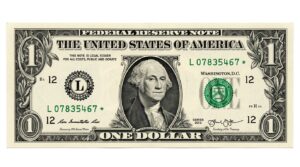
Before diving into the specific varieties, it helps to understand what a star note is and why the Federal Reserve district structure matters on these issues. A star note is a replacement note, printed with a star symbol in place of the final letter in the serial number suffix. When a sheet of currency was damaged during production or inspection, a star note replaced the defective note, ensuring that issued serial numbers remained unique.
On the Series 1934A $1 Silver Certificate, serial numbers began with a letter prefix indicating the issuing Federal Reserve Bank, followed by five digits and a letter suffix, with the star replacing that suffix on replacement notes. The twelve districts used the following prefix letters: A for Boston, B for New York, C for Philadelphia, D for Cleveland, E for Richmond, F for Atlanta, G for Chicago, H for St. Louis, I for Minneapolis, J for Kansas City, K for Dallas, and L for San Francisco. Each district ordered different quantities of regular notes and generated different volumes of defective sheets, so star note production was anything but uniform.
When examining a Series 1934A $1 Silver Certificate star note, always check the prefix letter before the serial number first. That single letter tells you which Federal Reserve district issued the note and is the single most important factor in determining its rarity. A Minneapolis (I*) star note is worth multiples of a New York (B*) example in the same grade.
The Block Letter System and What It Tells You
Beyond the district prefix, collectors track what are called serial number blocks. On the 1934A series, each district’s star notes ran from a starting serial number through a defined range, and when a block filled, a new block began. For most districts in this era, star note runs were short enough that only one block existed per district. The practical consequence for collectors is that the block letter, combined with the district prefix, defines the variety.
For the Series 1934A $1 Silver Certificate, star notes ran in the range of A00000001* through the final issued number for each district. The New York district (B prefix) had by far the largest production and consequently issued the most star notes, with estimates suggesting somewhere between 4.8 million and 5.5 million star notes bearing the B prefix across the 1934 and 1934A series combined, though isolating the 1934A figures specifically requires cross-referencing BEP delivery records. In contrast, the Minneapolis district (I prefix) issued star notes in quantities under 300,000 for the entire 1934A run, making fine-grade examples genuinely difficult to locate.
District by District: The Print Run Story
The variance in production quantities across districts is the central drama of this collecting area. Based on Bureau of Engraving and Printing production records, Federal Reserve delivery logs, and data compiled by researchers including those cited in the Standard Catalog of United States Paper Money and the work of numismatic researchers like Martin Friedberg, the following picture emerges for 1934A star notes.
The large commercial districts, particularly New York (B) and Chicago (G), dominated production. New York’s B* notes saw production runs that regularly exceeded one million notes, and the sheer volume means that circulated examples are available for $15 to $35 in grades like Very Fine 20 to Extremely Fine 40. Chicago’s G* notes are nearly as common. Richmond (E*) and Atlanta (F*) notes also appear regularly in the market, though in somewhat smaller quantities.
The story changes dramatically at the lower end of the production scale. Minneapolis (I*) star notes for the 1934A series are among the rarest in the entire run. Estimated deliveries for the Minneapolis district’s star notes in this series hover around 250,000 to 290,000 notes, and survivorship rates in collectible grades are low due to heavy circulation in the upper Midwest during the war years. Dallas (K*) and Kansas City (J*) stars are similarly scarce, with production figures in the 300,000 to 450,000 range for each district.
Do not rely solely on catalog values when buying 1934A Silver Certificate star notes from scarce districts. Because examples rarely appear at auction, published values in standard references can lag real market conditions by two or three years. Always check recent PCGS CoinFacts auction records or Heritage Auctions archives for the specific district prefix you are considering.
Grading Considerations Specific to This Issue
The 1934A $1 Silver Certificate was a workhorse note during World War II and the immediate postwar years. Heavy circulation means that the overwhelming majority of survivors grade below Very Fine. When examining these notes, pay particular attention to the four corner folds that define a Fine 12 from a Very Fine 20, the crispness of the blue Treasury seal ink, and the overall paper quality.
One issue that affects grading specifically on star notes from this series is what collectors call “counting creases,” the light parallel folds left by bank teller processing during the war period. These are distinct from standard circulation folds and can reduce an otherwise attractive note from EF-40 to VF-30 or lower. On scarce district stars where population reports show only a handful of graded examples, even VF-30 specimens command significant premiums over the standard catalog value for common districts.
PCGS Currency and PMG, the two primary third-party grading services for paper money, both hold populations for the rarer district stars like I*, K*, and L* (San Francisco) in the low single digits at grades of 58 or above. This thin population data is itself informative: it confirms that high-grade examples from these districts are genuinely rare, not simply undersubmitted.
The San Francisco Star Notes: A Case Study in Scarcity
The San Francisco Federal Reserve district (L prefix) presents a particularly interesting case for the Series 1934A star notes. The West Coast economy and banking system during the early 1940s generated substantial note circulation, but delivery records suggest that L* production for the 1934A series was constrained, with estimates ranging from approximately 280,000 to 360,000 notes. Unlike the Minneapolis notes, which circulated heavily in agricultural regions and are frequently encountered in low grades, the San Francisco stars show a somewhat better survivorship rate in mid-grades, possibly reflecting different retail banking practices. Even so, finding an L* star in grades of VF-30 or above requires patience, and EF or better examples appear at major auctions only once or twice per year.
Building a complete district set of Series 1934A $1 Silver Certificate star notes is an achievable long-term goal for a determined collector, but budget accordingly for the five scarce districts (I, J, K, L, and to a lesser extent H). Acquiring the common districts first in high grade gives you attractive display material while you save for the key pieces, and it sharpens your eye for detecting cleaned or pressed notes before you spend serious money.
Authentication Concerns and What to Watch For
Because star notes from scarce districts command meaningful premiums, they attract the two most common forms of fraud in paper money: chemically cleaned notes re-presented as original uncirculated, and altered notes where a regular serial number suffix has been modified to add a star. Both problems exist in this series.
Cleaned 1934A Silver Certificate stars can sometimes be detected by examining the paper surface under magnification: genuine original paper has a subtle texture from the cotton-linen fiber composition, while pressed or cleaned notes often show a flattened, slightly glazed surface texture. The blue seal on cleaned notes sometimes shows a faint “tide mark” around its perimeter where solvent or moisture reached the ink boundary.
Altered notes with fake stars are rarer but have appeared. Compare the star character’s ink density to the rest of the serial number under UV light and side lighting. A genuine star was printed simultaneously with the rest of the serial number and should match perfectly in ink depth and color. Third-party certification from PMG or PCGS Currency is the definitive protection for any purchase above $100.
| District / Prefix | Federal Reserve City | Est. Print Run | Rarity |
|---|---|---|---|
| A* (Boston) | Boston | Approx. 1,100,000 | Common |
| B* (New York) | New York | Approx. 5,200,000 | Common |
| C* (Philadelphia) | Philadelphia | Approx. 900,000 | Common |
| E* (Richmond) | Richmond | Approx. 1,400,000 | Common |
| F* (Atlanta) | Atlanta | Approx. 800,000 | Scarce |
| G* (Chicago) | Chicago | Approx. 3,600,000 | Common |
| H* (St. Louis) | St. Louis | Approx. 580,000 | Scarce |
| I* (Minneapolis) | Minneapolis | Approx. 270,000 | Key Date |
| J* (Kansas City) | Kansas City | Approx. 400,000 | Rare |
| K* (Dallas) | Dallas | Approx. 340,000 | Rare |
| L* (San Francisco) | San Francisco | Approx. 320,000 | Rare |
Collector Values in Today’s Market
As of current market data, Series 1934A $1 Silver Certificate star notes from common districts (B, G, A, C, E) in circulated grades of Fine to Very Fine trade in the $18 to $45 range, with Choice Uncirculated (CU-63) examples of the most common issues bringing $75 to $125. The scarce districts change the picture substantially. An H* (St. Louis) example in VF-30 might bring $90 to $140 at retail, while the same grade in I* (Minneapolis) could reach $200 to $350 depending on eye appeal and the venue. In Extremely Fine or better, Minneapolis and Dallas stars regularly exceed $400 to $600, and certified CU examples are genuinely rare enough that auction results become the only reliable price guide.
The District of Cleveland (D prefix) is notably absent from the rarity chart above because surviving production records for D* notes in the 1934A series are incomplete in the sources available, and the community of researchers has not reached consensus on the delivery figures. What is known is that Cleveland star notes appear less frequently than Boston or New York but more frequently than the scarce western and plains districts, suggesting a mid-range production figure. They trade at modest premiums over the most common issues.
Building Your Collection: Practical Strategies
For new collectors approaching this series, the most rewarding entry point is assembling a full twelve-district set in circulated grades first. This is both achievable and educational. You will immediately feel the difference in availability between hunting for a B* note versus an I* note, and the search itself teaches you the market dynamics. Budget approximately $400 to $600 to complete the common and moderately scarce districts in VF grades, then set aside a dedicated fund for the four scarce western and plains districts.
Experienced collectors often pursue a complete set in Extremely Fine or better, certified by PMG or PCGS Currency. At that level, the Minneapolis and Dallas stars become multi-year searches, and the satisfaction of completing the set is considerable. Some advanced collectors focus specifically on the star notes and try to assemble serial number runs within a single district, particularly for the common districts where consecutive or near-consecutive star serials occasionally surface from old collections.
Auction houses including Heritage, Stack’s Bowers, and Lyn Knight regularly feature 1934A star notes in their paper money sales, and setting up search alerts for specific prefix letters on major platforms is a practical tool. Dealer inventories at major shows like the FUN Convention and the Memphis International Paper Money Show consistently include examples from this series, often at prices slightly below recent auction levels for notes that have been in dealer stock for some time.
Conclusion: A Series That Rewards Careful Study
The Series 1934A $1 Silver Certificate star notes are, in many ways, an ideal collecting specialty. The series is well-documented enough that serious research is possible, yet the production records contain enough gaps and uncertainties to keep the hobby interesting. The range from easily affordable common district notes to genuinely rare key dates gives collectors at every budget level a meaningful goal. And the historical context of wartime production, with the BEP running at full capacity to supply currency for a rapidly expanding wartime economy, gives these small blue-seal notes a connection to American history that transcends their face value. Whether you are handling your first star note or adding the final I* piece to a complete graded set, the 1934A series has something to offer.