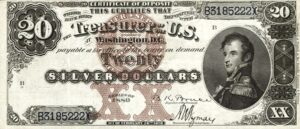
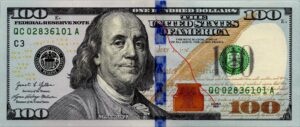
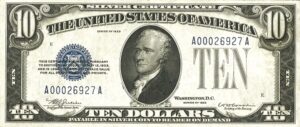
Pull two consecutive notes from the same pack and lay them face-down on your desk. Under normal circumstances, the backs of both notes face the same direction, the portrait of Lincoln or Hamilton centered identically, the Federal Reserve seal and serial numbers aligned to the same corners. Now imagine that somewhere between the overprinting press and the cutting room, a sheet of 32 notes was accidentally flipped end-for-end before the rotary or guillotine cutter made its pass. The result is something that stops experienced collectors mid-sentence: a matched pair of notes whose backs are mirror images of each other, one right-side up and one inverted, trimmed from exactly the same sheet position. These are flip-over cutting errors, and they are among the most visually dramatic production mistakes the Bureau of Engraving and Printing has ever allowed to escape into circulation.
How the BEP Prints and Cuts Modern Currency
To understand why a flip-over error even exists, you need to understand the basic production sequence at the Bureau of Engraving and Printing. Modern Federal Reserve Notes are produced in a multi-pass system. First, the back of each note is printed using wet intaglio engraving on large sheets. After drying, the sheets pass through a second intaglio press for the face. Overprinting adds the black Federal Reserve District seal, the green Treasury seal, and the serial numbers in a third pass. The sheets, which for most of the post-1996 era measure 32 subjects arranged in four columns of eight rows, are then passed through a slitter and a guillotine cutter that reduces them first to half-sheets and ultimately to individual notes, which are banded and packed in groups of 100.
The critical vulnerability in this process lives in the handoff between the overprinting room and the cutting room. Sheets travel on conveyor systems, stacked in lifts of several hundred. When a lift is repositioned, especially during shift changes, equipment maintenance, or when a jam is cleared, a stack or individual sheet can be flipped 180 degrees. If that inverted sheet re-enters the cutting queue without being caught by a quality-control inspector, the guillotine does not know or care. It cuts where it is told to cut, producing notes whose face orientation is correct relative to their serial numbers, but whose back orientation is rotated 180 degrees compared to every other note produced that run.
The Mirror-Image Pair: What It Actually Looks Like
The defining characteristic of a true flip-over cutting error pair is the back-to-back inversion between two adjacent notes. Hold note A face-up and note B face-up beside it: both fronts look normal, with serial numbers, seals, and portraits all correctly oriented. Now flip both notes over simultaneously. On note A, the back is right-side up. On note B, the back is upside down. The imagery mirrors each other across the cut edge. The Lincoln Memorial on a $5 note, for example, appears to “sink below” the baseline on one note and “float above” it on the other.
This mirroring is not a coincidence of design; it is the mathematical consequence of the sheet inversion. When position 1 on a 32-subject sheet is flipped, it now occupies the spatial position of note 32 but carries the serial number of note 1. The cutter severs that inverted sheet at the same measurement as always. The note that once shared a cutting edge with position 2 now shares it with what was printed as position 31. Every adjacent pair on that sheet becomes a mirror-image back pair.
When examining a potential flip-over pair, always check that both notes have consecutive serial numbers. A gap of even one digit suggests the notes were matched after separation, which dramatically reduces their value and raises authenticity questions. Genuinely paired flip-over errors will have serials that differ by exactly one unit.
Distinguishing Flip-Over Cuts from Other Inversion Errors
New collectors sometimes confuse flip-over cutting errors with the more famous inverted overprint errors, where the face or the green overprinting pass is applied upside down relative to the back. The two are fundamentally different in origin and appearance. An inverted overprint, such as the highly publicized Series 1985 Federal Reserve Note errors discovered in circulation in the late 1980s and early 1990s, results from a sheet being fed into the overprint press in the wrong orientation. The back and face intaglio printing are fine; only the serial numbers or seals are inverted. A flip-over cutting error, by contrast, produces notes where the entire back image is rotated 180 degrees. The intaglio engraving itself, the fine-line work, the portrait building or currency design, is inverted. The serials are correct because they were overprinted before the sheet reached the cutter.
Another error sometimes conflated with flip-over cuts is the miscut or shift error, where the cutting blade simply strays from its intended path, producing notes that are off-center, have narrow borders, or show design elements from an adjacent position. Those errors involve no inversion at all. The back and front maintain their correct rotational relationship; the blade just cut in the wrong place.
Notable Examples in the Numismatic Record
Flip-over cutting errors are rare enough that major auction appearances are genuine events. Among the most documented examples are Series 1985 $1 Federal Reserve Notes from the Atlanta Federal Reserve District (series prefix F-A), where a block of sheets apparently survived quality control and were released into circulation in Georgia and the Carolinas in 1987. Several consecutive pairs from that release have been authenticated by PMG and PCGS Currency, with grades ranging from PMG 63 Choice Uncirculated to PMG 66 Gem Uncirculated. A PMG-63 consecutive pair realized $4,800 at a Heritage Auctions floor sale in October 2014, a figure that would comfortably exceed $7,000 in today’s market given increased collector interest in mechanical errors.
Series 1993 $1 notes from the Boston district (A-A block) produced another documented flight of flip-over pairs. The Boston Consolidated Cash Office reported an anomalous batch in 1995, and at least 11 authenticated pairs are known to the major grading services as of 2024. These are particularly appealing to collectors because the 1993 series uses the Withrow-Bentsen Treasury signature combination, which itself is a shorter-run pairing than the dominant Withrow-Riegle combination of the same era.
Higher-denomination flip-over cutting errors exist but are extraordinarily scarce. A Series 1977 $10 Federal Reserve Note from the Dallas district (K series) bearing what appears to be a back inversion relative to its pack-mate was submitted to PCGS Currency in 2019 and certified as a genuine flip-over cutting error, graded PCGS 64 PPQ (Premium Paper Quality). The single note, separated from its pair before submission, realized $3,200. The consignor noted the companion note was spent in change before the error was recognized, a cautionary tale about examining currency before it leaves your hands.
If you find a note whose back appears upside down relative to the face, do not immediately assume it is a flip-over cutting error. Soaking a note to remove the back layer and reapplying it inverted is a known fraud technique. Always submit suspected inverted-back notes to PMG or PCGS Currency before purchasing or selling. Genuine errors will show consistent paper fiber alignment under magnification that rebacked fakes cannot replicate.
Authentication: What Graders Look For
The primary authentication challenge for flip-over cutting errors is the rebacking fraud mentioned above. A skilled counterfeiter can soak two circulated notes in a controlled solvent bath, separate the paper plies, and reassemble them with one back inverted. The result, to the naked eye, looks indistinguishable from a genuine production error. Certified graders combat this with several diagnostic tools.
First, paper fiber continuity: genuine BEP currency is made from a 75 percent cotton, 25 percent linen blend with embedded security threads (post-1990 notes) and red and blue synthetic fibers distributed throughout the sheet at the time of paper manufacture. Under high magnification or UV examination, the fiber distribution and thread positioning must be consistent with a single, un-manipulated sheet. Rebacked notes almost always show adhesive residue or fiber discontinuity at the paper boundary.
Second, ink penetration depth: intaglio printing forces ink into the paper fibers under tremendous pressure, typically between 5 and 15 tons per square inch on modern BEP presses. The ink sits proud of the paper surface and penetrates through a measurable portion of the sheet thickness. On a genuine flip-over error, both the face and back inks penetrate from their respective original surfaces. On a rebacked fraud, the adhesive layer interrupts normal ink penetration patterns.
Third, registration consistency: on genuine production errors, the back design is printed in perfect registration relative to the sheet margins, because the BEP printing process is mechanically precise. Rebacked fakes frequently show micro-misalignment between the margins of the face and back designs, detectable under a calibrated loupe at 10x or higher magnification.
How to Search for Flip-Over Errors in the Wild
Unscreened currency packs from bank teller drawers and ATM cassettes remain the most accessible hunting ground. Banks periodically receive banded packs of new or near-new notes directly from Federal Reserve branches. A genuine flip-over error pair will, by definition, sit adjacent to each other in the pack, because they were cut from the same sheet and bundled in sequential serial number order. This means the error will be immediately visible when you fan through a pack: one note will be face-up and appear normal, and the next note will appear face-up but its back will be inverted when the pack is fanned from that side.
Star note packs, replacement note runs issued to substitute for defective sheets, deserve particular attention. Star notes are printed in shorter runs and are subject to additional manual handling during the quality substitution process, which statistically increases the risk of a sheet inversion reaching the cutter uncorrected. The BEP’s own quality control data, published in aggregate form through Federal Reserve annual reports, suggests that mechanical cutting-room errors occur at a rate of approximately 1 in 3.2 million notes printed, though this figure encompasses all cutting errors, not flip-over inversions specifically.
Star note packs in smaller print runs, particularly those under 640,000 notes, receive more handling during production and offer statistically better odds for mechanical errors including flip-over cuts. Check the current print run data published by the BEP at moneyfactory.gov before prioritizing which packs to search.
Building a Collection Around Cutting Errors
Flip-over cutting errors do not exist in isolation. Serious collectors often build thematic collections that encompass the full spectrum of BEP cutting mistakes: fold-over cuts, where a portion of the sheet folds under itself before the blade descends; misalignment cuts that produce notes with dramatic design offsets; and flip-over inversions. The Eric P. Newman Numismatic Education Society has documented at least 14 distinct mechanical cutting error sub-types in its technical literature, and a comprehensive cutting error collection touching on six or more of those sub-types is genuinely impressive at major currency shows.
For investors rather than pure collectors, the flip-over cutting error pair commands the strongest premiums in this sub-category, consistently outpacing single inverted-back notes by multiples of three to ten in major auction results between 2010 and 2024. Higher-denomination pairs, particularly $20, $50, and $100 notes from the post-1996 era with their complex color-shifting ink designs, are especially dramatic visually and have attracted crossover interest from paper money newcomers drawn to the modern security features rendered upside down on one note of the pair.
| Series / Date | Denomination and District | Known Examples | Rarity |
|---|---|---|---|
| Series 1963-A | $1 FRN, Various Districts | Fewer than 8 authenticated singles | Rare |
| Series 1977 | $10 FRN, Dallas (K) | 1 certified single (PCGS 64 PPQ) | Key Date |
| Series 1985 | $1 FRN, Atlanta (F-A block) | Approx. 14 authenticated pairs | Scarce |
| Series 1988-A | $1 FRN, New York (B) Star | Approx. 6 authenticated pairs | Rare |
| Series 1993 | $1 FRN, Boston (A-A block) | 11 authenticated pairs known | Scarce |
| Series 1995 | $5 FRN, Chicago (G) Star | 3 authenticated pairs | Rare |
| Series 1999 | $20 FRN, San Francisco (L) | 2 certified singles, no confirmed pairs | Key Date |
| Series 2001 | $1 FRN, Multiple Districts | Wide release; 30+ singles authenticated | Scarce |
| Series 2009 | $1 FRN, Richmond (E) Star | Approx. 20 singles, 4 confirmed pairs | Scarce |
| Series 2017-A | $100 FRN, New York (B) | 1 certified pair (PMG 65 EPQ) | Key Date |
Grading Considerations Specific to Flip-Over Errors
Standard Sheldon-adjacent grading scales apply to error notes as they do to any currency, but a few nuances matter specifically for flip-over cutting errors. First, creasing from improper handling after discovery is an epidemic problem with these notes. A collector who finds a potential error in a pack sometimes bends the note backward or forward repeatedly while examining it, introducing handling creases that can drop a grade from Gem 65 to Extremely Fine 40 in a single evening of excited examination. If you suspect you have a flip-over pair, place both notes immediately in individual mylar sleeves and do not flex them further.
Second, the paper quality designation PPQ (Premium Paper Quality, used by PCGS Currency) and EPQ (Exceptional Paper Quality, used by PMG) carries additional weight for error notes because it confirms the note has not been pressed, cleaned, or chemically treated to improve appearance, processes that could theoretically be used to disguise rebacking fraud. An error note in a straight numerical grade without a paper quality designation should be viewed with appropriate skepticism.
Always request the EPQ or PPQ designation when submitting a flip-over cutting error to PMG or PCGS Currency. The presence of that designation adds significant market confidence and typically increases realized auction prices by 20 to 40 percent compared to identically graded notes without the paper quality designation. Submit both notes of a pair in a single holder if possible, as paired holders command the strongest premiums.
Conclusion: A Error Worth Pursuing
Flip-over cutting errors sit at a compelling intersection of mechanical drama and numismatic rarity. They are rare enough to be genuinely scarce but common enough that authenticated examples appear at major currency auctions several times per year, giving collectors realistic opportunities to compete for them. The mirror-image pair format makes for an extraordinarily compelling display, and the authentication challenge adds a layer of intellectual engagement that purely design-based collecting sometimes lacks.
Whether you are a new collector who just pulled a suspicious-looking note from a pack of ATM twenties, or a seasoned numismatist looking to add a mechanical error category to a Federal Reserve Note type set, the flip-over cutting error rewards careful study. Know how the BEP’s press and cutting rooms operate, understand what genuine paper fiber and ink penetration look like under magnification, insist on certified holders with paper quality designations, and keep consecutive pairs together at all costs. Do those things, and you will be positioned to recognize, authenticate, and wisely acquire one of the most visually arresting production mistakes in the history of American currency manufacturing.