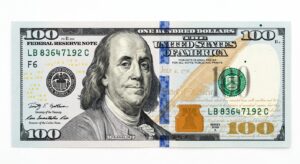
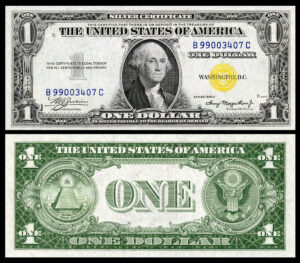
Pick up almost any major error currency reference and you will find obstruction errors occupying a special chapter, usually accompanied by photographs that make even veteran collectors do a double-take. A Federal Reserve Note with a ghostly blank patch where a serial number should be, or a denomination numeral that simply evaporates into unmarked paper, demands an explanation. These notes did not get censored. They did not survive fires or chemical baths. A chunk of foreign material sat on the paper at precisely the wrong moment during printing, and the Bureau of Engraving and Printing (BEP) quality control team missed it on the way out the door. The result is one of the most collectible and conversation-starting error categories in American numismatics.
What Exactly Is an Obstruction Error?
An obstruction error occurs when a foreign object sits on the face or back of a note during one of the BEP’s multi-pass printing stages, physically preventing ink from contacting the paper. The result is a clean, unprinted area that mirrors the size and rough shape of whatever caused the blockage. Once the obstruction falls away or is removed, subsequent sheets print normally, which is why obstruction errors tend to appear on isolated notes within a sheet rather than running across an entire run.
It is critical to distinguish obstructions from ink-void errors caused by foldovers or insufficient ink delivery. In a true obstruction error, the paper substrate beneath the blocked area is fully intact and clean. There is no crease, no thinning, and no sign that the paper itself was damaged. The blank area is simply unprinted. This distinction matters enormously during authentication, and it is the first thing a PCGS Currency or PMG grader will examine under magnification.
The Three-Stage Printing Process and Where Obstructions Strike
Modern Federal Reserve Notes are printed in three distinct stages at the BEP facilities in Washington, D.C., and Fort Worth, Texas. The first stage applies the back design using offset lithography. The second stage adds the face design using intaglio printing, the raised-ink process responsible for the tactile quality you feel when running a thumb across a fresh note. The third stage, sometimes called the overprint or letterpress stage, applies the Federal Reserve seal, district letter and number, serial numbers, and Treasury seal.
Obstruction errors can technically occur at any stage, but third-stage obstructions are by far the most frequently encountered and the most visually obvious to collectors. When debris sits on a note during the overprint pass, the serial numbers, seals, or Federal Reserve identifiers are partially or entirely missing. A Series 1985 $1 Federal Reserve Note, for example, might show the face design in perfect condition while one or both serial numbers are almost entirely absent, replaced by blank paper that precisely matches the dimensions of the obstructing material.
First-stage (back) and second-stage (face) obstructions are considerably rarer because the BEP’s inspection protocols catch more anomalies at those earlier passes. When they do escape, they command substantially higher premiums. A note with a missing portion of the back design, say an incomplete Federal Reserve Building or a ghostly blank where the large green ONE should appear on a $1 note, is a legitimately uncommon find.
Always examine both sides of any suspected obstruction error under a 5x loupe or stereo microscope. A blank area on the face that corresponds to a slight surface irregularity on the back may indicate a fold-over error rather than a true obstruction. Fold-overs and obstructions are both collectible, but they are cataloged differently and priced differently at auction.
Common Obstruction Culprits: What Was Actually Blocking the Ink?
BEP insiders and error currency researchers have identified several recurring categories of obstruction material. Pressure-sensitive tape is among the most common, producing obstructions with sharply defined, rectangular blank areas. Tape obstructions occasionally leave a faint adhesive residue on the unprinted zone, which is actually a useful authentication detail. When you see a pristine blank patch with clean, straight edges on a note graded by PMG or PCGS Currency, a tape obstruction is the probable explanation.
Folded paper scraps and trimmed selvage from nearby sheets produce irregularly shaped blank areas. These are often more visually dramatic because the missing print area does not conform to any geometric template, cutting through lettering, portraits, or scrollwork in unpredictable ways. A $20 Federal Reserve Note from the Series 1996 redesign era with Andrew Jackson’s portrait partially blanked by an irregular paper obstruction is the kind of note that stops a bourse table cold.
Currency bands and rubber bands have also been implicated, typically producing long, narrow blank strips that run horizontally or diagonally across a note. These are slightly less common than tape obstructions but tend to affect a larger surface area, which collectors generally view as a positive attribute since more missing print equals more visual drama and, usually, more value.
When purchasing a raw (ungraded) obstruction error, use a UV light to check for adhesive contamination in the blank area. Light adhesive residue that fluoresces under UV is consistent with a genuine tape obstruction. Chemical cleaning or artificial alteration typically produces a different fluorescence pattern and may affect the note’s surface in ways visible at an angle under raking light.
Authentication Red Flags: Altered Notes Disguised as Obstructions
The market for dramatic error notes has inevitably attracted fakes. The most commonly encountered fraudulent obstruction is a note that has had ink chemically removed or bleached from a specific area to simulate a missing print zone. These altered notes can fool the eye but rarely survive professional grading. Telltale signs include paper fiber disruption in the blank zone, inconsistent surface sheen where chemicals disturbed the sizing of the substrate, and a slight color change in the paper itself, which should be a bright, consistent cream or pale green rather than yellowed or mottled.
A second category of fraudulent obstruction involves layering: someone affixes a piece of paper or tape to a note and presents it as an unobstructed note with the obstruction material still in place. Legitimate in-situ obstructions, where the foreign material is still attached to the note, do exist and are highly desirable to specialists. However, they are exceedingly rare and should be approached with extraordinary skepticism unless accompanied by third-party grading from PMG or PCGS Currency. Both services will encapsulate in-situ obstruction errors with detailed attribution when the material can be verified as original.
Notable Examples and Their Market Performance
The auction record landscape for obstruction errors is illuminating. A Series 1977 $10 Federal Reserve Note from the Boston district (A-block) with a massive tape obstruction covering approximately 40 percent of the face design, including nearly the entire serial number and Federal Reserve seal, realized $2,640 in a 2019 Heritage Auctions sale in PMG Very Fine 25 grade. The note’s condition was somewhat compromised by circulation wear, yet the sheer size of the missing print area drove bidding well above pre-sale estimates.
On the smaller end, a Series 1988A $1 Federal Reserve Note with a narrow band obstruction affecting only one serial number sold at a 2021 Stack’s Bowers auction for $204 in PMG Extremely Fine 40. This illustrates an important pricing principle: size and location of the missing print matter more than denomination in most cases. A $1 note with half its overprint missing will consistently outperform a $5 note with a minor serial number gap.
Higher denomination obstruction errors occupy rarefied territory. A Series 2006 $100 Federal Reserve Note with a dramatic face obstruction eliminating Benjamin Franklin’s portrait and a large portion of the fine-line printing surrounding it was awarded PMG Choice Uncirculated 64 and sold privately in 2022 for an estimated $4,200 to $4,500, according to dealer reports shared in the Paper Money Collectors Network forums. High-denomination uncirculated obstruction errors from the post-1996 redesign series are genuinely difficult to find because the enhanced security printing features on those notes make BEP inspection more rigorous.
Focus your obstruction error searches on CU (Circulated Uncirculated) 63 and better examples when budget allows. An obstruction error in PMG Fine 12 tells a partial story; an obstruction error in PMG Gem CU 65 EPQ tells the complete story of a printing accident that somehow bypassed every BEP quality control checkpoint and reached circulation without ever being spent. That narrative commands a premium and tends to hold value better over time.
Obstruction Errors on Star Notes: A Double Premium
When an obstruction error appears on a star note replacement, the collecting world takes serious notice. Star notes are already low-print-run substitutes for defective notes, so finding one that itself exhibits a dramatic printing error creates a kind of numismatic contradiction that collectors find irresistible. A Series 1995 $1 star note from the Atlanta district (F-F* block) with any obstruction error would be genuinely exceptional, given that the 1995 Atlanta star run totaled only 128,000 notes, making it one of the key dates in modern small-size currency. No confirmed examples with obstruction errors from that specific run have been publicly auctioned, but hypothetically such a note would represent a five-figure conversation piece at minimum.
More accessible examples include star note obstructions from high-print districts like New York (B*) and Chicago (G*) from Series 1981 through 1995, where star print runs were larger and the statistical probability of an obstruction escaping QC is somewhat higher. These still command a 30 to 60 percent premium over equivalent non-star obstruction errors.
| Series / Date | Error Type / Denomination | Approx. Known Examples | Rarity |
|---|---|---|---|
| 1963 and earlier | Any obstruction, any denomination | Fewer than 20 confirmed | Key Date |
| 1969 series | Back obstruction, $1 FRN | Approximately 8-15 known | Rare |
| 1977 series | Face obstruction, $10 FRN | 25-40 estimated | Rare |
| 1981-1985 series | Overprint obstruction, $1 FRN | 75-150 estimated | Scarce |
| 1988A series | Partial serial obstruction, $1-$5 FRN | 100-200 estimated | Scarce |
| 1993-1995 series | Overprint obstruction, $1 star note | Fewer than 30 confirmed | Rare |
| 1996 redesign series | Face obstruction, $20-$100 FRN | 10-20 known | Rare |
| 2004-2006 series | Any obstruction, $50-$100 FRN | Fewer than 15 confirmed | Key Date |
| 2009-present | Overprint obstruction, $1-$20 FRN | Ongoing, 50-100 estimated | Scarce |
Grading Considerations Specific to Obstruction Errors
Both PMG and PCGS Currency grade obstruction errors on the condition of the host note using standard criteria, but they also provide an error description on the holder label that influences secondary market value independent of the numeric grade. A PMG holder reading “Obstruction Error, Face” on a Series 1981A $20 note graded VF 30 is more desirable than an identical note graded VF 30 with a holder reading “Obstruction Error, Partial Serial Number” simply because face obstructions are rarer and more dramatic than overprint obstructions.
The EPQ (Exceptional Paper Quality) designation from PMG is worth pursuing for obstruction errors because it confirms the paper has not been pressed, cleaned, or otherwise artificially enhanced. Since the blank area of an obstruction error might superficially resemble a chemically treated zone to the uninitiated, the EPQ designation provides important market confidence and can add 15 to 25 percent to realized prices based on Heritage Auctions data from 2018 through 2023.
Building a Collection Around Obstruction Errors
For collectors approaching this error category systematically, several strategies have proven effective. One popular approach is assembling a type set: one obstruction error from each printing stage (back, face, overprint), demonstrating all three varieties with well-attributed examples. Another approach focuses on a single denomination across multiple series, documenting how obstruction errors manifest differently as BEP printing technology evolved from the flat-bed intaglio processes of the 1960s through the modern high-speed rotary presses used today.
Budget-conscious collectors should know that overprint obstructions affecting only one serial number on common $1 Federal Reserve Notes from Series 1981 through 1995 can still be found in the $150 to $350 range in circulated grades, and occasionally raw examples surface at coin shows without full market pricing applied. These entry-level pieces are genuine errors, fully attributable, and represent excellent value as both display pieces and long-term holdings in a well-rounded error currency collection.
Conclusion: Compelling Errors With Room to Grow
Obstruction errors sit at an interesting crossroads in the error currency market. They are dramatic enough to attract general collectors who might not otherwise specialize in paper money, technically complex enough to reward serious study, and varied enough in scale and denomination that collectors at virtually every budget level can participate. The market has shown steady appreciation for high-grade, large-obstruction examples over the past decade, while more modest pieces remain accessible. Whether you are hunting for a showcase piece for your next paper money exhibit or simply want to add a genuinely unusual note to a general error collection, obstruction errors deliver exceptional numismatic value per dollar spent, provided you buy authenticated examples and understand exactly what caused that intriguing blank patch in the first place.