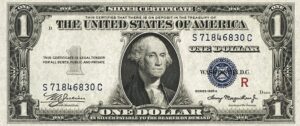
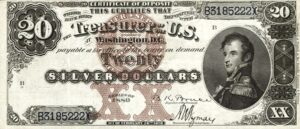
Pick up a folded-over corner error note for the first time and you will immediately understand why these pieces stop collectors cold. One corner of the note folds back onto itself before the sheet enters the press, leaving a crisp white triangle of blank paper where portraiture, vignettes, Treasury seals, and serial numbers should appear. When the note is unfolded, that triangle snaps back revealing an unprinted mirror image of the surrounding design pressed in reverse against the fold. Few error types communicate the chaos of a high-speed Bureau of Engraving and Printing (BEP) production run quite so immediately or so dramatically.
Anatomy of a Folded-Over Corner Error
To understand what you are holding, you need to visualize the BEP sheet room. Currency is printed on large sheets (32-subject sheets are the modern standard for Federal Reserve Notes) fed through intaglio and offset presses at high speed. Between press passes, sheets move through drying racks and counting equipment. If a corner of a sheet catches on a guide rail, buckles from humidity, or gets nudged by an adjacent sheet, it can fold over. The folded corner rides through the press along with the rest of the note, the ink deposits on the surface that is actually face-up, and the hidden area beneath the fold receives nothing.
When the fold is released, the result is a triangular blank zone on the printed face. Critically, collectors almost always find an offsetting clue on the opposite side of the fold: a faint reverse impression of whatever design element would have printed there, ghosted onto the back of the fold flap. This ghost impression, sometimes called a strike-through reverse offset, is one of the most important authentication markers distinguishing a genuine pre-print fold from a post-issue alteration where someone creases a note and trims or bleaches a corner.
How the Fold Location Changes Everything
Not all folded corner errors are created equal. The value and visual drama of a piece depend heavily on three variables: which corner folded, how large the triangle is, and at what stage in the multi-pass printing process the fold occurred.
Corner Placement
A fold affecting a lower right corner on a Federal Reserve Note typically obscures part of the Federal Reserve District seal and the series year, both printed during the green back pass and the black face pass. That same-sized fold at the upper left corner may swallow the entire portrait of the note’s subject, producing a dramatically blank face. Portrait-obscuring folds at the upper corners almost always command premium prices. A 2006 series $20 Federal Reserve Note with a large folded corner eliminating most of Andrew Jackson’s portrait sold at a Heritage Auctions event in 2019 for $840 in Very Fine condition, more than double what a corner fold affecting only the district seal would have brought.
Stage of Printing
Modern Federal Reserve Notes go through multiple printing stages: the back face (Series 1996 and later notes receive an offset lithography back printing first), then the intaglio face printing, and finally the overprinting pass that adds Treasury seals, Federal Reserve seals, district letters, and serial numbers. A fold that occurs before the very first pass leaves the triangle completely blank on both the back and the face. A fold that happens after the back is printed but before the face printing leaves the triangle showing the back design in reverse on the flap but blank on the face. A fold that happens after both intaglio passes but before overprinting leaves the triangle missing only seals and serials, which is actually the least dramatic and least valuable configuration.
Always gently and carefully unfold a folded-corner error to examine the flap interior before purchasing. The presence of a faint reverse offset impression on the inner surface of the flap is strong evidence of authenticity. If the inner flap is totally clean with no trace of ink transfer and the crease looks artificially sharp or chemically treated, treat the note with suspicion and seek third-party authentication before committing.
Size Matters: Measuring the Triangle
Collectors and dealers measure folded-corner errors by the length of each leg of the triangle, usually expressed in millimeters or fractions of an inch. The hobby has informally settled on three tiers. Small folds run up to about 12mm per leg and generally affect only border elements or corner numerals. Mid-size folds from 13mm to 25mm begin to intrude on major design elements and serial numbers. Large folds above 25mm per leg can eliminate portraits, Federal Reserve seals, or substantial portions of the back vignette entirely. Anything above 30mm per leg is considered a superb specimen. A $1 Federal Reserve Note from the 1995 series with a 34mm fold at the upper left corner that completely eliminated the portrait of George Washington sold for $1,320 at a Stack’s Bowers auction in 2021.
Denomination and Series Considerations
Higher denominations do not automatically mean higher error premiums. The error community values visual drama and rarity of surviving specimens more than face value. That said, a large folded corner on a $100 note carries added cachet because the complex design of Benjamin Franklin’s portrait and the Liberty Bell vignette creates more striking visual contrast between the printed and blank areas. Series 1996 through Series 2009 $100 notes are particularly popular for error collectors because the large-head portrait redesign maximized the visual impact of any fold affecting the upper center of the note.
Small denomination errors, especially $1 Federal Reserve Notes, survive in greater numbers simply because lower denomination notes circulate more widely and are scrutinized less carefully, meaning errors slip past cashiers and into collections. The $1 Series 1995 notes printed at the Fort Worth facility (identified by the small “FW” plate position indicator) are among the most commonly seen folded corner errors on the market today, appearing several times per year at major auctions.
When building a type set of folded-corner errors, consider anchoring the collection around a single denomination and varying the fold size and placement rather than chasing one of every denomination. A curated set of five or six $1 notes showing progressively larger and more dramatic folds tells a compelling story and is far more achievable on a modest budget than hunting across multiple denominations.
Authentication: Real Errors Versus Faked Folds
Because folded-corner errors look simple to fake, experienced collectors apply a checklist before spending serious money on an unslabbed example.
First, examine the crease under magnification. A genuine pre-print fold compresses the paper fibers along the fold line during the printing pressure of the intaglio press, producing a crease that is embedded into the paper structure rather than simply sitting on the surface. A post-issue fold made by hand typically shows surface fiber disruption but lacks the deep compression characteristic of passing under several tons of intaglio printing pressure.
Second, check ink behavior at the crease edge. On genuine errors, ink from the printed areas butts directly up against the blank triangle along a clean line at the fold. The ink does not feather or trail into the blank zone. A chemically bleached fake often shows subtle ink ghosting at the boundary or uneven surface sheen where the bleach interacted with the paper sizing.
Third, look for the reverse offset inside the flap. This is the single most reliable authentication marker. A genuine fold that went through the press will almost always show at least a partial blind embossing or faint ink transfer on the inside of the flap corresponding to the design element that was printing on the adjacent area of the sheet at that moment.
Third-party authentication by PMG (Paper Money Guaranty) or PCGS Currency is strongly recommended for any folded-corner error valued above $300. Both services note the error type on the holder label and add a meaningful liquidity premium at resale. PMG uses the notation “Butterfly Fold” for certain folded errors and “Pre-Print Fold” or “Printed Fold” depending on exactly when in the production sequence the fold occurred, so reading the label carefully informs you about which printing pass was affected.
Grading Nuances Specific to Fold Errors
Grading a folded-corner error involves a nuanced judgment that differs from grading a standard circulated note. The fold itself is a manufacturing defect, not a circulation defect, and PMG and PCGS Currency both have written policies specifying that they grade the paper condition independently of the error itself. A note can therefore earn a grade of PMG 64 Choice Uncirculated EPQ while still displaying a dramatic folded corner. The EPQ (Exceptional Paper Quality) designation is particularly meaningful on error notes because it confirms the note shows no post-manufacture moisture damage, tape, or cleaning, all of which are death sentences for error premiums.
Do not attempt to fully unfold and flatten a folded-corner error before submitting it for grading. Grading services want to see the note in its error state. Repeatedly folding and unfolding the flap creates additional crease wear that can lower the paper quality grade. If you need to verify the inner flap for authentication purposes, do so once, gently, and leave the fold as close to its found state as possible.
Notable Examples and Auction Records
The folded-corner error market has produced several memorable results worth knowing as benchmarks. A Series 2004A $50 Federal Reserve Note from the Atlanta district with a massive 38mm corner fold that eliminated the entire left serial number block and the Federal Reserve seal graded PMG 65 EPQ and sold for $2,640 at Heritage Auctions in January 2022. A Series 1985 $20 Federal Reserve Note with a double fold (two separate corner folds on the same note, an extremely rare configuration) graded PMG 63 achieved $3,120 at Stack’s Bowers in November 2020. On the accessible end of the market, raw mid-grade folded-corner errors on $1 notes from Series 1999 through Series 2009 routinely change hands in the $150 to $350 range at currency shows and on major online platforms.
| Configuration | Denomination / Series | Fold Size | Rarity |
|---|---|---|---|
| Small corner fold, border only | $1, Series 1995-2009 | Under 12mm | Common |
| Mid-size fold, serial obscured | $1 or $5, any modern series | 13-20mm | Common |
| Large fold, seal eliminated | $1 to $20, Series 1988-2006 | 21-29mm | Scarce |
| Portrait-eliminating fold | $1 to $20, any series | 30mm+ | Rare |
| Portrait-eliminating fold | $50 or $100, Series 1996+ | 30mm+ | Rare |
| Pre-first-pass fold (totally blank triangle, both sides) | Any denomination | Any size | Rare |
| Double corner fold (two separate folds) | Any denomination | Any size | Key Date |
| Fold on $500 or $1000 note (pre-1969 high denomination) | $500 / $1000, Series 1934 | Any size | Key Date |
Storing and Displaying Folded-Corner Errors
The folded flap is the whole point of these notes, so storage requires a bit more thought than standard flat currency. Avoid rigid currency sleeves that press the flap completely flat and stress the fold crease with repeated insertion and removal. Archival-quality Mylar flips (2×2 format with the fold-tolerant gusset style) work well for raw notes. For slabbed examples, standard currency slab boxes are fine because the slab itself protects the fold geometry. Never store a raw folded-corner error loose in a box where it can be pressed under the weight of other notes.
Conclusion: A Gateway Error Type Worth Pursuing
Folded-over corner errors occupy a sweet spot in the error currency hobby. They are visually self-explanatory even to non-collectors, they exist across enough series and denominations to support a genuine specialty collection, and they span a wide enough price range to welcome both budget-conscious beginners and serious advanced collectors. Understanding how to authenticate them, how to read the printing stage from the blank triangle, and how to evaluate fold size and placement against established auction benchmarks gives any collector a real edge in identifying value that casual sellers sometimes miss. The next time you encounter a note with a stark white triangle at one corner, you will know exactly what you are looking at and exactly what questions to ask before reaching for your wallet.