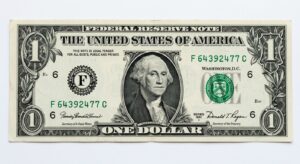
Pick up a stack of circulated Federal Reserve Notes and the odds of finding a dramatic printing error are vanishingly small. The Bureau of Engraving and Printing processes hundreds of millions of sheets annually, and its multi-stage inspection systems catch the overwhelming majority of defective notes before they ever reach a Federal Reserve Bank. Yet a small but steady trickle of ink void errors does escape into circulation every year, and when collectors find them, or when they surface at major currency auctions, they generate serious excitement. Ink voids are among the most visually striking error types in all of modern United States paper money: bold white patches, ghostly pale fields, or entire missing design elements that transform an otherwise ordinary Federal Reserve Note into a one-of-a-kind collectible.
What Exactly Is an Ink Void Error?
An ink void is a region on a printed Federal Reserve Note where ink that should be present is entirely absent or dramatically reduced. The void appears as a white or near-white patch against the surrounding printed design, and depending on the size and location, it can obscure everything from a small corner flourish to the entire portrait or a large portion of the reverse design. The term “ink void” is sometimes used interchangeably with “ink dropout,” “missing ink,” or “partial print” in auction catalogs, though strict numismatic usage distinguishes between a true void (complete absence of ink in a zone) and a partial print (reduced ink coverage that still shows faint design detail).
It is critical to understand from the outset that not every white patch on a note represents a genuine mint error. Post-printing bleaching, solvent exposure, and deliberate alteration can mimic the appearance of ink voids, and this distinction has enormous implications for value. A genuine certified ink void error on a modern $20 note might bring $500 to $1,500 at auction. The same note, if determined to be artificially altered, is worthless as a collectible and potentially fraudulent as an instrument.
The Printing Process: Where Voids Are Born
To understand ink voids, collectors need a working knowledge of the BEP’s multi-pass printing sequence for modern Federal Reserve Notes. Since the redesign era that began with the 1996 series $100 note, production has involved three distinct printing stages, each of which can produce its own void-type errors.
Stage One: Offset Lithography (Background Printing)
The first printing pass applies the fine-line background colors, the security micro-printing fields, and, on redesigned notes, the color-shifting elements and large numerals on the back of the sheet. Offset lithography uses a series of rubber-blanketed impression cylinders that transfer ink from a flat aluminum plate to the paper. Ink voids at this stage typically appear as large, softly edged pale zones because the offset process lays down relatively thin ink films over broad areas. If the ink fountain runs dry in a particular color zone, if a blanket becomes glazed or contaminated, or if the sheet feeds slightly off-register and one color zone misses the paper entirely, a void results.
Stage Two: Intaglio Printing (Portrait Side and Back Design)
Intaglio printing, the high-relief process that gives Federal Reserve Notes their distinctive tactile feel, is the stage most collectors associate with dramatic errors. The engraved steel plate is flooded with stiff, oil-based inks, wiped clean of surface ink so that only the recessed lines retain pigment, and then pressed against the paper under enormous pressure, typically around 35 tons per square inch. This extreme pressure forces the paper fibers down into the engraved lines, pulling ink out of the recesses and creating the raised ridges you can feel when you run a fingernail across a genuine note.
Ink voids in intaglio printing can result from several mechanical failures. An ink clog in a specific plate zone prevents pigment from reaching those recesses. A foreign object, such as a paper scrap, fiber, or a piece of hardened ink, can physically block ink transfer from a section of the plate to the sheet. Partially worn or improperly tempered plate zones can also fail to hold ink. Because intaglio ink is thick and richly pigmented, voids at this stage tend to be visually dramatic: the affected area will lack not only color but also the raised tactile quality that defines intaglio printing, making authentication somewhat easier.
Stage Three: Letterpress (Serial Numbers, Seals, and Overprints)
The final pass applies the Treasury seal, the Federal Reserve district seal, the serial numbers, and the series year in black and green inks. Voids in this stage produce notes missing one or both serial numbers, notes with a missing Treasury seal, or notes where the Federal Reserve district designation is absent. These overprint voids are among the most collected and command strong premiums, particularly when a complete serial number absence is certified. A 2006-series $20 note missing both serial numbers but retaining all intaglio printing, for example, realized $2,400 at a 2019 Heritage Auctions currency sale.
When examining a potential ink void error at a show or estate sale, always bring a loupe and a UV light. Under ultraviolet illumination, genuine BEP paper glows distinctively, and areas that have been chemically bleached or altered often fluoresce differently from the surrounding note. This single check eliminates the majority of fakes before you even consider the design details.
Appearance Characteristics by Void Type
Experienced collectors learn to read ink voids like diagnostic clues that point back to their production origin. Offset voids tend to have smooth, irregular edges and affect color without disturbing the paper surface texture. Intaglio voids leave the paper surface flat and unembossed in the affected zone, a telltale sign you can confirm by feeling the note in raking light. If the portrait of Andrew Jackson on a $20 note appears printed but the right cheek shows a smooth, flat patch instead of raised ink ridges, an intaglio void is the likely explanation.
Size and location are the two primary value drivers beyond mere authentication. Small corner voids affecting less than 5 percent of the design surface are relatively common and typically catalog in the $150 to $400 range in circulated condition, perhaps $500 to $800 in problem-free uncirculated grades. Voids that obscure a major design element, specifically the portrait, the building on the reverse, or a complete serial number, are dramatically rarer and command multiples of those figures. A 2013-series $100 note with a large intaglio void obliterating most of Benjamin Franklin’s portrait was certified PMG 64 Choice Uncirculated and sold for $6,800 at Stack’s Bowers in January 2022, a figure that reflects both the denomination and the dramatic visual impact of the error.
Authentication: Genuine Voids vs. Altered Notes
The authentication challenge is real and has grown more acute as UV bleaching technology has become more accessible. Genuine ink voids share several consistent characteristics that altered notes rarely replicate convincingly. First, on a genuine void, the paper fibers in the affected zone are undisturbed. Chemical bleaching, by contrast, tends to weaken fiber structure, creating a slightly translucent, tissue-paper quality in the treated area when the note is held to a strong backlight. Second, genuine intaglio voids will also lack the microscopic embossing that intaglio printing creates, something chemical bleaching cannot remove retroactively. Third, the security thread embedded in post-1990 Federal Reserve Notes runs continuously through the paper regardless of surface printing; a note with a void directly over the security thread should still show the thread intact within the void zone.
Before purchasing any ink void error worth more than $300, insist on third-party certification from PMG or PCGS Currency. Both services specifically note the error type on their holders and have examiners trained to distinguish genuine voids from bleached alterations. The certification cost of $30 to $75 per note is trivial compared to the price difference between a genuine error and an artificially altered note.
Series-Specific Notes for Collectors
Ink void errors appear across all modern series, but certain production periods have yielded more documented examples than others, often correlating with equipment transitions at the BEP’s Washington, D.C. and Fort Worth, Texas facilities. The Fort Worth plant, which opened in 1991 and now handles a significant share of production, printed its first notes with the “FW” plate position identifier beginning with the 1988A series. Equipment calibration issues during major transitions, including the introduction of the new-design $100 note in 1996 (Series 1996) and the further redesign producing the Series 2009 and 2013 $100 notes, have historically coincided with slightly elevated error escape rates.
The Series 2004A $20 note redesign, which introduced background colors to that denomination for the first time, also produced a notable number of offset-layer void errors as printers adjusted to the new multi-color offset pass. Several examples of Series 2004A $20 notes with missing peach and blue background offset printing have been certified by PMG, typically grading in the Extremely Fine to About Uncirculated range since these notes were primarily found in circulation rather than new packs.
Star note ink voids deserve special mention. When a void error occurs on a star replacement note, the already-limited print run of the star series compounds the rarity. A Series 2003A $1 Federal Reserve Note from the Boston district (A*) star series with a partial intaglio void on the back, certified PMG 65 Gem Uncirculated EPQ, sold for $3,100 at a 2021 Heritage auction, substantially more than the same error on a standard serial number note would have commanded.
Ink void errors on star notes are a powerful combination because you are effectively collecting two rare attributes simultaneously. When searching original bank-wrapped packs, always check star note packs first. The notes are already worth a small premium over standard notes, and finding a void error within a star pack is genuinely exceptional.
Notable Auction Results: A Data Survey
Auction records provide the most objective window into market values, and the past decade has produced a useful body of data. The following results are drawn from Heritage Auctions, Stack’s Bowers, and Lyn Knight Currency Auctions records from 2015 through early 2024.
A Series 1995 $1 Federal Reserve Note from the Chicago district (G) with a large back intaglio void covering approximately 40 percent of the reverse design, graded PMG 63 Choice Uncirculated, realized $840 at Heritage in 2016. A Series 2006 $10 note with a complete missing overprint (no serial numbers, no seals), graded PMG 55 About Uncirculated, brought $1,920 at Stack’s Bowers in 2018. A Series 2013 $50 note with a dramatic face intaglio void eliminating Grant’s portrait, certified PMG 64 Choice Uncirculated, sold for $4,200 at Heritage in November 2020. The previously mentioned Series 2013 $100 PMG 64 with the Franklin portrait void realized $6,800 in January 2022, setting a strong benchmark for high-denomination modern void errors in choice uncirculated condition.
At the lower end of the market, minor offset voids on $1 notes in circulated grades typically trade between $75 and $250 in dealer inventories, rarely attracting auction competition unless they are exceptionally dramatic or on star notes. The practical takeaway for collectors is that condition, denomination, void size and location, and star note status all stack multiplicatively rather than additively: each factor that upgrades a void error compounds its rarity and value substantially.
| Series / Date | Denomination and Void Type | Approx. Known / Context | Rarity |
|---|---|---|---|
| 1988A | $1 FRN, minor back intaglio void | Several dozen certified | Common |
| 1995 | $1 FRN, large back intaglio void (40%+ of reverse) | Fewer than 20 certified examples | Scarce |
| 1996 | $100 FRN, offset background void (new design transition) | Under 10 certified | Rare |
| 2003A | $1 Star Note, partial intaglio void, Boston (A*) | 3 to 5 documented | Key Date |
| 2004A | $20 FRN, missing offset background colors | Roughly 30 to 40 certified | Scarce |
| 2006 | $10 FRN, complete overprint missing (no serials, no seals) | Under 15 certified | Rare |
| 2006 | $20 FRN, missing both serial numbers only | Fewer than 25 certified | Scarce |
| 2009 | $100 FRN, face intaglio void (portrait zone) | Under 8 certified | Rare |
| 2013 | $50 FRN, Grant portrait intaglio void | Fewer than 10 certified | Rare |
| 2013 | $100 FRN, Franklin portrait intaglio void | 2 to 4 documented | Key Date |
Building a Collection Around Ink Void Errors
For collectors approaching this specialty for the first time, the most accessible entry point is the $1 Federal Reserve Note with minor back voids. These are the most frequently encountered, the most affordable, and the easiest to authenticate due to the simplicity of the $1 design. A focused collection might pursue one certified example from each Federal Reserve district (Boston through San Francisco, twelve districts total) with a documented void error, a goal that would take years and provide a genuinely educational survey of modern BEP printing practices.
More advanced collectors often pursue denomination sets: one certified ink void error for each denomination from $1 through $100. The $2 note presents a particular challenge since its infrequent printing schedule and lower circulation volume mean fewer void errors surface overall. A complete denomination set of void errors, all certified PMG or PCGS Currency, all in Uncirculated or better condition, would represent a collection of genuine numismatic significance with an estimated assembled value in the $15,000 to $25,000 range at current market prices.
Network actively with other error note collectors through the Society of Paper Money Collectors (SPMC) and its publication, Paper Money. Members regularly report newly discovered errors before they hit major auctions, and building relationships with dealers who specialize in errors means you will hear about significant voids before they appear in public sales. Some of the best ink void examples never make it to auction at all, moving directly between specialized collectors.
Conclusion: Why Ink Voids Endure as Collector Favorites
Ink void errors occupy a unique position in the United States error note market. They are dramatic enough to attract immediate attention from non-collectors, specific enough in their production origins to reward careful study, and varied enough across denominations and series to support serious long-term collecting specialization. The auction record over the past decade demonstrates consistent appreciation for the best examples, particularly portrait voids on higher denominations and complete overprint omissions on any denomination.
The keys to success in this field are the same as in any numismatic specialty: buy certified, study auction archives before spending significant sums, and prioritize visual drama and originality above all else. An ink void that makes a non-collector say “how did that happen?” is invariably the kind of error that commands the strongest long-term premiums. The BEP’s quality controls continue to improve, which means the existing population of dramatic certified void errors represents a finite and non-replenishing supply. For patient collectors, that scarcity only points in one direction over time.