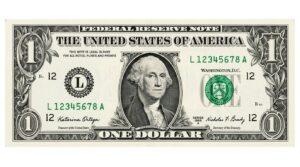
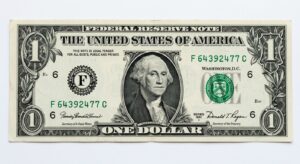
Pull a stack of circulated Federal Reserve Notes out of your collection and they all look reassuringly uniform: crisp right angles, balanced margins, a clean border all the way around. That uniformity is the product of one of the most precise industrial cutting operations in American manufacturing. The Bureau of Engraving and Printing processes millions of sheets every week through high-speed guillotine and rotary cutters calibrated to tolerances measured in fractions of a millimeter. When something goes wrong at that stage, the results range from subtle margin imbalances that only a seasoned collector would notice to spectacular butterfly folds that produce notes looking like they belong in a surrealist painting rather than a cash register. Cutting errors are among the most collected, most debated, and most misunderstood error types in U.S. paper money, and this guide covers all of it.
How U.S. Currency Gets Cut: The Production Context
Understanding cutting errors requires a brief look at the BEP’s finishing process. After intaglio printing, offset printing of serial numbers and Treasury seals, and inspection, sheets of 32 subjects move to the cutting room. The large sheets are first trimmed along their outer edges, then cut into two 16-subject half-sheets, and finally cross-cut into individual notes. The BEP uses high-speed rotary cutting equipment capable of processing thousands of notes per minute. The speed is a virtue for production efficiency, but it is precisely that speed that makes catastrophic misfeeds and fold-overs possible.
Prior to 1957, sheets were printed in smaller formats, but the modern 32-subject layout has been the standard that frames virtually every collecting discussion about cutting errors on Federal Reserve Notes. Star note sheets follow the same cutting process, which is why cutting errors on star notes carry a significant premium: the underlying print run is already smaller before you factor in the rarity of surviving errors.
Insufficient Margin Errors: The Entry Point for Collectors
The most common cutting error is the insufficient margin note, sometimes called a miscut. On a properly cut note, the BEP mandates balanced margins on all four sides. When the sheet feeds through the cutter even slightly off-register, one or more margins shrink while the opposite margins grow. A note that shows a wide margin on the left and a sliver or complete absence of a border on the right is a classic insufficient margin error.
Collectors generally classify these by severity. A note with margins measuring 1mm or less on one side is considered a minor miscut and typically trades for a modest premium, sometimes as little as $25 to $75 over face value for common series in circulated grades. When the margin disappears entirely and the design of the adjacent note on the sheet begins to intrude, the error becomes significantly more collectible. A note showing a full printed border from the neighboring subject intruding 3mm or more into the face can fetch $150 to $400 in PMG Very Fine 25 or better.
When evaluating an insufficient margin note, measure all four margins with a millimeter ruler before assigning a value. A note that appears dramatically off-center at first glance sometimes shows adequate margins on three sides, which reduces its premium compared to a note with two or three truly deficient margins simultaneously.
Some of the most visually striking insufficient margin errors come from the $1 Federal Reserve Note series of the 1970s and 1980s, simply because the volume of production was so enormous that errors escaped quality control in greater absolute numbers. Series 1977A and 1981 $1 FRNs with dramatic miscuts appear regularly at currency shows, and they make excellent entry-level pieces for new collectors because they are affordable and easy to authenticate.
Offset Cut Errors: When the Blade Misses Its Mark
An offset cut is a more severe relative of the insufficient margin error. Where a basic miscut involves the sheet feeding slightly crooked, an offset cut typically occurs when the cutting blade engages the sheet at the wrong position entirely, cropping through the printed area of one subject while leaving excess paper on another. The result is a note that may show portions of two different subjects on the same piece of paper, with the cut line running diagonally or straight through design elements.
Offset cuts from the cross-cutting stage are particularly dramatic. Because cross-cuts separate notes that sit side by side in the same row, a severe offset cross-cut can leave a note showing portions of its neighbor’s portrait or numeral. A $5 Federal Reserve Note from the Series 1995 issue that clearly displays the bottom margin and partial numeral of the adjacent note due to a cross-cut offset is the kind of piece that generates genuine excitement on the floor of a major currency convention.
Offset cut errors are sometimes confused with retained tab errors, where an uncut margin remains attached to the note. The key distinction is that a retained tab involves paper that should have been separated but was not, while an offset cut involves the blade striking the wrong location. Examine the edge carefully: a clean cut through design elements points to an offset cut, while a retained portion with a feathered or uncut edge suggests a retained tab.
The Butterfly Error: Rarest of All Cutting Mistakes
No cutting error commands more collector attention, more auction room drama, or higher prices than the butterfly fold, also known as the accordion fold error. The name is descriptive: before cutting, a sheet develops a sharp fold along one axis, somewhat like an accordion pleat. When the folded sheet passes through the cutter, the blade cuts through multiple layers of paper simultaneously. When the finished note is unfolded, it opens up to reveal a symmetrical double-image, with a mirror-image or offset impression on the reverse of the fold. The unfolded note looks, in profile, like a butterfly with wings spread.
The mechanics matter for authentication. A genuine butterfly fold error unfolds to reveal a note larger than standard dimensions, because the fold consumed some of the paper’s length. The crease line should bisect the note in a straight line consistent with the fold axis. Most importantly, the imagery on each half of the unfolded note should be consistent with adjacent subjects from the original 32-subject sheet. Counterfeit or altered butterfly errors exist in the marketplace, typically created by folding a normal note and pressing it, then submitting it for grading. Genuine butterfly errors will show ink that was deposited before the fold was made, meaning the portion of the design that printed on the underside of the fold will appear on what was previously the reverse of the adjacent note’s printing. Third-party grading services are essentially mandatory for butterfly errors due to the prevalence of fakes.
PMG-graded butterfly errors on $1 FRNs have sold at Heritage Auctions and Stack’s Bowers for figures ranging from $1,500 for minor examples to over $10,000 for dramatic, well-centered specimens with large wing spreads. A Series 1988A $1 butterfly fold graded PMG 65 EPQ (Gem Uncirculated) realized $9,600 at a 2019 Heritage auction, demonstrating the ceiling this error type can reach. On higher denominations, prices climb further: a $100 FRN butterfly fold is a genuine trophy piece.
Always submit a butterfly fold candidate to PMG or PCGS Currency before purchasing at a significant price. Genuine examples will be encapsulated with explicit notation of the error type. An unslabbed butterfly fold offered at a major price should raise immediate caution, because authentication is straightforward for the grading services and sellers of genuine pieces rarely have reason to avoid it.
Partial Back-to-Face Cutting Errors
A less-discussed but genuinely collectible subtype involves notes where a fold prior to cutting causes the reverse of one note to appear on the obverse of another. These are sometimes catalogued alongside butterfly errors but are technically distinct: the fold axis is perpendicular to the cut line, causing a flap of paper bearing back printing to appear on what should be the face. These errors often look like a note with a rectangular or trapezoidal patch of reverse printing visible on the obverse. Examples from Series 1985 and Series 1993 $1 FRNs have appeared in major collections, generally valued between $400 and $2,500 depending on the size of the affected area and the grade.
Grading Nuances Specific to Cutting Errors
Grading a cutting error requires evaluating two separate dimensions: the technical grade of the paper itself (folds, creases, soil, circulation wear) and the severity or visual drama of the error. PMG and PCGS Currency both grade errors on the standard Sheldon-derived numeric scale, but they also apply qualifiers that inform a collector about the error’s significance. A note graded PMG 64 Choice Uncirculated with a dramatic butterfly fold is a very different collecting proposition from a PMG 64 note with a minor margin shift, even though both carry the same technical grade.
For insufficient margin errors specifically, graders note the condition of the miscut edge. A clean machine cut, even through printed design elements, is preferable to a ragged or torn edge. The latter suggests the note may have been damaged post-production rather than cut in error at the BEP, which would remove the error premium entirely.
When building a type set of cutting errors, consider assembling examples by increasing severity: start with a minor insufficient margin note, add a dramatic miscut showing adjacent-subject intrusion, then work toward an offset cut, and finally add a butterfly fold as the centerpiece. This progression tells a compelling educational story and creates a display set that appeals to both new collectors and seasoned numismatists at shows and club meetings.
Series-Specific Hunting Grounds
Not all series are equally productive hunting grounds for cutting errors. High-volume series produced during periods when BEP inspection technology was less sophisticated tend to yield more escapees. The Series 1963 through 1981 $1 FRNs are particularly rich territory. The transition to the current high-speed cutting lines in the late 1980s actually increased the rate of certain fold-related errors for a period as operators adapted to the new equipment, which is why Series 1988 and 1988A notes turn up with a somewhat elevated frequency of butterfly and fold-over errors compared to adjacent series.
The Fort Worth facility, which opened in 1991 and is identified by a small “FW” prefix on Federal Reserve indicator letters for certain series, provides an interesting parallel track for error collectors. Fort Worth cutting errors from the early 1990s are documented and add a geographic dimension to a cutting error collection.
| Series / Note | Error Type | Estimated Surviving Examples | Rarity |
|---|---|---|---|
| $1 FRN Series 1963-1969 | Minor Insufficient Margin | Thousands | Common |
| $1 FRN Series 1977-1981 | Dramatic Miscut (3mm+ intrusion) | Hundreds | Scarce |
| $1 FRN Series 1988A | Butterfly Fold (minor) | 50-100 known | Rare |
| $1 FRN Series 1988A | Butterfly Fold (dramatic, Gem) | Under 20 known | Key Date |
| $5 FRN Series 1995 | Offset Cross-Cut | 30-60 known | Rare |
| $20 FRN Series 1985 | Partial Back-to-Face Fold | 20-40 known | Rare |
| $100 FRN Any Series | Butterfly Fold | Under 10 known | Key Date |
| Star Note ($1) Any Series | Butterfly Fold | Under 15 known | Key Date |
| $1 FRN Series 1993-1995 | Dramatic Miscut on Star | 100-200 known | Scarce |
Authentication Red Flags
The cutting error category unfortunately attracts a small but persistent number of altered notes. The most common manipulation involves taking a normal note, trimming one or more edges to simulate an insufficient margin, and offering it as a genuine miscut. The telltale sign of a trimmed note is the absence of deckle or machine-cut consistency along the suspicious edge: a genuine BEP cut leaves a very specific edge profile that differs from a razor blade or scissors cut. Under magnification, the paper fibers along a genuine cutting edge are compressed in a characteristic way. Any edge that shows separated paper fibers, a slightly ragged finish, or a profile inconsistent with the other three edges warrants skepticism.
For butterfly errors, as noted, the ink deposition pattern is the authentication key. An artificially folded note that was creased after printing will show clean ink on both halves with no transfer or offset where the fold bisects a design element. A genuine butterfly fold that occurred before or during printing will show distorted ink deposition at the fold line, and any design element that was printed while the paper was folded will show a sharply defined cutoff at the fold axis consistent with the geometry of the fold.
Where to Find Cutting Errors Today
Currency shows affiliated with the Professional Currency Dealers Association (PCDA) and the Paper Money Collectors of America (PMCA) remain the best live venues for examining cutting errors in hand before purchase. Major auction houses including Heritage Auctions, Stack’s Bowers, and Lyn Knight Currency Auctions regularly feature certified cutting errors in their sale archives, providing excellent price realization data for collectors researching values.
Online platforms such as eBay host enormous numbers of self-described cutting errors, and while genuine examples do appear, the platform is also where altered and trimmed notes are most frequently offered. Buying raw (uncertified) cutting errors above the $100 threshold without the ability to examine them in hand is a risk that experienced collectors generally avoid.
Building a Focused Cutting Error Collection
Cutting errors reward a focused, systematic collecting approach. A thematic collection built around a single denomination across multiple series can document the evolution of BEP production technology through its mistakes. A $1 FRN cutting error collection spanning Series 1963 through Series 2017 would illustrate how error rates and types have shifted over six decades of production. Alternatively, a collection focused exclusively on butterfly errors across all available denominations provides a showcase of the rarest cutting mistakes in the most dramatic format.
Budget-conscious collectors should know that a solid insufficient margin collection of certified examples can be assembled for well under $1,000, making this one of the more accessible specialty areas in U.S. paper money errors. The path from that foundation to a genuine butterfly fold centerpiece is a satisfying collecting journey that can span years and multiple stages of expertise.
Whether you are examining your first dramatic miscut or hunting for a Gem butterfly fold to anchor a serious error collection, cutting errors offer a uniquely physical connection to the industrial process behind every note in circulation. They are, in the most literal sense, the evidence of a perfect system caught in an imperfect moment, and that is what makes them endlessly compelling to collect.