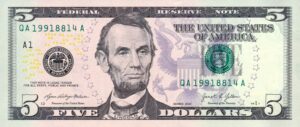
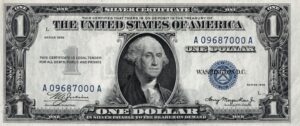
Picture a freshly printed sheet of currency paper traveling through the Bureau of Engraving and Printing’s massive intaglio presses. Before the sheet receives its second-side impression, a corner or edge folds back on itself. The press rolls on, oblivious. The result is a note that carries a ghostly white unprinted void on one face and, mirrored against it, a reversed, ink-smeared duplicate impression on the reverse. On a $1 Federal Reserve Note, that kind of drama might fetch a few hundred dollars at auction. On a $50 or $100 note, the same error can push into the tens of thousands. Foldover before printing errors on high-denomination currency sit at the intersection of printing mechanics, rarity, and raw collecting excitement, and understanding them thoroughly gives any collector a significant edge.
How a Foldover Before Printing Error Actually Happens
The Bureau of Engraving and Printing produces Federal Reserve Notes through a multi-pass printing process. Currency paper, a specialized cotton-linen blend manufactured exclusively by Crane Currency, enters the facility in large sheets. Modern BEP production uses 32-subject sheets for most denominations. The printing sequence runs roughly as follows: first, the back design is applied via offset lithography, then the face design is applied via intaglio, and finally the overprinting stage adds serial numbers, Federal Reserve seals, and Treasury seals.
A foldover before printing error occurs when a sheet of paper folds partially over itself at some point prior to one of these impression stages, most commonly before the face intaglio pass or before the overprinting pass. The folded portion is shielded from the ink, leaving an unprinted blank area once the sheet is unfolded and cut. Simultaneously, the folded flap that did receive ink carries a mirror-image offset impression on its interior surface, which becomes visible as a smeared, reversed design element when the note is examined closely.
The fold geometry determines the visual impact. A corner fold produces a triangular blank zone at one corner of the note, with a corresponding reversed design element adjacent to it. An edge fold running parallel to the long axis of the note can produce a dramatic horizontal blank stripe across the face, sometimes obscuring entire portrait elements or large portions of the back design. It is this latter variety, where a significant percentage of the note’s surface is affected, that generates the most collector enthusiasm and the highest realized prices.
When evaluating a claimed foldover before printing error, unfold the note completely and examine whether the blank area and the mirror impression align geometrically. If the blank zone on one side does not correspond to a reversed design ghost of equal size and shape, the note may be a post-printing alteration rather than a genuine BEP error. Authentic foldovers will show precise geometric symmetry between the blank and the ghost impression.
Why Denomination Matters So Much in Error Collecting
The numismatic market for error currency is fundamentally denominator-driven. A foldover before printing error that scores, say, 25 percent blank coverage on a $1 note might realize $400 to $600 at a major auction. Scale that identical error profile to a $50 Series 2004A note and you are realistically looking at $6,000 to $12,000. Put the same error on a Series 2006 $100 Federal Reserve Note and the ceiling climbs considerably higher, sometimes exceeding $30,000 for dramatic examples with portrait obscuration.
Three forces drive this denomination premium. First, face value itself: collectors and investors subconsciously anchor partly to the denomination, and the idea of a $100 bill with a major production error feels inherently more significant. Second, print run dynamics: $100 notes are produced in substantially smaller quantities relative to $1 notes, so the absolute number of error notes escaping quality control at the $100 denomination is correspondingly lower. Third, circulation culling: high-denomination notes are scrutinized more carefully at every point of circulation, from BEP quality control to Federal Reserve cash handlers to bank tellers, meaning surviving examples are genuinely rare.
Series Spotlights: $50 Foldover Errors Worth Knowing
The Series 1996 $50 Federal Reserve Note holds a particular place in foldover error collecting history. This was the first redesigned $50, featuring the enlarged off-center portrait of Ulysses S. Grant, microprinting, and color-shifting ink. Foldover errors from this series are highly desirable precisely because the new design elements, when partially blanked or ghost-reversed, create especially dramatic visual effects. The color-shifting ink on the numeral “50” in the lower right corner of the face, for instance, produces a uniquely disorienting ghost image when caught in a fold.
The Series 2004A $50 notes, printed at both the Washington, D.C. facility and the Fort Worth, Texas facility, represent another strong collecting focus. The Fort Worth notes carry a small “FW” identifier in the lower right corner of the face. A Series 2004A FW foldover before printing error combines two collectible characteristics simultaneously: the Fort Worth printing designation and the dramatic error, making these notes particularly sought after by specialists who focus on production facility varieties.
For Series 2004A $50 and $100 notes, check for the small “FW” mark in the lower right area of the face to identify Fort Worth printed notes. On an FBP error where this corner is affected by the fold, the “FW” mark may be partially or fully absent, adding an additional layer of variety interest. Document this with high-resolution photography before submitting for grading.
Series Spotlights: $100 Foldover Errors and the Benjamin Premium
The $100 Federal Reserve Note has undergone two major redesigns in the error-collecting era. The Series 1996 redesign introduced the large portrait of Benjamin Franklin, the watermark, the security thread reading “USA 100,” and color-shifting ink. Foldover errors from the 1996 through 2003 series of $100 notes are relatively scarce in the marketplace, and dramatic examples with significant portrait obscuration have sold at Heritage Auctions and Stack’s Bowers for figures well into the mid-five-figure range.
The Series 2009A $100 note, which introduced the blue 3-D security ribbon, the bell in the inkwell, and background color tones of light blue and orange, created an entirely new canvas for error collectors. When a foldover before printing error occurs on a 2009A $100 note during the face intaglio pass, the resulting blank zone sits against a background that already contains the pre-printed offset lithography colors. The contrast between the brightly colored offset-printed background and the stark white unprinted void where the intaglio impression should be is visually arresting in a way that earlier monochromatic designs could not replicate. Collectors and dealers frequently describe these as among the most visually compelling error notes ever produced at the BEP.
Serial number positioning on $100 foldover errors also merits attention. If the fold occurs before the overprinting stage, the serial numbers themselves may be partially or entirely missing from the blank zone. A $100 note with a partial serial number due to a foldover before the overprinting pass is a distinct variety from one where the fold occurred before the face intaglio impression, and knowledgeable collectors pay a premium for the former because the missing serial number digits add a dramatic, immediately visible element that casual observers notice instantly.
When purchasing high-denomination foldover errors, always request the full grading certificate number and verify it independently through the PMG or PCGS Currency online registry. High-denomination error notes attract sophisticated counterfeiters who have been known to chemically alter genuine lower-denomination errors and add the visual characteristics of higher denominations. Registry verification takes two minutes and can protect a four or five-figure investment.
Grading Foldover Errors: The Crease Problem
Every foldover before printing error carries, by definition, a fold crease in the paper. This creates an inherent tension with standard currency grading. Under normal circumstances, a sharp crease through the face of a $100 note would drop a note immediately out of uncirculated territory and into the Very Fine or Extremely Fine range. For error notes, both PMG (Paper Money Guaranty) and PCGS Currency address this by grading the note on its physical paper quality and then appending an error designation that explains the mechanical cause of the crease.
In practical terms, a $100 foldover error might receive a grade of Very Fine 30 EPQ (Exceptional Paper Quality), with the EPQ designation indicating that the paper quality is consistent with the grade and the defects present are entirely attributable to the production error rather than post-printing handling. Error collectors understand that the crease grade reflects the mechanics of how the error formed, not collector abuse, and pricing in the market reflects this nuanced understanding.
The size and severity of the fold also affect perceived desirability independently of the technical grade. A small corner fold that produces a minor blank triangle might grade higher technically than a dramatic half-sheet fold that blanks an entire portrait, but the dramatic example will almost always command the higher price. Experienced error dealers often say that in the error note market, spectacle sells, and nowhere is this truer than in high-denomination foldovers.
Authentication Red Flags and the Altered Note Problem
The significant premiums attached to $50 and $100 foldover errors have inevitably attracted fraudulent alteration attempts. The most common deception involves taking a genuine lower-denomination error note, removing the printed elements, and attempting to pass it as a higher denomination. Modern security features on $50 and $100 notes make this increasingly difficult but not impossible for sophisticated fraudsters working with chemically treated paper.
A second category of fraud involves creating artificial folds in genuine high-denomination notes by pressing or starching the paper after printing, then claiming the resulting crease and margin distortion represent a pre-printing fold. Genuine foldover errors can be distinguished from these fakes through several technical indicators: the ink impression on the folded flap should show mechanical pressure distortion consistent with press contact, the blank area should have absolutely clean paper with no ink ghosting from the design (a pressed fake will often show faint ink traces where the design was), and fiber analysis under ultraviolet light should reveal no chemical treatment of the paper surface.
Before purchasing any unslabbed high-denomination foldover error from a private seller or online marketplace, insist on examining the note under both white light and UV light. Genuine BEP errors on modern notes will show the security thread glowing pink (for $100 notes) or orange (for $50 notes) under UV regardless of which portion of the note was affected by the fold. If the thread glow is interrupted, distorted, or absent in a way that does not correspond to the geometric fold pattern, treat the note with serious suspicion.
| Series / Denomination | Variety or Printing Facility | Approx. Known Examples | Rarity |
|---|---|---|---|
| Series 1996 $100 FRN | Face Intaglio FBP, Large Portrait Obscured | Fewer than 10 confirmed | Key Date |
| Series 1996 $50 FRN | Face Intaglio FBP, Color-Shift Ink Zone Affected | 15-25 estimated | Rare |
| Series 2001 $100 FRN | Overprint FBP, Partial Serial Number Missing | 20-30 estimated | Rare |
| Series 2004A $50 FRN (FW) | Fort Worth, Face Intaglio FBP | 30-50 estimated | Rare |
| Series 2006 $100 FRN | Washington D.C., Overprint FBP | 40-70 estimated | Scarce |
| Series 2009A $100 FRN | Face Intaglio FBP, Blue Ribbon Background Contrast | 50-80 estimated | Scarce |
| Series 2013 $100 FRN | Face Intaglio FBP, Corner Fold | 80-120 estimated | Scarce |
| Series 2017A $50 FRN | Any District, Minor Corner FBP | 100+ estimated | Common (for type) |
Buying, Selling, and Valuing High-Denomination FBP Errors
The market for $50 and $100 foldover errors is small, specialized, and primarily driven by major auction houses. Heritage Auctions, Stack’s Bowers, and Lyn Knight Currency Auctions handle the majority of significant error note transactions. Prices realized at these venues provide the most reliable market data, as private dealer asking prices for error notes can vary wildly and do not always reflect actual realized values.
Several factors combine to determine the specific value of a given FBP error on a high denomination note. The percentage of the note’s surface area that is affected by the blank is perhaps the single most important visual factor. A fold that obscures 40 percent or more of the face design, particularly if it covers the portrait, will command a substantially higher premium than a small corner fold affecting only 5 to 10 percent. The stage at which the fold occurred matters too: a fold before the face intaglio impression is generally considered more dramatic and desirable than a fold before the overprinting stage, because the intaglio impression carries the primary design elements.
For collectors entering this market, it is worth noting that the combination of high face value and dramatic error creates a collecting category where condition and spectacle outweigh series date specificity to a greater degree than in many other areas of paper money collecting. A spectacular, high-impact foldover on a common Series 2013 $100 note will almost always outsell a minor corner fold on the much scarcer Series 1996 $100. This is a key distinction from, say, the star note market, where date and district rarity drive value more directly.
Building a Collection Around High-Denomination Error Notes
For collectors with the budget and patience to pursue this category seriously, a focused collection might aim to represent each major $100 design type with a corresponding foldover example: one from the pre-1996 large-portrait era, one from the 1996 redesign series, and one from the 2009A third-era design. Each represents a visually distinct note face, and foldover errors on each tell a different story about how BEP production mechanics interact with changing design complexity.
Pairing $50 and $100 foldover errors from the same series year, such as matching Series 2004A examples, creates a visually compelling two-note set that demonstrates the denomination premium visually: same error type, same approximate severity, dramatically different market values. These “matched error pairs” are uncommon and highly regarded by advanced collectors who appreciate the storytelling dimension of a well-assembled collection.
Conclusion
Foldover before printing errors on $50 and $100 Federal Reserve Notes represent one of the most compelling intersections of printing history, mechanical accident, and numismatic value in American paper money collecting. The combination of genuine rarity, dramatic visual impact, and the inherent prestige of high-denomination currency places these notes in a category that rewards careful study and patient acquisition. Whether you are adding your first error note to a general collection or building a specialized portfolio of high-denomination BEP mistakes, understanding the formation mechanics, authentication requirements, and market dynamics outlined here will serve you well every time one of these dramatic pieces crosses your path.