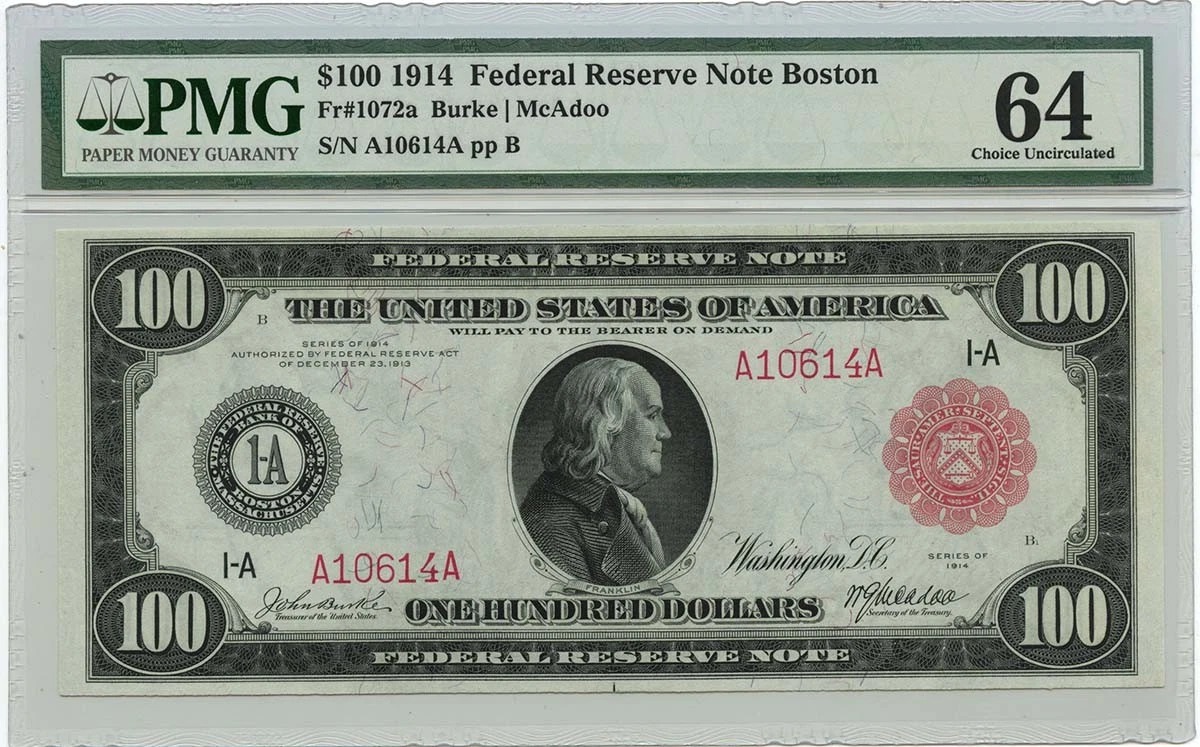
📷 Image source: eBay. Images are selected by AI to represent the article topic and may not depict the exact note(s) described.
Banking in the Ashes: The South Before District 6
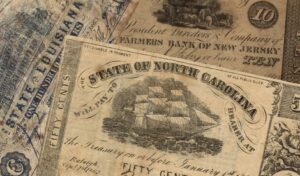
To understand why Federal Reserve Bank of Atlanta notes occupy such a fascinating place in American numismatic history, you have to travel back before the notes themselves existed. By the time Woodrow Wilson signed the Federal Reserve Act on December 23, 1913, the American South was only about four decades removed from the end of Reconstruction. The Confederate banking system had collapsed entirely in 1865. State-chartered banks across Georgia, Alabama, Mississippi, and the Carolinas had issued their own currency throughout the antebellum period, and virtually all of it became worthless overnight. The National Banking Act of 1863 and 1864 had attempted to stabilize things, but the South’s participation in the national bank system lagged far behind the North and Midwest, partly due to capital shortages and partly because of the enormous disruption the war had visited upon regional commerce.
Cotton remained king across much of the district, and cotton-dependent agriculture meant seasonal, volatile cash flows that demanded a more elastic currency than the existing system could provide. Small farmers, sharecroppers, and the merchants who supplied them operated in an economy of credit and barter more than cash. The Federal Reserve System, with its promise of an elastic currency backed by commercial paper and its mandate to smooth out regional liquidity crises, was in many ways designed with places like District 6 in mind.
The Large-Size Era: Red Seals, Blue Seals, and the Birth of Atlanta Currency
The very first Federal Reserve Notes issued in 1914 came in two distinct varieties that collectors today treat as separate series. The so-called Red Seal Federal Reserve Notes of 1914 featured a red Treasury seal and red serial numbers. They were issued in denominations of $5, $10, $20, $50, and $100, and they carried the signatures of Secretary of the Treasury William G. McAdoo and Comptroller of the Currency John Skelton Williams. For District 6, these Red Seal notes are genuinely scarce across all denominations. The $50 and $100 Red Seal Atlanta notes are considered major rarities in any grade, with very few examples documented in collector hands.
The Blue Seal (or blue serial number) Federal Reserve Notes of 1914 followed quickly and represent a far more substantial issue. The Atlanta district produced Blue Seal notes across the full denomination range, and the surviving population, while not large, gives collectors a reasonable chance of acquiring circulated examples of the lower denominations. The $5 Atlanta Blue Seal 1914 with the McAdoo-Burke signature combination, for instance, appears at auction often enough to be considered collectible at Fine to Very Fine grades, though Choice Uncirculated examples command strong premiums.
The Federal Reserve Bank Notes of 1915 and 1918 present a different collecting challenge. These notes, which were obligations of the individual Federal Reserve Banks rather than the Federal Reserve System as a whole, were issued in $1, $2, $5, $10, $20, $50, and $100 denominations. The Atlanta 1918 $1 Federal Reserve Bank Note features a portrait of George Washington on the face and an eagle on the back, and it bears the signatures of the Atlanta bank’s own officers alongside the Treasury officials. These are among the most historically evocative pieces of Atlanta currency, issued as the country was financing its involvement in World War I.
When examining large-size Atlanta Federal Reserve Notes, pay close attention to the district letter F in the seal and the numeral 6 in each corner. Counterfeits of the more valuable Red Seal issues do exist, and a loupe examination of the fine-line engraving on genuine Bureau of Engraving and Printing products will reveal a crispness that period counterfeits cannot match. Authentication by PCGS Currency or PMG is strongly recommended for any Red Seal Atlanta note above the $20 denomination.
Small-Size Notes and the Depression-Era South
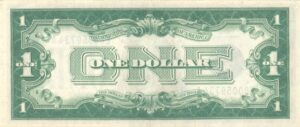
The transition to small-size currency in 1928 coincided almost exactly with the beginning of the Great Depression’s early agricultural phase. Cotton prices collapsed before the broader stock market crash of October 1929, meaning that District 6 communities were already under severe financial stress when the new currency format arrived. The small-size Federal Reserve Notes bearing the Atlanta district designation began with the Series 1928, printed in all denominations from $1 through $10,000.
For collectors, the most important thing to understand about early small-size Atlanta notes is the serial number prefix letter. All Atlanta notes carry the letter F as the prefix (or suffix in some periods) to the serial number, paired with the numeral 6 in the Federal Reserve seal. The 1928 series across all Atlanta denominations tends to show higher survival rates in circulated grades than some contemporaneous issues from other districts, partly because Southern banks were more cautious about withdrawing notes from circulation during the banking panics of the early 1930s.
The star notes, used to replace misprinted or otherwise defective notes, are a particularly rich area for Atlanta collectors. Star notes are identified by an asterisk replacing the final letter suffix in the serial number. Early small-size Atlanta star notes from the 1928 and 1934 series can have extremely low print runs relative to regular notes, and several Federal Reserve district star issues from this period are outright rarities. The 1928 $1 Atlanta star, for example, had a reported print run that collectors and researchers have debated for decades, and pristine examples are rarely offered.
Serial number research is essential for Atlanta star notes from the 1928 to 1950 era. The Bureau of Engraving and Printing production records, many of which have been digitized and are accessible through the Society of Paper Money Collectors and related resources, can tell you the precise block and print run for a given star note. Before bidding on a supposedly rare Atlanta star, verify the serial against published run data to confirm you are not looking at a common replacement block.
The Unique Regional Context: Agricultural Cycles and Currency Demand
One aspect of District 6 currency history that rarely receives attention in general numismatic literature is the way seasonal agricultural cycles affected actual note production and retirement. The Federal Reserve System was specifically designed to expand credit and currency during harvest seasons and contract it afterward. For Atlanta, this meant that the district’s member banks regularly ordered large shipments of currency in the late summer and fall to pay cotton pickers, warehouse workers, and the network of merchants who serviced agricultural communities. Notes that entered circulation during these periods often showed heavy wear within a single season.
This seasonal wear pattern has a practical implication for collectors: Atlanta notes from the 1930s and 1940s in the $1 through $10 denominations tend to cluster in lower circulated grades (Fine to Very Fine) more heavily than notes from comparable industrial districts like Chicago or New York. A truly gem uncirculated small-size Atlanta note from the late 1930s is often rarer in practice than the raw print run figures would suggest, because so many notes entered brutal circulation quickly.
Branch Bank Notes and Birmingham’s Special Role
The Atlanta district established branch banks in Birmingham, Jacksonville, Nashville, and New Orleans, and later in Miami. Some large-size Federal Reserve Bank Notes were issued bearing branch city names rather than Atlanta itself. A small number of 1915 and 1918 series notes exist with New Orleans branch designations under the District 6 umbrella, and these are among the more unusual pieces available to dedicated collectors. The New Orleans branch notes create a fascinating overlap with the historic currency culture of Louisiana, a state with one of the richest paper money traditions in North American history predating even the Civil War.
If you are building a district set of Federal Reserve currency, consider whether you want to represent branch bank issues separately from the main Atlanta notes. Including New Orleans branch notes in a District 6 collection adds both visual interest and historical depth, telling the story of a district that spanned radically different economic subregions, from the cotton belt of Georgia and Alabama to the port economy of Louisiana.
Signature Combinations That Matter
Federal Reserve Notes carry two sets of signatures: those of the Secretary of the Treasury and the Treasurer of the United States. Different combinations correspond to different production windows, and some are considerably scarcer than others for specific districts and denominations. For Atlanta large-size Blue Seal notes, the McAdoo-Burke combination (1914 to 1915 period) is the most commonly encountered. The Burke-Glass and Burke-Houston combinations are meaningfully scarcer on many Atlanta denominations, and the White-Mellon combination on the 1914 series represents a later printing that collectors sometimes overlook.
In the small-size era, signature combinations including those of Treasurer Georgia Neese Clark (1949 to 1953) paired with Secretary John Snyder appear on Series 1950 Atlanta notes. These are perfectly common in circulated grades but far less frequently seen in gem condition. The moral for condition-conscious collectors is that rarity is always denomination, district, and grade specific, not a blanket characteristic.
| Series / Date | Denomination and Type | Approx. Known or Print Run | Rarity |
|---|---|---|---|
| 1914 Red Seal | $100 Federal Reserve Note, Atlanta | Fewer than 20 known in all grades | Key Date |
| 1914 Red Seal | $50 Federal Reserve Note, Atlanta | Fewer than 30 known in all grades | Key Date |
| 1914 Red Seal | $5 Federal Reserve Note, Atlanta | Several hundred estimated survivors | Scarce |
| 1915 Series | $20 Federal Reserve Bank Note, Atlanta | Very limited original issue, few dozen known | Rare |
| 1918 Series | $1 Federal Reserve Bank Note, Atlanta | Moderate original issue, circulated examples available | Scarce |
| 1918 Series | $2 Federal Reserve Bank Note, Atlanta | Small original issue, seldom offered | Rare |
| 1928 Small-Size | $1 Star Note, Atlanta (F*) | Estimated under 600,000 printed | Scarce |
| 1934 Series | $500 Federal Reserve Note, Atlanta | Very few survivors across all districts | Rare |
| 1914 Blue Seal | $10 Federal Reserve Note, Atlanta (Burke-Glass) | Moderate survivors, VF and below most common | Scarce |
| 1928 Small-Size | $10 Atlanta, standard issue | Large print run, widely available in circulated grades | Common |
Collecting District 6 Today: Building a Meaningful Set
A focused collection of Atlanta Federal Reserve currency can take many forms. Some collectors pursue a complete denomination set of large-size Blue Seal 1914 notes, accepting circulated grades for the scarcer issues while holding out for choice examples of the more available denominations. Others concentrate exclusively on small-size star notes from the 1928 through 1963 series, charting print run data against surviving populations to identify the true condition rarities within that universe.
Perhaps the most historically resonant approach is to build a collection that reflects the actual economic history of the district, including one or two pieces from the National Bank Note era (pre-1914 notes issued by Georgia and Alabama state-chartered national banks), a Red Seal 1914 Federal Reserve Note in the most affordable denomination available, and a progression of small-size notes through the postwar era. Such a collection tells the story of currency in a region that went from financial ruin in 1865 to active participation in the most sophisticated monetary system in the world within a single human lifetime.
Budget-conscious collectors who want genuine historical Atlanta currency should consider the Series 1914 Blue Seal $5 note in grades from Good to Very Fine. These are legitimately over a century old, carry authentic historical signatures, and represent the actual monetary instruments that circulated in the post-Civil War South during World War I. Prices in lower circulated grades are often surprisingly accessible relative to their historical significance, making them excellent entry points for a District 6 type set.
Conclusion: More Than a Banknote
Every Atlanta Federal Reserve Note tells a story about resilience. The Deep South’s banking system was effectively destroyed in 1865 and rebuilt, imperfectly and unevenly, over the following five decades. When the Federal Reserve Bank of Atlanta opened its doors in 1914 and began issuing currency bearing the letter F and the numeral 6, it represented something genuinely new in the region’s economic life: access to a national monetary system built on the principle that currency should serve commerce, not strangle it.
For collectors, this context transforms what might otherwise seem like a regional sub-specialty into a window onto one of the most dramatic chapters in American economic history. Whether you hold a worn $5 Red Seal that passed through Georgia cotton markets in 1914 or a pristine gem $1 star note from 1934, you are holding a tangible fragment of that larger story. That is what makes District 6 currency worth collecting seriously.