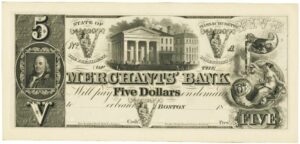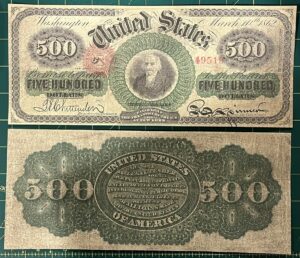
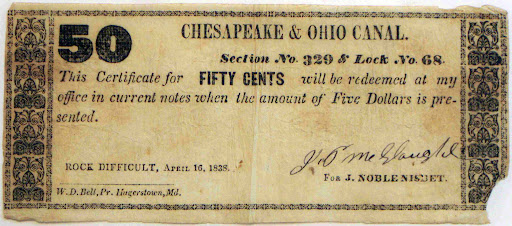
📷 Image source: Web image. Images are selected by AI to represent the article topic and may not depict the exact note(s) described.
On the morning of April 20, 1914, Colorado National Guard troops and armed guards employed by the Colorado Fuel and Iron Company opened fire on a tent colony of striking miners and their families near Ludlow, Colorado. By the time the smoke cleared, at least 21 people were dead, including 11 children and 2 women who suffocated in a pit beneath a burning tent. The Ludlow Massacre stands as one of the bloodiest episodes in American labor history, and while most accounts focus on the bullets and the fire, a quieter weapon had been deployed against these workers for decades before the shooting ever started: company scrip.
What Was Company Scrip?
Company scrip was a form of privately issued substitute currency used by employers, particularly in mining, logging, and textile industries, to pay workers in lieu of, or in addition to, lawful United States money. In the coal camps of southern Colorado, scrip took many physical forms: printed paper certificates, metal tokens, cardboard chits, and die-struck coins in denominations ranging from one cent to five dollars. CF&I scrip notes were typically printed on thin, often brightly colored stock with the company name prominently displayed alongside denomination figures. Some issues bore serial numbers and rudimentary engraving to deter counterfeiting, though the security features were far simpler than those found on contemporary Federal Reserve or National Bank Notes.
From a numismatic standpoint, these pieces occupy an important niche in American exonumia. Collectors today classify Colorado coal scrip under merchant tokens and trade tokens, catalogued in resources such as the Rulau Standard Catalog of United States Tokens. CF&I scrip pieces, particularly the earlier die-struck metal issues from the 1880s and 1890s, command premiums in Very Fine or better condition because most surviving examples show heavy circulation wear, consistent with their everyday transactional use in commissary stores.
When attributing Colorado coal scrip, look for the mine camp name stamped or printed on the piece alongside the issuing company. CF&I operated dozens of camps, including Ludlow, Aguilar, Berwind, and Hastings. Camp-specific issues are considerably scarcer than generic CF&I company-wide pieces and can fetch two to five times more at specialized token auctions. Cross-reference with the Fuld and Fuld Colorado token listings for confirmed attributions.
The Mechanics of Control: How Scrip Trapped Workers
The economic trap of company scrip was elegant in its brutality. CF&I and its predecessor companies owned not just the mines but the towns themselves. The houses workers lived in, the churches they prayed in, the schools their children attended, and the stores where they bought food and clothing all belonged to the company. Workers were often paid in scrip rather than U.S. currency, and that scrip was redeemable exclusively at the company-owned commissary, known locally as “the pluck-me store,” a nickname that left little doubt about how miners felt about the arrangement.
If a miner attempted to spend his scrip at an outside merchant in Trinidad or Walsenburg, those merchants would accept the notes only at a steep discount, typically between 60 and 90 cents on the dollar, because they in turn had to redeem the scrip with the company, a process that was neither guaranteed nor convenient. This discount effectively represented a hidden wage cut. A miner earning the equivalent of $3.00 per day might receive $3.00 in face-value scrip, but if he wished to purchase goods outside the company’s monopoly, his real purchasing power might be as low as $1.80. The commissary, meanwhile, charged prices that independent observers consistently found to be 15 to 25 percent above market rates for comparable goods in nearby towns.
The Colorado Bureau of Labor Statistics documented these disparities in its reports from 1903 to 1912, noting that the scrip system, combined with mandatory company housing deductions and tool rental fees, meant that many miners received little to no cash at settlement. Some actually finished pay periods in debt to the company, a condition that bound them to continued employment under threat of eviction from company housing.
The Legal Landscape: Scrip and Federal Currency Law
It is worth pausing here to situate company scrip within the broader context of American monetary law, a subject of natural interest to currency collectors. The National Currency Act of 1863 and the National Bank Act of 1864 had established a framework for nationally chartered bank notes, and the federal government had imposed a 10 percent tax on state bank notes in 1866 to drive competing paper currency from circulation. But these laws regulated banks, not employers. Company scrip issued as wages, not as circulating bank currency, existed in a gray area that courts were slow to address.
Several states attempted to outlaw the truck system, the legal term for paying wages in goods or non-cash instruments, during the late 19th century. Colorado passed a law in 1887 requiring coal miners to be paid in lawful U.S. money, but enforcement was virtually nonexistent in the isolated southern coalfields where CF&I operated with near-sovereign authority. The company simply continued issuing scrip with near-total impunity, secure in the knowledge that no state inspector was likely to make the long journey to Ludlow or Hastings to verify compliance.
Paper scrip issues from Colorado coal companies are significantly more fragile than their metal token counterparts and far fewer have survived in collectible condition. If you encounter a paper CF&I note at a show or estate sale, examine it carefully under a loupe for evidence of heavy fold lines, ink transfers from adjacent items, and edge losses. Even examples grading Fine to Very Fine represent important documentary artifacts. Store paper scrip flat in Mylar sleeves inside acid-free folders, never folded, to prevent further deterioration.
The United Mine Workers Strike and the Role of Scrip in Grievances
When the United Mine Workers of America called a strike across the Colorado coalfields on September 23, 1913, the abolition of the scrip and company-store system was among their seven formal demands, alongside recognition of the union, an eight-hour workday, and the right to trade at stores of their own choosing. The UMWA’s demand for payment in lawful money was not merely symbolic. Organizers had spent years documenting how the scrip system made it nearly impossible for workers to accumulate savings, relocate to better employment, or exercise any meaningful economic independence.
The striking miners and their families, evicted from company housing within days of the strike call, established tent colonies at Ludlow and other locations near the mine entrances. The UMWA supplied tents, limited food, and a degree of organizational structure. Crucially, the union also began paying strike benefits in actual United States currency, a stark contrast to the scrip economy the workers had lived under. For many strikers, receiving a five-dollar Federal Reserve Note or a National Bank Note in their hands, redeemable anywhere in the country, was a tangible, physical expression of the freedom they were striking for.
CF&I, the Rockefellers, and the Company Town System
Colorado Fuel and Iron had passed into the effective control of John D. Rockefeller Sr. in 1903 and was managed day-to-day by his son, John D. Rockefeller Jr., through a network of hired managers. The Rockefeller family’s distance from the actual conditions in the camps would become a significant public relations liability following the Ludlow Massacre. Congressional hearings in 1914 and 1915 forced Rockefeller Jr. to confront documented evidence of the scrip system’s abuses, company store price gouging, and the systematic suppression of workers’ rights to free assembly and union organization.
The hearings produced one of the most remarkable documents in the history of American labor: the so-called Rockefeller Plan, or Colorado Industrial Plan of 1915, which was an early company union scheme developed with the help of Canadian labor reformer William Lyon Mackenzie King. While the plan fell far short of UMWA recognition, it did formally end the mandatory scrip payment system at CF&I properties, replacing it with cash wages. From a currency history perspective, the Ludlow Massacre and its aftermath thus directly accelerated the demise of one of the most widespread forms of private, employer-issued currency in American history.
Company scrip from the pre-1915 Colorado coal camps represents a convergence of labor history, exonumia, and monetary policy that makes it uniquely compelling for thematic collections. A focused collection might pair CF&I scrip pieces with period National Bank Notes from Trinidad National Bank (Charter 3450) or the First National Bank of Walsenburg (Charter 4381), which were the nearest federally chartered banking institutions to the Ludlow strike zone. The visual contrast between scrip printed on cheap stock and the elaborate engraving of a contemporary National Bank Note powerfully illustrates the two-tier monetary world these miners inhabited.
Surviving Scrip: What Collectors Find Today
Surviving examples of Colorado coal company scrip appear regularly at token shows, online auction platforms, and in the inventories of dealers specializing in Western Americana and exonumia. Metal tokens tend to survive in higher grades than paper issues simply because of their durability. CF&I brass tokens in denominations of 25 cents and 50 cents from the 1890s to 1910s are the most commonly encountered pieces. True paper scrip notes in any grade are considerably rarer and, when authenticated, are eagerly sought by both token collectors and labor history specialists.
Counterfeit and reproduction scrip exists in the marketplace, so buyers should exercise caution. Authentic pre-1915 paper pieces will typically show genuine aging consistent with their purported age, including appropriate paper yellowing, ink oxidation, and wear patterns consistent with folding and handling. Reproduction pieces often appear on brighter, more uniform paper stock. When in doubt, consult with a specialist before purchasing high-priced paper scrip examples.
| Issue Type | Issuer / Camp | Approximate Surviving Examples | Rarity |
|---|---|---|---|
| Brass Token, 25 cent, 1890s | CF&I, General Issue | Several hundred known | Common |
| Brass Token, 50 cent, 1890s | CF&I, General Issue | 100 to 200 known | Scarce |
| Die-Struck Token, $1.00, 1880s | CF&I, Ludlow Camp | Fewer than 50 known | Rare |
| Paper Scrip Note, 50 cent, pre-1900 | Colorado Coal and Iron Co. | Fewer than 20 confirmed | Key Date |
| Paper Scrip Note, $1.00, 1900-1910 | CF&I, Berwind Camp | Approximately 10 to 15 known | Key Date |
| Cardboard Chit, 10 cent, 1905-1913 | Victor-American Fuel Co. | 30 to 50 known | Rare |
| Aluminum Token, 25 cent, 1908-1914 | Rocky Mountain Fuel Co. | 75 to 100 known | Scarce |
| Paper Scrip Note, $5.00, pre-1915 | CF&I, Any Camp | Fewer than 5 confirmed | Key Date |
Legacy: Federal Protections and the End of the Scrip Era
The broader national movement against company scrip gained significant momentum following Ludlow and similar tragedies in West Virginia and Pennsylvania. The Fair Labor Standards Act of 1938 and subsequent Department of Labor regulations finally established clear federal prohibitions on paying wages in scrip or truck, mandating payment in lawful currency and effectively ending the company scrip system as a widespread practice across American industry. Colorado had its own strengthened wage payment law by 1917, specifically referencing the abuses documented during the coal wars.
For currency historians, the arc from the 1863 National Currency Act to the post-Ludlow wage payment reforms illustrates a fundamental tension in American monetary history: the gap between the federal government’s authority to define legal tender and its actual capacity to enforce that definition against private economic power operating in isolated company towns. Company scrip was not merely a curiosity of the frontier economy. It was a deliberate instrument of labor control that operated in the shadow of legitimate U.S. currency for decades, and it took the deaths of 21 people at Ludlow to begin forcing genuine accountability.
Today, when a collector holds a CF&I brass token or a fragile piece of coal camp paper scrip, they are holding a direct artifact of that history. These are not merely interesting exonumia. They are material evidence of how the definition and control of money shaped the lives, and ended the lives, of ordinary Americans in ways that no textbook account of U.S. monetary policy fully captures.