Long-duration spaceflight creates a surprising financial puzzle: what happens to an astronaut's money, taxes, and paper currency while they orbit Earth for months at a time? From Skylab to the International Space…
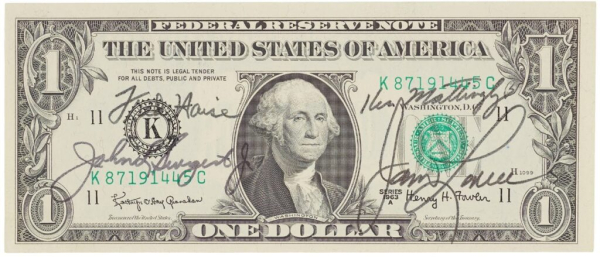
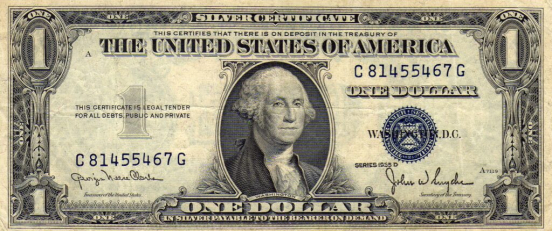
📷 Image source: AI generated. Images are selected by AI to represent the article topic and may not depict the exact note(s) described.
When astronaut Scott Kelly returned from his 340-day mission aboard the International Space Station in March 2016, he faced the usual barrage of medical tests, rehabilitation sessions, and press conferences. But tucked among the less glamorous post-flight logistics was a question that almost nobody outside of NASA's administrative offices had ever considered: what exactly had happened to his money while he was gone? His direct deposits had continued, his bills had been paid by a designated family member, and somewhere down on Earth, Federal Reserve Notes bearing his purchasing power had circulated through the economy without him. The intersection of U.S. currency policy and human spaceflight is a niche so rarely explored that even dedicated numismatists are often surprised it has a history worth telling at all. It does, and it is a genuinely compelling one.
First U.S. Astronaut Paid in Orbit
Skylab crews, 1973 to 1974
Longest U.S. Mission (Single)
Scott Kelly, 340 days (2015 to 2016)
Currency Physically Flown to ISS
Small commemorative lots; no circulating FRNs routinely carried
Astronaut Pay Classification
GS-13 to GS-15 federal civilian pay scale
Tax Consideration
U.S. astronauts remain fully taxable; no extraterrestrial exemption exists
Relevant FRN Series
Series 1969 through present (all circulated during manned missions)
The Financial Reality of Living Off-Planet
To understand how NASA handled currency for astronauts, it helps to first appreciate that American astronauts are, in most cases, federal employees. Military astronauts remain on active-duty pay from their respective branches, while civilian NASA astronauts earn salaries on the General Schedule pay scale, typically ranging from GS-13 (roughly $78,000 per year in the early 2000s) to GS-15 (over $130,000 by the 2010s). That paycheck keeps coming whether the astronaut is sitting at a desk in Houston or floating 250 miles above the Indian Ocean. The paper money those wages eventually become, specifically the Federal Reserve Notes printed by the Bureau of Engraving and Printing, flows into the broader economy through automatic deposit systems, bill payments, and the spending habits of family members left behind on the ground.
No astronaut on a long-duration mission has ever needed to carry a wallet into orbit in any practical sense. There are no vending machines on the ISS, no commissary accepting $20 bills, and no opportunity to tip a flight attendant. The financial infrastructure of spaceflight is entirely terrestrial, managed through power of attorney arrangements, spousal oversight, or in some cases NASA's own administrative support staff who helped astronauts in the early program years set up their affairs before launch.
Collector Tip
Federal Reserve Notes from Series 1969 are particularly significant to space-history collectors because they were the first series issued after the Apollo 11 moon landing of July 1969. A circulated 1969-series $1 FRN with a Dallas (K) district seal and a Elston-Kennedy signature combination is an affordable piece that literally shared the economy with the first men to walk on the moon.
Skylab and the First Long-Duration Financial Problem
Prior to Skylab, Mercury and Gemini missions lasted days at most, and Apollo lunar missions stretched to under two weeks. Financial disruption was minimal. Skylab changed everything. The three Skylab crews, flying in 1973 and 1974, spent 28, 59, and 84 days in orbit respectively. Astronaut Gerald Carr, commander of the third Skylab mission, later recalled in interviews that the pre-launch financial preparation was treated almost as an afterthought by NASA administrators who had not yet standardized any procedure for managing an astronaut's domestic finances over months rather than days.
During this period, the Federal Reserve Notes in circulation were primarily Series 1969 and Series 1969-A through 1969-D variants, all featuring the signatures of either Dorothy Andrews Elston or Romana Acosta Bañuelos as Treasurer, paired with David M. Kennedy or John B. Connally as Secretary of the Treasury. These notes, with their Green Federal Reserve seal and green serial numbers, were the literal currency of the era when Americans first had to think seriously about long-term financial planning for people living off the planet.
NASA eventually formalized a pre-flight financial checklist that required astronauts assigned to long-duration missions to establish powers of attorney, arrange automatic bill payment, and designate a financial contact person. This system, while mundane by modern standards, was a genuine administrative innovation for a government agency that had previously only needed to manage absence periods comparable to a long business trip.
The Space Shuttle Era: Shorter Missions, Less Financial Drama
The Space Shuttle program, which ran from 1981 to 2011, generally kept mission durations short enough that no extraordinary financial arrangements were necessary. Most Shuttle missions lasted between 7 and 16 days, well within the range that a spouse or automatic payment system could handle without anyone needing to invoke power of attorney. The notable exception came with the long-duration Shuttle missions to Mir, particularly those flown by Shannon Lucid (188 days in 1996) and Michael Lopez-Alegria, whose later ISS missions stretched even further.
Collector Tip
Shannon Lucid's 1996 Mir residency coincided with the circulation of Series 1993 and Series 1995 Federal Reserve Notes. The Series 1995 $1 notes with Mary Ellen Withrow as Treasurer and Robert Rubin as Secretary of the Treasury are common in circulated grades, but star note replacements from certain districts, especially the Atlanta (F*) and Minneapolis (I*) banks, are genuinely scarce and worth seeking out for a themed space-era collection.
Currency Actually Flown in Space: The Numismatic Angle
Here is where the story becomes genuinely interesting for currency collectors. While no astronaut routinely carried circulating Federal Reserve Notes into orbit for transactional purposes, there is a documented tradition of carrying small quantities of currency and other paper items as personal preference items (PPKs, or Personal Preference Kits) or as part of special commemorative payloads. NASA has always allocated a small weight allowance, historically around 1.5 pounds, for personal items astronauts wish to carry.
Some astronauts have used portions of this allowance to carry currency. Documented examples include folded $1 and $2 Federal Reserve Notes that were later sold or donated with accompanying certificates of flight authenticity. The $2 note has proven particularly popular for this purpose given its novelty status and compact size. A Series 1976 $2 FRN, which carries the signatures of Francine Irving Neff and William E. Simon, was among the currency types reportedly carried on early Shuttle missions by astronauts with a sentimental attachment to the bicentennial issue.
It is worth noting that space-flown currency exists in a gray area for serious numismatists. Unlike space-flown coins, which have a robust and documented collector market with authentication services that specifically certify orbital provenance, paper currency lacks a comparable certification ecosystem. Collectors interested in space-flown FRNs should insist on NASA-issued flight manifests, mission-specific certificates signed by the astronaut, and ideally photographic documentation from aboard the spacecraft.
The ISS Era: Modern Financial Infrastructure for Long-Duration Crews
When the International Space Station began hosting permanent crews in November 2000 with Expedition 1 commander Bill Shepherd aboard, NASA had already developed relatively mature financial management protocols. Astronauts spending six-month rotations on the ISS work with the agency's human resources and legal offices well before launch to ensure every financial obligation is covered. Direct deposit of Federal Reserve Note-equivalent funds into bank accounts happens automatically; mortgage payments, utilities, and insurance premiums are handled through pre-arranged automatic withdrawals or by designated contacts.
The IRS has explicitly confirmed, in correspondence made public through Freedom of Information requests, that U.S. astronauts aboard the ISS remain fully subject to federal income tax. The ISS orbits within the legal jurisdiction of the United States for purposes of the Outer Space Treaty and subsequent NASA administrative interpretation. There is no exotic tax shelter in low Earth orbit. The money earned, eventually manifesting as Federal Reserve Notes when withdrawn from ATMs or used in commerce by family members, is ordinary taxable income.
Collector Tip
Collectors building a thematic "currency through the space age" set should note that every series of Federal Reserve Notes from Series 1963 (which introduced the modern "In God We Trust" motto on $1 FRNs) through the current NexGen series has existed during a period of active American human spaceflight. A type set of $1 FRNs by Treasurer-Secretary signature combination from 1963 to the present makes a fascinating parallel history display alongside mission photographs.
Soviet and Russian Parallels: Rubles in Orbit
The financial logistics of spaceflight were not exclusively an American concern, and the contrast with Soviet and Russian practice illuminates how deeply currency systems reflect broader economic structures. Soviet cosmonauts on Salyut and Mir stations were nominally paid in rubles, but the Soviet command economy meant those rubles had limited practical meaning. Post-Soviet Russian cosmonauts on the ISS are paid by Roscosmos and face their own tax and financial management obligations under Russian law. Joint U.S.-Russian crews on the ISS have at times compared notes, so to speak, on how differently their respective countries handle the mundane financial side of what is otherwise the most extraordinary workplace in human history.
Paper Money and the Future of Deep Space Exploration
NASA's Artemis program, aimed at returning humans to the lunar surface and eventually sending crews to Mars, raises the financial questions all over again at dramatically longer timescales. A Mars transit mission could last 18 months or more. Federal Reserve Notes, by their nature, change series and sometimes design during such periods. An astronaut who departed Earth during one Secretary of the Treasury's tenure might return during another's. The notes they left behind in savings accounts would be the same series they departed with; the notes they encountered at the grocery store upon return might carry entirely new signatures and design elements.
There has been informal discussion within aerospace financial planning circles about whether cryptocurrency or other digital transaction systems might eventually serve as a practical medium of exchange for deep space crews who need to conduct transactions among themselves, but no formal policy has been established. For now, the Federal Reserve Note remains the de facto unit of account for American astronauts, even when those astronauts are hundreds of miles above the notes themselves.
| Series / Date | Denomination and Variety | Significance / Print Run Context | Rarity |
|---|
| Series 1969 | $1 FRN, all districts | Circulated during Apollo 11; Elston-Kennedy signatures; green seal | Common |
| Series 1969-C | $100 FRN, star notes | Circulated during final Apollo missions; Bañuelos-Shultz; low star runs in some districts | Scarce |
| Series 1976 | $2 FRN, Neff-Simon | Bicentennial issue; reportedly carried on early Shuttle PPKs; first $2 FRN since 1966 | Common |
| Series 1981-A | $1 FRN, star notes, Atlanta (F*) | Circulated during early Shuttle era; Ortega-Regan; limited Atlanta star run | Scarce |
| Series 1995 | $1 FRN, star note, Atlanta (F*) | Lucid Mir mission year; Withrow-Rubin; 128,000 printed | Key Date |
| Series 1995 | $1 FRN, star note, Minneapolis (I*) | Withrow-Rubin; very low distribution in circulation; under 200,000 printed | Rare |
| Series 2001 | $1 FRN, all districts | First series fully in circulation during ISS permanent crew era; Marin-O'Neill | Common |
| Series 2006 | $5 FRN, redesigned; star notes | New purple and gray design; circulated during Kelly and Williams long missions | Common |
| Series 2013 | $100 FRN, star notes, Fort Worth | Redesigned Franklins circulating during peak ISS crew rotations; some FW star runs quite limited | Scarce |
Conclusion: A Currency History Written in Zero Gravity
The story of Federal Reserve Notes and human spaceflight is, at its heart, a story about how thoroughly financial systems are woven into the fabric of modern life. Even when Americans leave the planet entirely, the infrastructure of the dollar follows them, not as physical paper in a spacesuit pocket, but as direct deposits, automatic payments, legal obligations, and tax filings. The Bureau of Engraving and Printing has printed billions of Federal Reserve Notes across dozens of series since Yuri Gagarin first orbited the Earth in 1961, and every single one of those series has existed against the backdrop of humanity's expansion into space.
For the currency collector, this intersection offers a genuinely distinctive lens through which to appreciate a type collection or a signature set. The Series 1969 note in your collection circulated when Neil Armstrong was still giving speeches about the lunar surface. The Series 1995 star note you hunt for at currency shows represents the same moment Shannon Lucid was eating dehydrated food aboard Mir. Paper money has always been a historical artifact, but when you align its timeline with the history of human spaceflight, the familiar green rectangles in your collection take on a whole new dimension.